












- WIADOMOŚCI
81st Anniversary of the Warsaw Uprising: Honoring Poland’s Legacy of Resistance

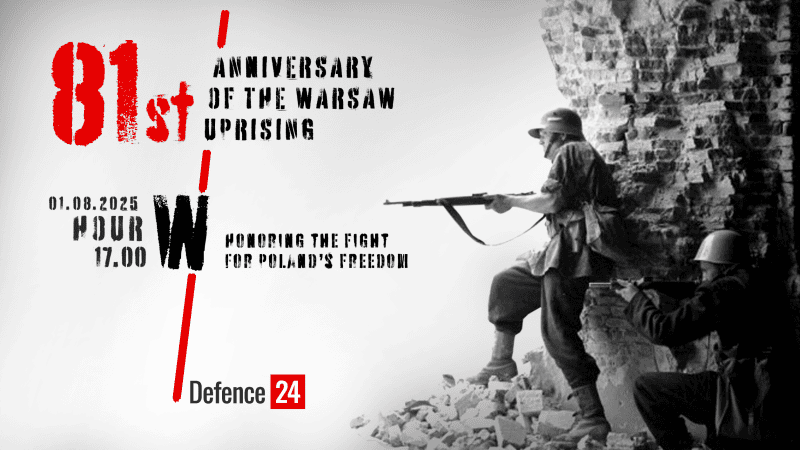
On 1 August 2025, Poland commemorates the 81st anniversary of the Warsaw Uprising – a defining moment in its modern history and a powerful symbol of national resistance against totalitarian occupation. As sirens sounded across the country at „W” Hour, citizens paused in solemn tribute to the thousands who took up arms in a battle for freedom, dignity, and sovereignty.
The Warsaw Uprising, launched on 1 August 1944, was the largest single military effort undertaken by any European resistance movement during the Second World War. Orchestrated by the Home Army (Armia Krajowa)—the underground armed forces loyal to the Polish government-in-exile—the operation aimed to liberate Warsaw from German occupation before the arrival of Soviet forces advancing from the east.
Over the course of 63 days, approximately 50,000 Polish resistance fighters—many of them poorly armed and supported by civilians—engaged in fierce urban combat against a heavily equipped German military. The goal was not only military victory but to assert Polish independence and prevent Soviet political domination. The uprising was ultimately crushed, resulting in the deaths of an estimated 18,000 fighters and up to 200,000 civilians, and the near-total destruction of the capital city.
Despite its tragic outcome, the Warsaw Uprising remains a cornerstone of Poland’s national memory. Each year, commemorations are held throughout the country, with the epicenter in Warsaw, where at precisely 5:00 p.m.—”W” Hour—the city comes to a standstill. Sirens wail, traffic stops, and people stand in silence to honor the fallen.
The 81st anniversary comes at a time when regional security and the defense of sovereignty are once again at the forefront of Polish and European strategic discourse. As hybrid threats and revisionist powers challenge the post-Cold War order, the memory of the Warsaw Uprising serves not only as a tribute to past sacrifice but as a reminder of the enduring cost of freedom. For many Poles, the legacy of August 1944 is not confined to history—it is a living call to vigilance, resilience, and unity.


