












- WIADOMOŚCI
Immigration raid at Hyundai-LG plant in Georgia: A stress test for the U.S.–South Korea alliance

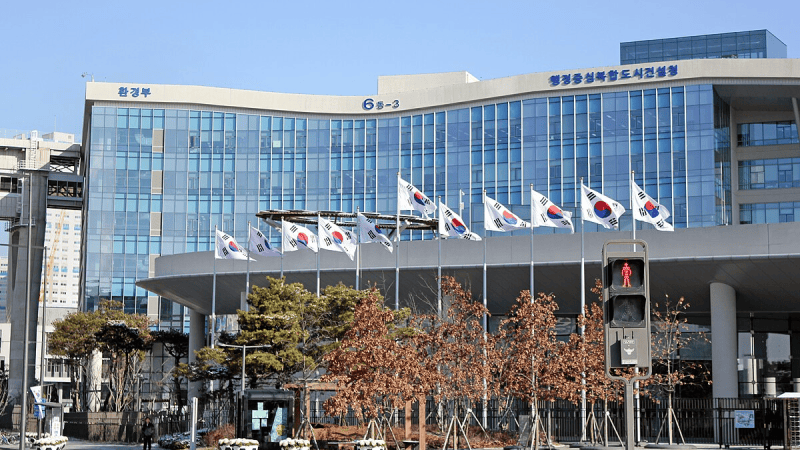
On 4 September 2025, U.S. federal authorities carried out one of the largest single-site immigration raid in the history of the Department of Homeland Security. Nearly 500 workers were detained at the Hyundai-LG plant in Ellabell, Georgia, including more than 300 South Korean nationals. The operation was part of investigation into the alleged visa violations and undocumented employment practices at the $7.6 billion electric vehicle and battery complex. While U.S. officials framed the raid as an enforcement of immigration law, in South Korea it was perceived as a profound breach of trust, triggering one of the sharpest diplomatic crises between the two allies in years.
A Shock to an Alliance
For Washington, the raid aligned with President Donald Trump’s broader crackdown on undocumented labor and campaign promises to protect „American jobs.” For South Korea, however, the imagery of engineers and technicians, many brought to Georgia to stand up highly specialized EV production lines, being handcuffed and bused to detention centers was viewed as humiliating and unjust. South Korean media outlets across the political spectrum, from the conservativeChosun Ilbo and JoongAng Ilbo to the progressiveHankyoreh, spoke with one voice in condemning the raid as a betrayal of the alliance. Such unanimity in the South Korean press is rare and underscores the depth of the backlash.
President Lee Jae-myung called the detentions an „unjust infringement” on the rights of South Korean citizens and companies investing in the United States. Foreign Minister Cho Hyun traveled to Washington, where he raised the issue directly with Secretary of State Marco Rubio. Following these talks, the United States agreed to release the workers after seven days in ICE custody. They were transferred to Atlanta airport and flown home on a Korean Air charter flight, bringing a formal end to the immediate crisis. Yet the damage to public perception of the U.S.-South Korea relationship has already been done.
Investments Turned Against Seoul?
The timing of the raid compounds the sense of betrayal. Just less than two months ago, Seoul and Washington concluded a trade agreement under which South Korea pledged to invest $350 billion in U.S. in exchange for reduced tariffs of 15 percent. The package would encompass major commitments in shipbuilding, advanced technology, and energy sectors. South Korean companies, however, had already increased their investments in the U.S. under President Joe Biden. The Hyundai-LG electric vehicle and battery plant itself had been championed by both state and federal leaders as an example of how to revitalizing U.S. manufacturing, promising around 8,500 jobs for rural Georgia.
Now, instead of symbolizing partnership, the facility has become the site of a dramatic immigration crackdown. South Korean lawmakers openly question whether Washington is playing a „bait-and-switch”: attracting massive foreign investment while punishing the foreign technicians and experts necessary to launch such projects. The outrage is not limited to liberals and progressives; conservative voices that normally emphasize the security alliance with Washington are equally scathing.
The raid has also security implications. The American-South Korean alliance is not only about deterring North Korea; it increasingly rests on economic and technological cooperation, also in fields vital to national security of both countries. If South Korean public opinion turns against further investment in the United States or against U.S. investment in Korea, Seoul may hedge more strongly toward diversification, deepening ties with Europe and even cautiously exploring closer economic engagement with China.
Managing the Fallout
Both governments are now scrambling to contain the damage. Seoul secured the voluntary departure deal to protect its citizens« rights and ability to travel in the future. President Lee emphasized the need for „system improvements” through consultation with Washington to prevent a repeat. The White House, for its part, insists that the raid was not aimed at South Korea specifically and stressed that the U.S.-South Korea relationship remains „great.”
Yet such assurances ring hollow in Seoul when juxtaposed with images of South Korean engineers in shackles. The optics will likely overshadow the technical details, such as whether those detained workers misused visa waivers or overstayed business permits. For Koreans, the raid was not about paperwork but about lack of respect.
The deeper challenge lies not in the perception of that incident itself, but in sustaining political trust between the two countries in the months ahead. In South Korea, the awareness that Washington is willing to humiliate its ally for domestic political gain could linger long after the workers return home. Conversely, in the U.S., populist narratives are likely to frame South Korean companies as circumventing immigration law and undermining American workers. These parallel perceptions risk corroding the alliance from within.
If mishandled, the incident could cast a shadow over future mutual investment between South Korea and the United States, and weaken a partnership central to Indo-Pacific security. If managed with sensitivity, it could serve as a catalyst to establish clearer frameworks for labor mobility and investment protection, preventing the next immigration raid from turning into a diplomatic crisis.


