












- WIADOMOŚCI
- ANALIZA
Russian drones over Poland: This is not the end [OPINION]

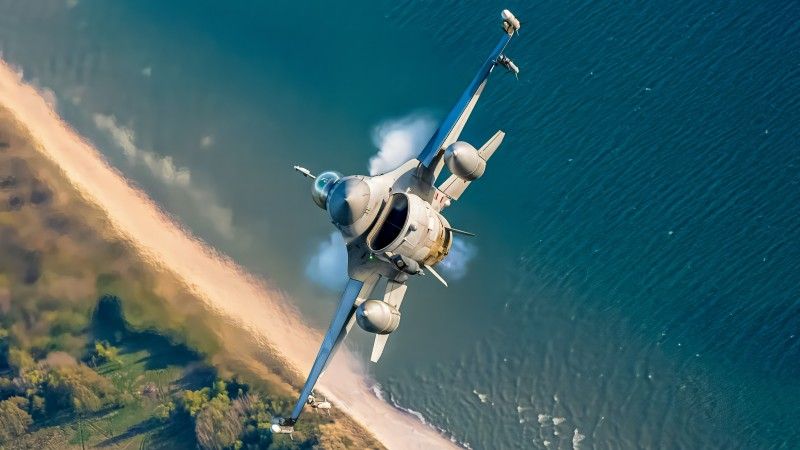
Photo. 31 BLT kpt. Paweł KRZESZKIEWICZ
Russians are once again crossing thresholds in escalating the situation on NATO’s eastern flank. The recent large-scale violation of Polish airspace-thus the airspace of a NATO member state—and the creation of a real threat to the lives and health of citizens necessitated the use of exceptional defensive measures in combined operations. However, the entire matter clearly requires broader analysis regarding Russia’s next steps and an even greater acceleration of our own defense preparations.
In yet another dangerous incident involving Russian unmanned systems entering Polish airspace, it must be remembered that both the Russian and Belarusian sides have evidently concluded that they are no longer able to intimidate Poland and other regional states using previously employed mass methods. The mere announcement of Zapad/West military exercises (their next edition), the deployment of certain units, including missile forces, or even nuclear threats, no longer produce the desired reactions from the Kremlin’s perspective. Moreover, Russian-Belarusian attempts at shows of force are increasingly met with appropriately structured responses from Poland and its allies. This is evidenced by the launch of Poland’s own Iron Defender-25 exercises, which include an important information domain component and are embedded in effective communication with citizens (such as creative social media campaigns like “wave to the soldiers”). It should also be noted that Poland has announced the temporary closure of its border with Belarus.
Thus, Russia is seeking new tools of influence, making it unfortunately possible that various forms of unmanned aerial vehicles (UAVs) will be employed on a larger scale. Most importantly, this constitutes a crisis situation, though we have by no means lost control. There have even been instances of physically shooting down UAVs, an action of significant symbolic importance both for our security posture and in the perception of the aggressor, namely Russia. Nevertheless, it must be assumed that even a strong message will not deter Russia from continuing such actions.
These may take the form of isolated incidents or an escalation in scale, as we have recently witnessed. Looking ahead, we must consider the possibility of Russians employing UAVs with warheads, attempts to penetrate sensitive zones-particularly urban areas—as well as further efforts to paralyze air traffic. The adversary enjoys considerable freedom in this regard, as it is conducting a campaign of mass strikes against Ukraine and can repeatedly disguise its actions as part of operations against western Ukraine, claiming incidents were accidental or due to technical failures. For us, however, it is crucial to emphasize publicly and internationally that Russia is acting deliberately and with premeditation.
Russian political and military authorities are fully aware of the threat posed to the lives and health of Polish citizens (and foreign nationals on our territory, including NATO troops), as well as to infrastructure. Indeed, this is one of their objectives, alongside other derivative goals, such as:
-exerting psychological pressure on Poland-lowering the nationwide sense of security, creating doubts about the effectiveness of the government, armed forces, and other state institutions;
-exerting psychological pressure on NATO allies by playing on the threat of full-scale war, particularly in light of events in Europe (questions about France’s political stability after the government’s collapse) and globally (Israel’s strike on a target in Qatar’s capital);
-testing the response systems of Poland, its armed forces, and allied forces, as well as information-sharing between NATO states and Ukraine (an operational objective);
-applying economic pressure by increasing threats to airspace and infrastructure, including paralyzing normal passenger and cargo air traffic (through real alerts and potentially false alarms);
-maintaining constant pressure on the Polish Air Force and the Armed Forces as a whole, as well as on NATO forces operating in Poland and along NATO’s eastern flank. Just as the migration crisis tied down significant resources in patrols and Border Guard support, UAV use may now have a similar short- and medium-term impact on resources, particularly air defense, including the very costly deployment of advanced manned aircraft (ISR platforms, aerial refueling tankers, and combat aircraft).
This can therefore be described as a deliberate act of aggression (though not full-scale), hovering around the threshold of force, marking Russia’s departure from mere shows of force, which it has deemed insufficient for achieving political objectives. At the same time, UAVs are unlikely to be the only highly probable form of escalation in the coming days and weeks. We must remember that Russians and Belarusians have long been engaged in sabotage and subversive activities not only against Poland. We must therefore anticipate an increase in such operations, combined with direct airspace violations, in an effort to achieve a synergy effect that amplifies political-military-intelligence pressure on Poland, NATO’s eastern flank, and the Alliance as a whole. In general, we must be prepared for the use of all forms of sub-threshold influence.
This also raises the level of risk for soldiers and officers serving on the borders, as Belarusians may incite illegal migrants to greater aggression. At the same time, it must be recalled that Russia is heavily engaged in electronic warfare (EW) and has shown increased activity in the cyber domain.
It must therefore be assumed that at some point Russia may act against Poland or other allied states in an integrated and interoperable manner. For example, we could face an attempt to penetrate airspace with a large number of UAVs, combined with mass activity in the electromagnetic spectrum using assets not only in the Kaliningrad Oblast but also in Belarus. This could be accompanied by strong cyberattacks, particularly against critical infrastructure and information networks. Remaining below the threshold of war, such escalatory actions could not only create a sense of threat but also support other forms of aggression. It should be noted that in 2021, tensions along the Polish, Lithuanian, and Latvian borders with Belarus were clearly an operational cover for preparations for the full-scale invasion of Ukraine. Thus, the current series of aggressive actions against Poland by Russia should not be analyzed solely in relation to one NATO state. We may be facing a similar operation designed to tie down NATO in one area while covering another direction. This must also be considered in light of recent threats made by Dmitry Medvedev against Finland.
Regardless, we are clearly witnessing Russia’s testing of NATO’s overall response. This may stem from factors such as U.S. declarations of strong partnership with Poland within NATO following President Karol Nawrocki’s visit to Washington; discussions of potential coalition-of-the-willing missions to Ukraine (with Vladimir Putin threatening to treat any such mission as a legitimate military target); and NATO/EU announcements of continued efforts to strengthen defense and deterrence capabilities. It is worth considering what the best allied response to the current situation might be, across three dimensions:
-actions to activate allied response by deploying additional air defense forces, relieving the burden on Poland (deployment of air and missile defense units, increased NATO Air Policing presence, and assurances that Poland could receive logistical and material support if Russian actions requiring combat measures persist);
-a show of force through the deployment of additional forces in unannounced exercises/drills/inspections, such as activating the U.S. Bomber Task Force Europe mission or similar air force operations by France. Since Russia has buried military transparency mechanisms, NATO should now adopt similar tactics to create uncertainty for the adversary. In plain terms, we should not shy away from scenarios involving rapid ad hoc exercises without announcing their end dates or disclosing the full scope of forces involved;
-appealing to the symbolism and practical effect of invoking Article 4 of the North Atlantic Treaty (a diplomatic-political tool against Russia, but also a practical NATO response mechanism), as well as increasing NATO’s strategic communications activity, similar to strong responses to Russian provocations since 2021.
In conclusion, we are not dealing with an isolated incident, but with yet another element of Russia’s ongoing aggression against European states, visible for years. Russia has engaged in numerous violations of international law, has completely disrupted Europe’s security architecture, and is contributing to global instability through its current actions. Exceptional allied measures are therefore required, alongside the continuation of long-term policies to rapidly strengthen armed forces and non-military security components. In this regard, it must be emphasized that discussions on civil defense should not be dismissed as a “secondary issue.” Polish citizens will find themselves in a situation of potential threat, as it is difficult to assume that Russia will cease such forms of escalation; rather, it is likely to intensify them.


