












- KOMENTARZ
- WAŻNE
- WIADOMOŚCI
Sanae Takaichi: Japan’s first female prime minister and the return of conservative nationalism

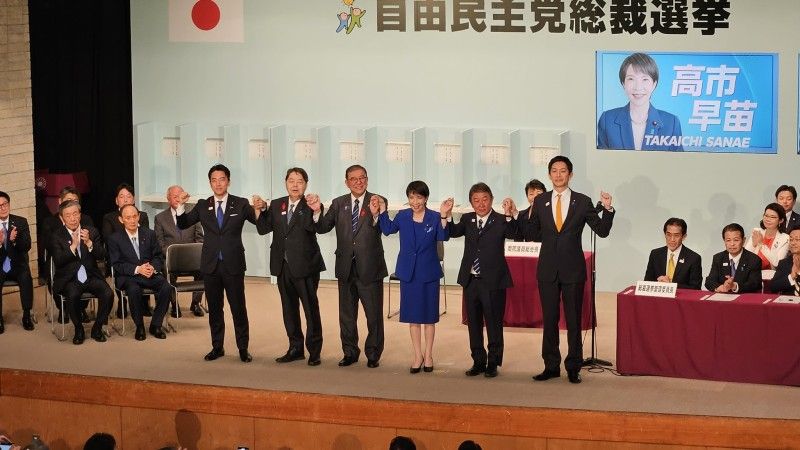
Japan is set to enter a new political chapter with the election of Sanae Takaichi as the leader of the ruling Liberal Democratic Party (LDP), and, most likely, the country’s first female prime minister. Her victory marks not only a personal milestone but also a significant ideological shift for Japan after a turbulent period of political fragmentation, economic stagnation, and declining public trust in the ruling party. Takaichi’s victory marks the return of the LDP’s conservative wing. As a veteran politician, she is also considered as an ideological heir to Shinzo Abe. Her blend of nationalist sentiment, assertive economic policy, and focus on „Japan’s strength and pride” suggests a return to Abe-era priorities, albeit under far more difficult domestic and international conditions.
A Symbolic First — and a Tough Road Ahead
At 64, Takaichi enters the leadership with over three decades of decades of political experience and a reputation for discipline, but she faces the challenge of uniting a divided LDP. In her victory speech she acknowledged the party’s loss of direction and pledged to restore public trust, stressing the need for reform and humility in governance. She also promised relentless effort, vowing to „abandon work-life balance” and „work, work, work, work, work.”
Her election carries strong symbolism and potential redefinition of leadership within Japan’s traditionally male-dominated political establishment. Her rise is seen by some lawmakers as a source of inspiration for women and outsiders seeking a place in national politics. Yet few expect her to govern as a feminist trailblazer. Takaichi has shown little interest in advancing gender equality as a political cause. She also opposes same-sex marriages, the use of separate surnames for married couples (Japanese law requires women to take their husband’s surname), and the idea of female emperors – positions that reflect her adherence to traditional family structures and conservative social values rather than a reformist agenda.
The immediate challenge, however, is political survival. The LDP-Komeito coalition no longer holds a majority in both house of Parliament. Takaichi must form alliances to secure her confirmation as prime minister in the mid-October Diet session and to pass legislation afterward. Her first test will be to unify a fractured LDP and decide whether to bring rivals like Shinjiro Koizumi, whom she narrowly defeated in the run-off, into senior party positions. Another key challenge will be maintaining the ruling coalition, as Takaichi’s nationalist agenda may test the ideological tolerance of Komeito, the LDP’s more moderate and centrist partner.
Economic Nationalism with a „Crisis Management” Agenda
Takaichi’s domestic policy platform combines Abenomics-style stimulus with new interventionist priorities. She proposes massive government spending in what she calls „crisis management investments” – targeting food security, energy independence, and high-tech sectors such as AI, semiconductors, and battery technology. She supports restarting Japan’s nuclear reactors and creating a national intelligence agency to strengthen economic and security coordination.
Her economic nationalism is also visible in proposals to screen foreign investments in sensitive industries and to tighten rules on land purchases by non-Japanese citizens. This aligns with the growing influence of far-right populists movements like the Sanseito party, which praised her victory as a step toward „anti-globalist” policies that protect Japan’s national interests.
At the same time, Takaichi has promised social policies aimed at reversing Japan’s demographic decline, including tax deductions for childcare services and incentives for companies to support working parents.
Conservative Roots and National Identity
Ideologically, Takaichi sits firmly on the right of the political spectrum. A self-described admirer of Margaret Thatcher, she has long been known for her hardline positions on history, defence, and national pride. She has regularly visited the Yasukuni Shrine in Tokyo – where over 2 million of Japan’s war dead are enshrined, including over a 1,000 war criminals – a gesture that many in China and South Korea view as glorifying Japan’s militarist and imperialist past.
Takaichi also has previously criticized the 1995 Murayama Statement, which acknowledged and apologized for Japan’s wartime aggression and colonial rule. She has also argued that accounts of wartime atrocities have been exaggerated, reflecting her alignment with Japan’s historical revisionist right.
Like Abe, she supports revising Article 9 of Japan’s pacifist constitution, which renounces war and threat or use of force as means of settling international disputes. She is also in favor of replacing the Self-Defence Forces with formal Armed Forces. While constitutional revision remains politically difficult, her election ensures the debate will return to Japan’s political mainstream, and at the same time it will cause controversy in neighboring countries, especially South Korea and China.
Relations with the United States, South Korea, and China
Her foreign policy vision stresses a stronger, more assertive Japan in Asia. „To protect Japan’s peace, we will strengthen like-minded cooperation based on the Japan-U.S. alliance and lead a free and open Indo-Pacific,” she said in her acceptance speech. Takaichi’s approach to the United States will likely mix pragmatism and personal diplomacy. She has expressed confidence in her ability to build a strong relationship with President Donald Trump, noting that her „Japan First” focus mirrors his „America First” approach.
For United States, her leadership is a double-edged sword: on one hand, it ensures continuity in the alliance; on the other, her nationalism could complicate coordination on sensitive issues like historical memory, trade, and trilateral cooperation between Washington, Tokyo and Seoul.
Relations with South Korea are likely to become more tense. Takaichi’s repeated visits to Yasukuni and revisionist stance on wartime history risk undoing recent progress in Tokyo-Seoul ties. Her attitude contrasts sharply with South Korea’s current efforts to stabilize relations through pragmatic cooperation and putting historical issues aside. Yet issues such as Japan’s wartime atrocities against Koreans, including forced labor and the „comfort women”, remain deeply sensitive and emotionally charged, requiring little to reignite tensions between the two countries.
While describing China as an „important neighbor,” and supporting the strengthening bilateral relations, she also emphasized Japan’s need to put national interests first. Her administration is expected to pursue deterrence through defence buildup and closer coordination with the United States, while avoiding direct confrontation. Takaichi has also floated the idea of a closer cooperation with Taiwan, signaling both solidarity with the island and some kind of defiance toward Beijing.
Japan’s Future: Between Pragmatism and Nationalist Pride
Sanae Takaichi’s rise signals both continuity and change. She inherits weakened parliamentary majority, public fatigue with the ruling party, and deep structural challenges, from demographic decline to sluggish growth of Japanese economy. Yet her promise to implement ambitious and active policies taps into deeper anxieties about Japan’s role in the world and its domestic decline.
If she manages to balance her conservative instincts with pragmatic governance, she could revitalize Japan’s politics and reassert its influence in Asia. But if she leans too heavily on ideology, reviving disputes over wartime history or pushing constitutional revision too aggressively, she risks isolating Japan from key partners at a moment of strategic volatility.
Either way, her premiership will mark a historic and potentially transformative chapter. For the first time in its postwar history, Japan will be led by a woman who embodies both the nation’s traditional values and its enduring struggle to define power, identity, and purpose in the 21st century.


