












- WAŻNE
- WIADOMOŚCI
- PILNE
The Netherlands has little left to give Ukraine from its own stocks

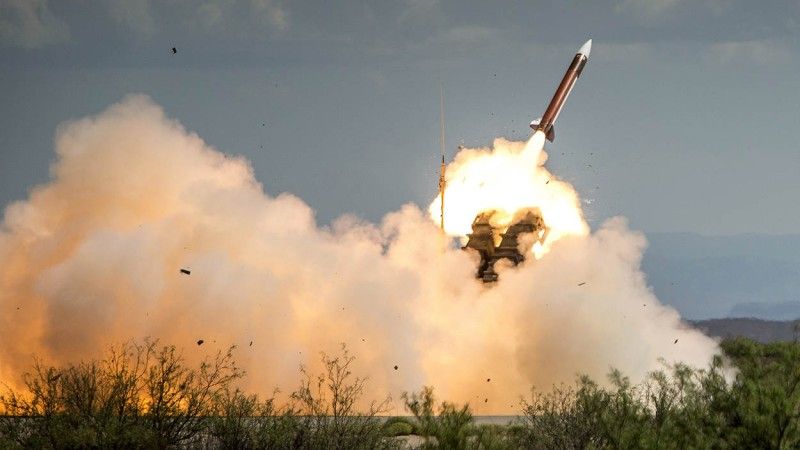
Photo. sergeant-majoor Gerben van Es/Siły zbrojne Holandii
The Netherlands has been one of Ukraine’s most active military supporters, but it is now admitting that it has reached the limit of direct equipment support. This is an important signal for the whole of Europe. After four years of war, NATO countries will increasingly move away from sending weapons from their own warehouses and towards financing purchases, production and loans.
Dutch defence minister Dilan Yeşilgöz-Zegerius told Bloomberg on the sidelines of the NATO summit that the Netherlands has no more scope to offer further direct military support to Ukraine. She also said she would call on other countries to increase their help for Kyiv. This is not a minor statement. The Netherlands has been among the countries that supported Ukraine most consistently, including in areas directly needed on the battlefield.
According to figures presented by the Dutch authorities, since the beginning of Russia’s full-scale invasion Amsterdam has allocated around €9.1 billion in military assistance for Ukraine. A further €11.6 billion has been planned for measures supporting Kyiv. The Netherlands has also pledged €1 billion under PURL, the NATO mechanism that allows allies to finance the purchase of American weapons for Ukraine. This shows that Dutch support is not ending, but its form is changing.
The scale of what the Netherlands has already provided explains why The Hague is now speaking about limits. One of the most important elements of Dutch assistance has been the transfer of F-16 fighter aircraft. The Netherlands also played a key role in preparing Ukrainian pilots and technicians to operate Western aircraft, strengthening Ukraine’s air force at a time when Russian air and missile pressure remains constant. Amsterdam has also provided elements of Patriot air-defence systems and supported Ukraine in obtaining ammunition for those systems. Against Russian missile and drone attacks, this has been one of the most strategic forms of assistance.
This shows a wider change in the model of support. At the beginning of the war, many countries sent Ukraine equipment they had in storage: ammunition, vehicles, artillery systems, air defence, spare parts and post-Soviet weapons. That stage is largely coming to an end. Stocks have been emptied or reduced to a level below which governments are no longer willing to go, because they also have to rebuild their own defence capabilities.
This does not apply only to the Netherlands. Finland and Sweden have also transferred a great deal from their own stocks and increasingly have limited room for further equipment donations. The same applies to the Baltic states and Poland. These countries were among the first to support Ukraine, often quickly and without excessive political calculation, but after four years of war the question is no longer simply what can be taken from national warehouses and sent to the front.
That is why the centre of gravity is shifting towards money, production, joint procurement, EU mechanisms and political support. Loans from the European Union, programmes for financing weapons purchases, contracts with industry and arrangements under which Ukraine formally buys equipment with partner support will become more important. This is less spectacular than handing over ready tanks or launchers, but in the long term it may prove more important.
At the same time, NATO countries are rebuilding their own armed forces. The Netherlands is expected to announce more than €3 billion in new defence projects, including air-defence cooperation with Belgium and maritime projects with the United Kingdom. This does not mean abandoning Ukraine. It means a change in priorities. European capitals are beginning to understand that they cannot only transfer equipment to Kyiv if they also want to maintain their own ability to deter Russia.
The problem is that the war will continue to require enormous amounts of money. Military and financial support for Ukraine will become more politically difficult, because governments will have to explain to their own societies why they are simultaneously increasing spending on their own armed forces and financing weapons for Kyiv. Loans may look better in budgetary terms than direct grants, but the question remains how Ukraine would realistically repay all of them. In practice, some of these instruments may become political loans that are unlikely ever to be fully repaid.
This is what the cost of confronting Russia looks like. Ukraine is fighting, but Western states are paying to keep its military capability alive because the alternative would be far more expensive. If Kyiv were weakened, Russian pressure would move further west. Europe will therefore have to move from emergency assistance to a permanent system of financing war, producing ammunition, drones and air defence, and rebuilding its own stocks. The Dutch statement does not mean the end of support for Ukraine. It marks the end of the easiest stage of that support.


