












- WIADOMOŚCI
Sarajevo under siege thirty years later. What's the truth behind the "human safari"?

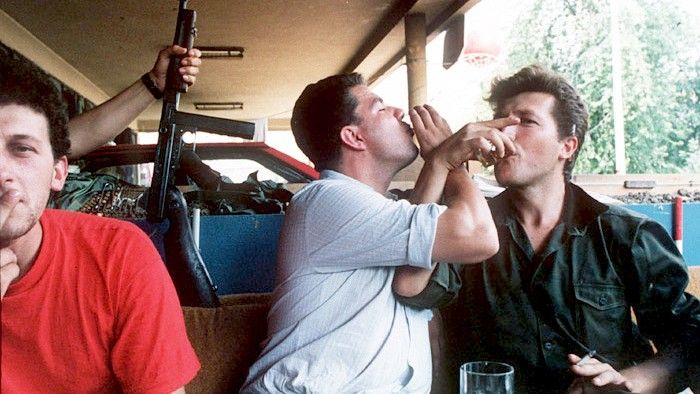
Photo. Wikimedia Commons
Wealthy foreigners traveled to besieged Sarajevo to shoot civilians as entertainment, as announced by the media. There were people who carried weapons more suitable for hunting boars in the Black Forest than for urban combat in the Balkans, recalls John Jordan, an American ex-Marine who came to Bosnia in the 1990s as a volunteer.
Imagine the horror, blood, and incomprehensible evil of the genocide, of tortures that become a daily happening. The 1990s Balkan wars resembled a sudden fire that no forces could quell. Brothers against brothers, but also against sisters, mothers, and children. And now imagine wealthy people, the upper class, the soil of this earth, traveling in the middle of hell not to help but to take part in murders. For fun.
Voluntary homicide aggravated by cruelty
„Human safari,” the media named it. Last week the Public Prosecutor’s Office in Milan opened an investigation following the complaint by an Italian writer, Ezio Gavezzeni, against unknown individuals for voluntary homicide aggravated by cruelty and abject motives. To be clear, the individuals were not only rich Italians; they came from many other countries, such as the US, Canada, Russia, Germany, and most probably others.
But these wealthy and bloodthirsty people, according to the media, started their travel in the Italian city of Trieste, near the border of today’s Slovenia. They would catch a flight from there to get to Sarajevo and had to pay the Serb militia for a killing consent. They spent between £70,000 and £88,000 to take part in the murders.
The case of „human safari” was being documented for years by an Italian writer, Ezio Gavazzeni. He gathered the evidence on the allegations, although the first time he heard about the sniper tourists was already in the 1990s. And then, in 2022, a Slovenian director, Miran Zupanič, made a documentary film, „Sarajevo Safari” which led to the cooperation between two artists and archivists of the terror. After learning new facts and gathering evidence, Gavazzeni turned to the justice system.
New butchers of the Balkans
Between 1992 and 1996, during the Bosnian Serb siege of Sarajevo, 11,541 people were killed. Around half of them were civilians. The ones who survived were left with deep scars, both physical and mental ones. Nevertheless, also the ones who came there to help were astonished by the visible, touchable, and unfortunately entirely new level of human cruelty.
One of them was an American ex-marine who went to Sarajevo voluntarily as a firefighter, John Jordan. He was prepared. He and his group brought military-grade weapons into Bosnia as defense measures against snipers. Later Jordan testified in the trial of wartime Bosnian Serb army commander Ratko Mladić. Mladić was sentenced to life in prison; he was one of the „butchers of the Balkans”.
During Jordan’s testimony in The Hague in 2007 Jordan mentioned „shooting tourists” who would pay Serbs to be able to murder civilians for fun in the besieged city.
”I have seen on more than one occasion personnel who did not appear to me to be locals by their clothing, by the weapons they carried, by the way they were treated, that is, being instructed by locals,” Jordan said. As he added, the „tourist shooters” wore a combination of „civilian-military” clothing and carried weapons that were more suitable for „hunting boars in the Black Forest than for urban combat in the Balkans.” Additionally, they seemed „completely unfamiliar” with the city architecture and were assisted by the people who knew the area.
The case comes back, thirty years later, as another ghost from Bosnia. And as any connoisseur of horror movies would acknowledge, we have to find out the terrifying truth and judge the guilty, although there is probably no chance to find them all. But the pain of the innocents has to be addressed, however imperfect the contemporary response may be.


