












- WIADOMOŚCI
Poland’s Drone Revolution Gains Momentum with New PLN 200 Million in Investments

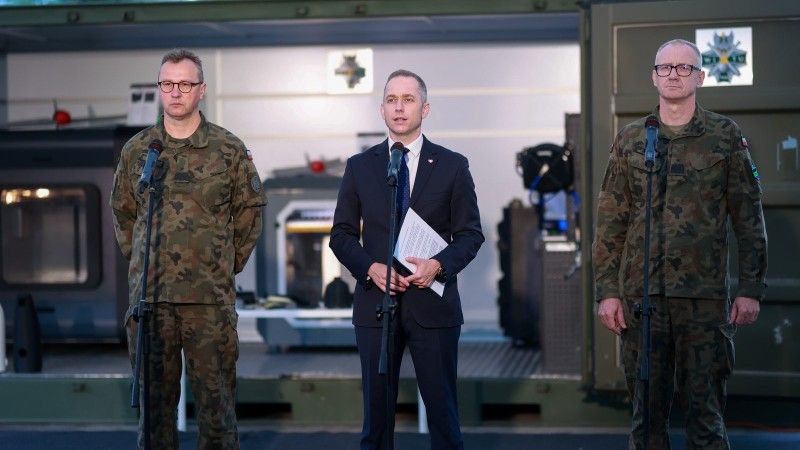
Drawing key lessons from the ongoing war in Ukraine, the Secretary of State at the Ministry of National Defence, Cezary Tomczyk, has announced that the Polish Armed Forces are entering a new era described as a „Drone Revolution.” This year alone, PLN 200 million is expected to be allocated for the purchase of drones and related training systems.
In addition, the Vice-Minister revealed plans to establish a Drone Center, which will be responsible for the testing, development, and implementation of unmanned systems across all domains: land, air, and sea.
Profound Redefinition of the Modern Battlefield
If there is one technological innovation for which the Russo-Ukrainian war will be particularly remembered, it is the unmanned aerial vehicle (UAV). While drones were used in previous conflicts, this war has elevated their battlefield role. UAVs have become indispensable for surveillance, reconnaissance, precision strikes, and even logistical support.
Driving this transformation has been a combination of Ukrainian military ingenuity, engineering expertise, and entrepreneurial innovation. Since the outset of the conflict, Ukrainian forces and private actors have continuously adapted, modified, and improved their drone systems in response to real-battlefield experience. In the process, they have miniaturized, democratized, and scaled UAVs, leveraging their cost-effectiveness and versatility to achieve unprecedented saturation across the frontline.
The consequences are far-reaching. As many experts have observed, drones are fundamentally redefining modern warfare. Their ubiquity has forced armed forces to disperse into smaller units, avoid concentration, and keep heavy vehicles away from frontline zones. At the same time, it has triggered an urgent race to develop and deploy effective counter-UAS capabilities, ranging from kinetic systems to cyber and electronic measures.
More Than Drones: Reforming Law, Industry, and Technology
Poland’s growing investment in drone capabilities is not merely a matter of procurement. It reflects a broader recognition that autonomous and unmanned systems are reshaping the future of warfare, and may prove decisive in the conflicts to come.
The war in Ukraine has made one thing clear: flexibility and autonomy for innovators are essential. The ability to rapidly iterate, adapt, and field new technologies in response to emerging and evolving trends is a prerequisite for maintaining any form of technological edge on the battlefield. In drone warfare, success ultimately hinges on having a faster innovation cycle than your adversary.
In this light, reform efforts must go beyond mere hardware acquisition. Poland’s institutional, legal, and industrial environments must evolve in parallel. In this context, the „Special Defence Investment Act” (Specustawa o inwestycjach obronnych), just passed by Parliament and currently awaiting the President’s signature, will represent a significant breakthrough. The legislation seeks to streamline and accelerate defense acquisitions, particularly by exempting drone-related purchases from the lengthy procedures outlined in the public procurement law.
Building a True Drone Ecosystem: From Laboratories to Mass Production and Social Resilience
Drone laboratories are now being established across Polish military units, from special forces to the territorial defense forces. Their mission is to design, assemble, modify, and service drones, increasingly through advanced technologies such as 3D printing.
Yet hardware alone is not enough. One of the most critical lessons from Ukraine is the importance of industrial mass-scale production for unceasing replenishment and maintaining „drone-supremacy” in the air. Ukraine currently produces and loses tens of thousands of drones each month, and its annual production is expected to reach 4 million units in 2025.
This underscores the urgency to develop pre-designated facilities and production lines capable of scaling rapidly in the event of conflict. This is why investing in dual-use drones, that can serve civilian purposes in peacetime and be swiftly converted for military use in wartime, should become a priority.
The government should also strongly support issuing drone licenses, training programs, and civil associations so that a growing number of citizens are equipped with the skills to operate, repair, and modify them. In the era of mass drone warfare, broad-based societal drone literacy may emerge as one of the key pillars of national resilience.
Author: Kacper Kremiec


