European Interest In IBCS. Northrop Grumman VP: Opportunities for Polish Industry

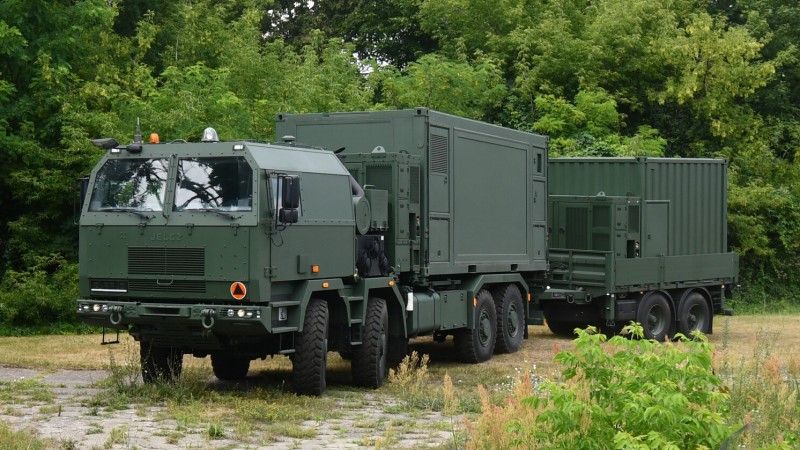
Photo. WZŁ1
I absolutely do see increased interest around the world, but particularly here in Europe. There are many countries that we’re in discussions with, that are in various stages of interest or requests made of the U.S. government to acquire the IBCS system. But I’ll go back to a point that I made early on is that Poland is viewed as a leader, a global leader, particularly around Europe.
Jakub Palowski: Poland is centerpiece of the NATO defense in general here in Central Eastern Europe. Poland has purchased IBCS seven years ago and a year ago there was a contract for the second stage of the system. So what are the steps that you are going to take in the near future regarding the Polish program of IBCS?
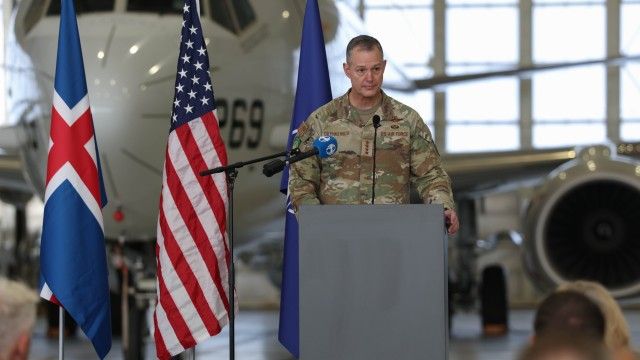
Kenneth Todorov, Vice President and General Manager for C2 and Weapons integration, Northrop Grumman Defense Systems: First of all, Jakub, thank you for the opportunity to discuss not only IBCS but the broader security cooperation between our company and the Polish military and the Polish government. It’s a privilege to be back in Warsaw. I was here several years ago and then moved away to a company that moved me to a different job.
But about six months ago, I came back to this portfolio. My background, as perhaps you know, is a former retired US Air Force general officer. I worked at the Missile Defense Agency as its deputy director. So, I have long been passionate about the work and the importance of integrated air and missile defense. And so I want to first commend Poland for being a global leader, a global thinker and foresight, and having that vision some seven years ago now, to understand the value that a system like IBCS will provide to Poland and its greater defense, particularly in the air and missile defense domain.
As you well know, threat is a serious challenge and is getting more complex and more serious all the time. At its core IBCS links together sensors and shooters and effectors to provide the best solution to a possible response to threats coming from the air. So specific to your question, you mentioned the Polish, the programs that we’re proud to partner with Poland on, WISŁA and also NAREW. Those programs are going, I think, very, very well. We’re proud to partner with the companies of PGZ and Polish industry as well. And we have set up now a separate Polish company under the direction of Quinn Canole, our managing director here in Warsaw, who is overseeing that work and is here full time with his family and now lives in this beautiful city. So I think I would characterize to your question that the work is going very well.
Poland continues to be a global leader in integrated air and missile defense, particularly C2. Poland was really the first around the world to have the vision and see the need for a system to get away from stovepipe systems in the battlespace, be able to link them together and really create a much more understandable air picture and also facilitate a response that would deal with the threat appropriately.
While in the first phase of Wisla, the system constituted mainly of Patriot batteries with IBCS and some Polish elements including C2, in the second phase of Wisła and Narew there is integration of various Polish sensors and European effectors, basically produced in Poland but made from technology from UK and Italy. We talked about it during Defence24 Days. It is a complex endeavour, integrating systems from three, four countries. So why IBCS is positioned to take up the challenge?
I think the beauty of a system like IBCS is that it allows a partner nation like Poland to make their own decisions on which effectors, which sensors are tied into the system. As an industry partner, it is not our decision to choose which systems are integrated or not but at the request of our in-country partners in Poland, we will facilitate the work to incorporate systems, as you mentioned, into the architecture.
The good news is that work is, I say, relatively easy. The engineers have proven time again with many systems, increasing numbers of systems from around the globe. In other nations, what I see is eventually a network if you will of systems from various countries around NATO around the globe, where it will truly fulfill the visionof any sensor any effector to deal with the challenge. But the decision whether it is CAMM missile or some other system is really left to the host say the host, in this case Poland.

I see so. Poland ordered IBCS as we said seven years ago. Now the system is in full rate production since a few years. Do you see an increase of interest of European NATO nations in the system, which would then basically follow the path that Poland has created?
I absolutely do see increased interest around the world, but particularly here in Europe. There are many countries that we’re in discussions with, that are in various stages of interest or requests made of the U.S. government to acquire the IBCS system. But I’ll go back to a point that I made early on is that Poland is viewed as a leader, a global leader, particularly around Europe.
Countries very near to Poland, we were just in one a day ago, continuously ask us about the experience in Poland, how it’s going, how are the Poles able to integrate the systems that they’re integrating. And they recognize in order to be relevant in a future fight, they not only have to integrate with a U.S. system, with the U.S. Army in this case, but also in partner nations like Poland, to be able to integrate across nations.
And so I think it’s a very compelling and powerful argument and one that’s needed to deal with the threat that increases on.
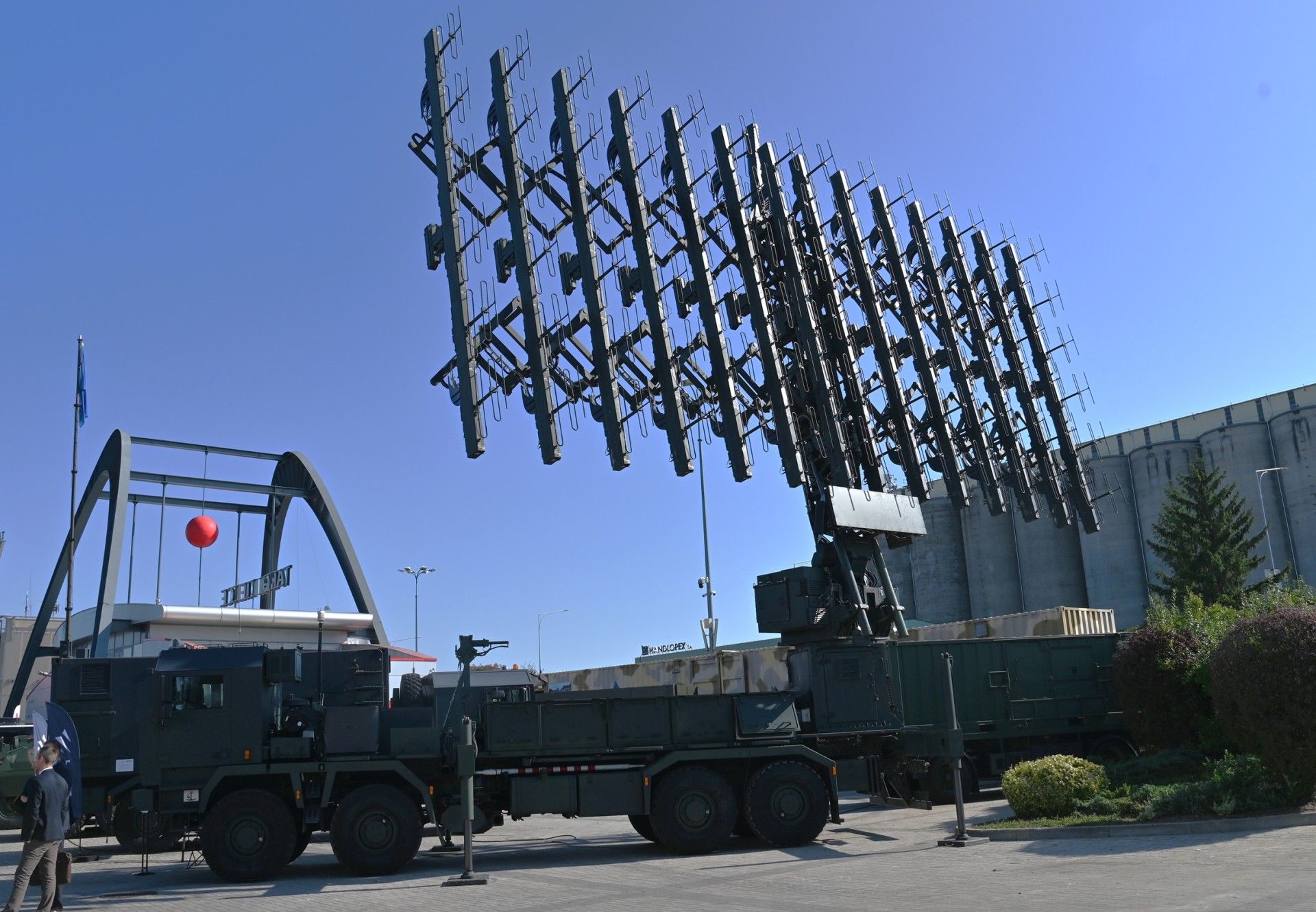
Photo. M.Dura/Defence24.com
To some extent the Polish industry was involved in the first phase of Wisla and also now much more in Narew system. Now that we see some more increased interest in European NATO countries, do you see any opportunity for the Polish industry to participate in deliveries for European NATO countries beyond the Polish program, thanks to the certain capacity that was established and already exists here?
The short answer is yes, absolutely. Once again to my leadership comment, I think there’s an opportunity for Polish industry companies to not only link together with IBCS, U.S. to Poland construct, but as other nations acquire IBCS, those nations will be interested in integrating Polish technology, Polish systems into their architecture where it makes sense.
So perhaps let me move now to more global picture, because as you said that the threat is increasing. We also see it in Central and Eastern Europe, though I know it is not the only region facing IAMD challenges. The Russian strikes from today or from a month ago are not the same they did in 2022, they have improved. So what is the way you want to use the leverage, the multi-domain C2 to stay ahead of the threat?
It’s an excellent question and you’re absolutely right. We’re seeing tactics, techniques and procedures of our adversaries improve, increase at a very rapid pace, more rapid all the time. In a conflict that’s very near to Poland, you can imagine that seeing things that we haven’t seen even a few months ago.
And so a system like IBCS can adapt to the future. When we see those new techniques, those new threats, being able to incorporate those new capabilities into an architecture, deal with those new capabilities on the adversary side, is vitally important.
And in fact, it’s away from a locked stovepipe system with an effector, a sensor, and a C2 node that’s basically in a bubble amongst itself. Being able to cross those lines and incorporate new technologies and new capabilities is absolutely vital to deal with the threats that are increasing all the time.
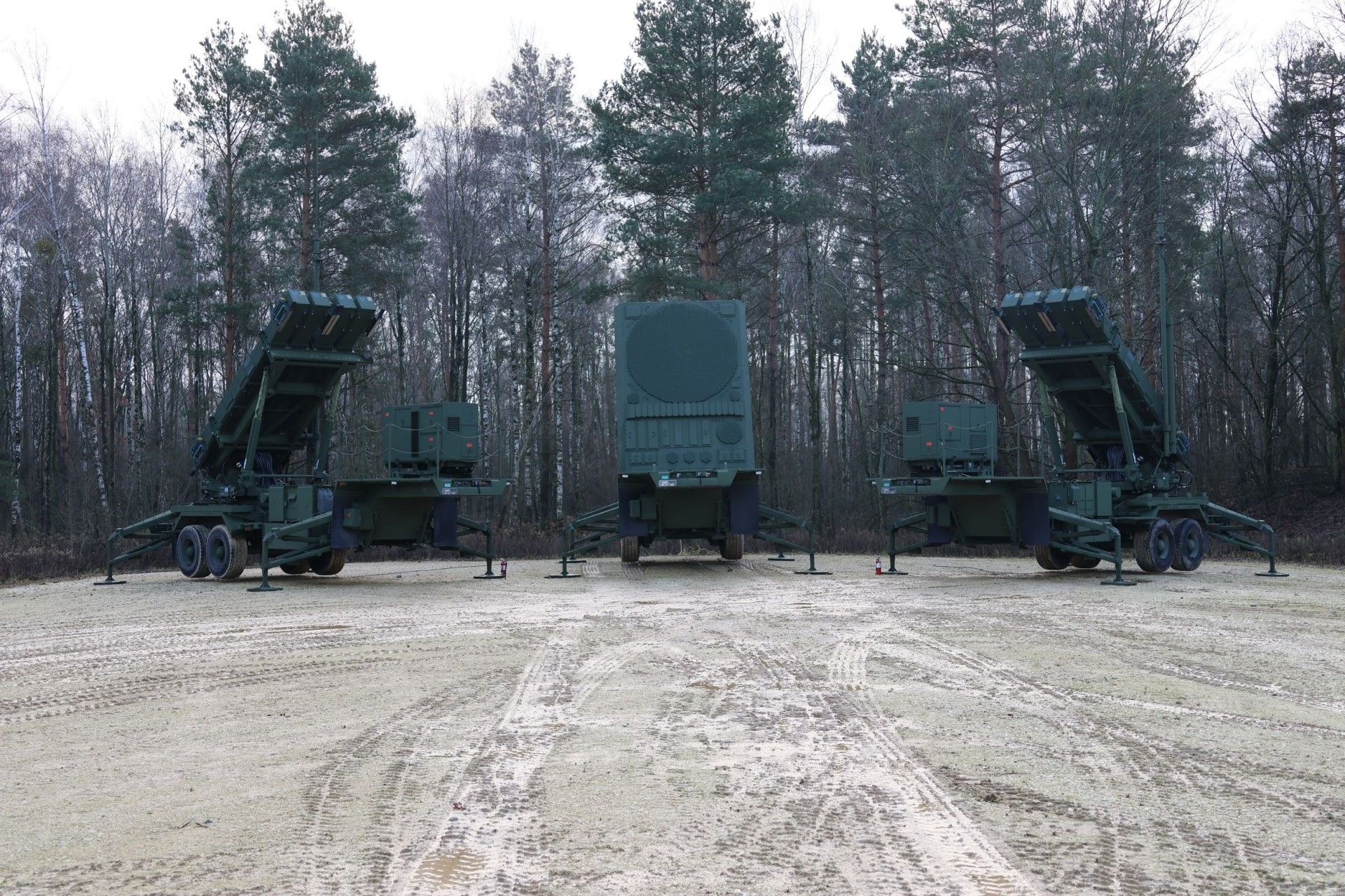
Photo. Armament Agency
So, also in the U.S., there are many discussions on the air defense, both on the Army level and also on the national level, which you have been involved. So, where would you see the IBCS, both in the Army, perhaps as a contribution to multi-domain operation, but also on the national level in the U.S.?
Well, some of those decisions I would defer to U.S. policymakers and lawmakers. However, I can tell you that the United States Army, for which IBCS is the program of record, is now fielding early instantiations of IBCS to places like Guam, which is a very strategic location, as you know, for the United States and the Pacific.
They’re fielding IBCS early to places like the Republic of Korea for the United States Army. There’s interest in deploying it in Japan as well in the coming years, as well as places in the Middle East. So, I think the U.S. Army, our primary U.S. customer, is recognizing the importance and the effectiveness of the system and choosing to now put it out there sooner than maybe they anticipated because they too see that threat evolving as more rapidly as we’ve already discussed.
I assume that for them IBCS is part of the answer to the emerging threat. IBCS is the centerpiece, but it is not the only project Northrop Grumman is doing in the area of multi-domain C2 and Integrated Air and Missile Defence in particular. So what are the initiatives of the company for the air defence which of those could be interesting particularly in the European context as well as the NATO?
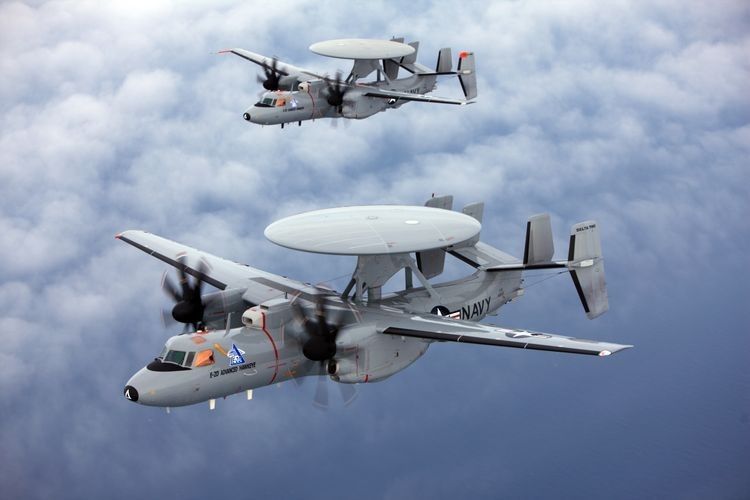
I’m privileged to be an executive in our defense systems segment of the business. But as you know, in our company, 100,000 strong, there are three other segments as well. For example, I believe you said you were on a panel during the Defence24 Days with VP Janice Zilch. She represents our aeronautics sector. So technologies that involve the E2D, for instance, is something that I know is of interest to the United States and Poland.
We build, 45% of the content on F-35, which, as you know, is the platform that your nation acquires very soon. The sensor suite and the communication suite, be it the EODAS or be it the MADL, are capabilities that I think apply to a multi-domain C2 construct. Our mission systems sector, which is the sector I came from in my last role, has many technologies from a sensing, from a communication standpoint, that could apply.
And even our space systems sector is in discussions with other Polish industry and Polish representatives to talk about technologies that go into outer space for communication links. And so one of the really reasons I’m privileged to work at a company like Northrop Grumman is that we can bring capabilities from all domains from the depths of the ocean to the vastness of space together to address the multi-domain C2 challenge. And the fact that Poland has already acquired IBCS puts Poland in the driver’s seat to take advantage of a multi-domain architecture that will certainly come in the coming years.
Does that include increasing the production capacity?
We just opened a new facility in Huntsville called EPIC, and that stands for the Enhanced Production Integration Center, EPIC. We think it’s pretty epic. We’ve more than doubled our footprint for production on the IBCS program, not only for the U.S. domestic customer, but for our international partners as well. We have a state-of-the-art facility, brand new. We’re very proud of what EPIC will bring in terms of the growing demand around the world for IBCS.
But I want to emphasize that it is not just the U.S. system, it is a Polish system as well. So we co-produce, working with those companies at PGZ to make sure that Polish content, Polish industry benefits from the production as well.
So what is your vision of the Allied integrated Air and Missile Defence? It is a multinational IAMD, that’s the specifics of the NATO here in Europe, so what could be role of IBCS here?
Well, IBCS certainly, our view and I think the view of many of our customers, our primary customer and nations like Poland, can be the centerpiece for unlocking the multi-domain C2 equation. But it doesn’t necessarily mean that if NATO or the Europeans develop European SkyShield initiative, for example, or if other companies from around the continent bring their own C2 systems, it doesn’t mean that one cancels out the other.
IBCS can be sort of the centerpiece or the key that connects and unlocks the other C2 capabilities, but I don’t believe is intended to replace anything, but rather connect.
See also 
I see. Perhaps, I’m not sure if this is a good analogy, but in the U.S., there are army systems and there are Navy systems like Aegis, and they need to come together. So at Guam, which you said, IBCS will not replace Aegis, they will work together.
Neither of those system is intended to replace one another, they are to support each other. And in fact, when I was in government, working at the Joint Integrated Air Missile Defense Organization and also the Missile Defense Agency, we worked very hard to connect, via a bridge, the IBCS capability with the CEC capability, the Aegis capability that you referred to.
So again, in that multi-domain construct, we don’t see IBCS as replacing what the Aegis system brings, nor do we see the Aegis system able to replicate what IBCS can, but rather they work together in an integrated architecture across multi-domains, provide really the picture that’s needed for the warfighter to deal with that complex threat.
So I think we are slowly approaching to an end. So how would you summarize the role of Poland in the integrated air and missile defense, something we started from?
I would like to emphasize this point – Poland is a global leader in their vision for integrated air missile defense. Everywhere I travel around the world, and I literally get to go to a lot of countries in all six of the seven continents, people ask about Poland. They want to know about Poland’s vision, how Poland is doing, how they’ve already declared IOC how they’ve already incorporated a system like IBCS. So the role of Poland in my view is that of a global leader and to be admired.
Thank you for the conversation.