












- WIADOMOŚCI
High stakes in the Republic of Moldova

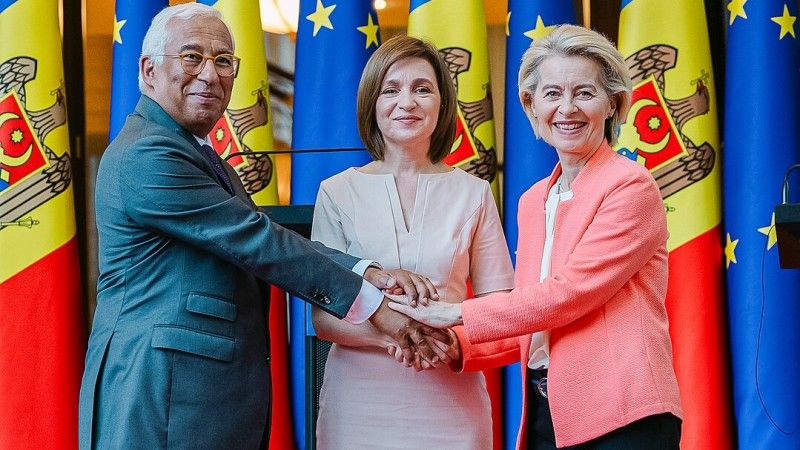
The Republic of Moldova, a mid-sized country situated between Ukraine and Romania, has long been overshadowed by its geography and history. Well-known for its wines and culinary traditions, the country on 28 September will hold parliamentary elections whose outcome is likely to reverberate beyond its borders. The vote will not only determine Moldova’s political trajectory but may also affect the broader balance in Central Eastern Europe and the course of Russia’s ongoing war of aggression against Ukraine.
The contest pits the pro-Western ruling camp led by president Maia Sandu against a pro-Russian bloc centered around former president Igor Dodon. Reports of Russian attempts to sway the elections—through disinformation, financial support, and voter manipulation—surface almost daily.
Historical legacies and geopolitical tensions
Moldova’s historical trajectory has been shaped by great-power politics. Once part of the Principality of Moldavia, the territory was annexed by the Russian Empire in the early 19th century, subjected to policies of Russification, and later absorbed into the Soviet Union after World War II. Following the dissolution of the USSR in 1991, Moldova declared independence. Yet its sovereignty was immediately challenged by the breakaway region of Transnistria, where Russian „peacekeepers” remain stationed to this day. Although politically aligned with Moscow, Transnistria’s economy is now more dependent on European markets than on Russia.
From the outset, Republic of Moldova has been torn between pro-European and pro-Russian sentiments. Successive elections, presidential and parliamentary alike, have functioned as referenda on the country’s geopolitical orientation. In 2024, pro-European forces prevailed in both the presidential race and a referendum on EU accession, though by narrow margins.

Political actors and electoral dynamics
The current ruling party, the Party of Action and Solidarity (PAS), led by President Sandu and Prime Minister Dorin Recean, came to power in 2021 with a parliamentary majority. However, after several years in office, its popularity has eroded due to economic stagnation and voter fatigue, even as incremental progress has been made on the European integration agenda. Crucially, for many Moldovans the most tangible benefit of EU ties remains visa-free travel and access to labor markets in member states, a lifeline embraced not only by pro-Western supporters but also by pro-Russian sympathizers and even residents of Transnistria.
According to polls—often unreliable in Moldova—PAS currently commands around 35–40 percent support, insufficient for single-party rule. The Patriotic Electoral Bloc (BEP), an umbrella coalition of pro-Russian groups led by Igor Dodon, remains a serious contender. Moscow’s support for BEP is multifaceted: financing, disinformation campaigns, and efforts to discredit Sandu personally through fake news and fabricated stories.
A third force, the Alternativa bloc, led by former Prosecutor General Alexandr Stoianoglo, complicates the picture. While formally pro-European, its credibility as a reliable partner for Western institutions might be questionable, given Stoianoglo’s prior alignment with Dodon. Alternativa draws votes away from PAS, creating uncertainty about coalition scenarios.
Possible scenarios
The post-election landscape could produce several outcomes:
-A renewed PAS majority (unlikely under current polling trends) -A PAS–Alternativa coalition, ensuring a nominally pro-European government but with internal strains; -A BEP–Alternativa alliance; -Widespread electoral fraud or destabilization efforts, which could serve Russian interests even without a BEP victory.
Regional implications
The stakes are considerable. A pro-Russian government in Chişinău or prolonged instability would jeopardize Moldova’s European path, undermine the aspirations of its citizens, and complicate Ukraine’s already difficult situation as it endures Russia’s protracted war of aggression. For the European Commission and member states which openly supported Maia Sandu and PAS, her loss in the elections might also be troublesome. Still, even the victory of pro-Russian option would not mean that the country turns into second Belarus – the pro-Western sentiment remains too strong among the population.


