












- WIADOMOŚCI
Dispute over SAFE in Poland. What is the situation like in other countries?

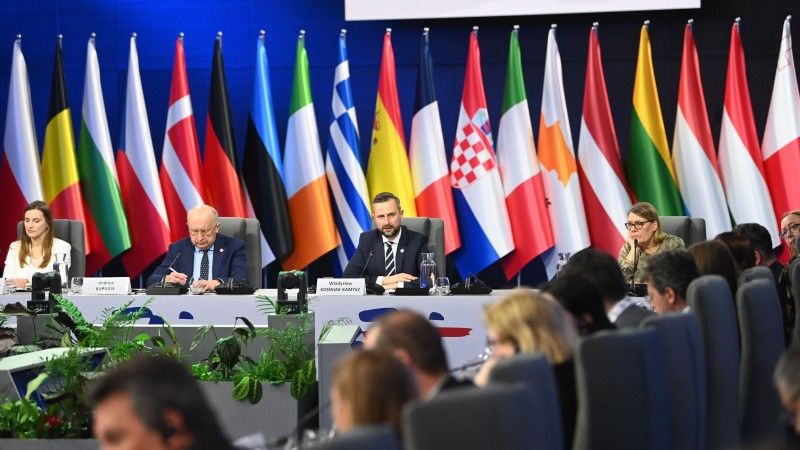
Photo. Polish MoD via X
The veto by Karol Nawrocki of legislation concerning the SAFE programme has triggered a political storm in Poland. Are other countries participating in the EU initiative facing similar difficulties?
Deputy Prime Minister and Minister of National Defence Władysław Kosiniak-Kamysz co-chaired the EU Foreign Affairs Council (Defence) in its informal format together with the EU’s High Representative for Foreign Affairs and Security Policy. Image: Polish MoD via X
Poland is potentially the largest borrower within the Security Action for Europe (SAFE) programme. Warsaw could receive EUR 43.7 billion in loans to finance the acquisition of European-made military equipment. Other countries expected to receive the largest loans (although significantly smaller than Poland’s) include Romania (EUR 16.7 billion), France (EUR 16.2 billion), Hungary (EUR 16.2 billion) and Italy (EUR 14.9 billion). Have similar political disputes over SAFE emerged in those countries as well?
The underlying cause
A review of media outlets in countries expected to benefit most from SAFE reveals little coverage of the EU programme. When references do appear, they rarely attract major media attention or spark wider public debate. The situation therefore appears completely different from that in Poland, where the political dispute has recently escalated to an unusually intense level.
Several factors may explain this difference. It is difficult to attribute it simply to the level of political conflict, as Poland is certainly not unique in that respect, as equally strong political polarisation can be observed in many European states. The main driver of the dispute appears instead to stem from constitutional arrangements, the complexity of the political system and legal as well as budgetary considerations.
It is worth noting that in France, Italy and Hungary there is no need to adopt special legislation to accept funding from such an instrument. In Italy, for example, SAFE is treated as simply another source of sovereign debt financing. Romania is a certain exception, although in that case the law adopted in January merely confirmed an earlier government decree concerning the loan, effectively closing any potential political dispute over SAFE. Indeed, Romania may be seen as particularly advanced in planning how EU funding could be used. In recent days Volodymyr Zelensky visited the country and, together with Romania’s president Nicușor Dan, discussed the creation of a joint venture focused on the production of military drones that could utilise the funds in question.

Difficulties in Hungary and Bulgaria
The issues outlined above do not mean that the implementation of the EU instrument is entirely problem-free elsewhere. In Hungary, for instance, potential difficulties related to SAFE stem less from domestic political disputes and more from the relationship between the government of Viktor Orbán and the European Commission. Budapest’s blocking of EU assistance for Ukraine (worth around EUR 90 billion) could complicate efforts to secure financing from the EU loan instrument. Bulgaria, meanwhile, faces a different type of problem. The country is currently experiencing a political crisis, and if it continues, a new government in Sofia may struggle to complete the formal procedures required to obtain loans totalling more than EUR 3 billion.


