












- WIADOMOŚCI
- ANALIZA
This narrow strip of land between Poland and Lithuania may prove decisive for the future of Central and Eastern Europe

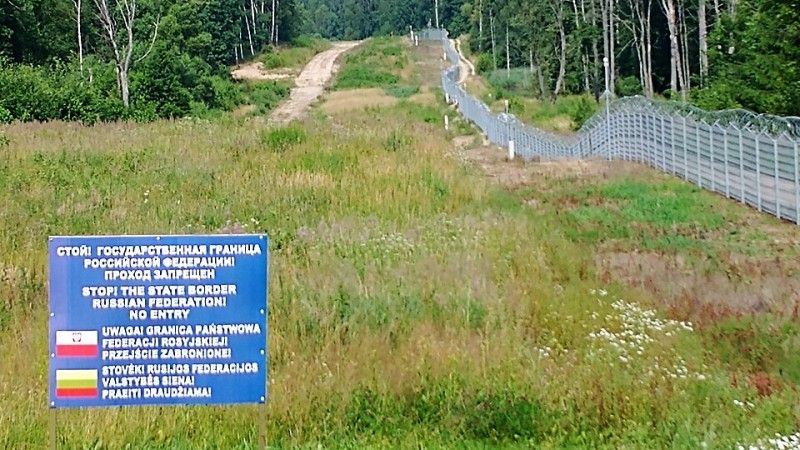
Photo. By MOs810 - Own work, CC BY-SA 4.0 / Wikimedia Commons
The Suwałki Gap would likely become a key target in any Russian attempt to seize control of the Baltic states and exert pressure on Poland, making control of this geographic bottleneck a strategic prerequisite for the region’s security.
Geopolitical shifts in Central and Eastern Europe are driving a clear realignment of strategic orientation among regional states. The long-standing divide between Westward and Eastward foreign policy choices, which has shaped many countries’ security strategies, is eroding under the pressure of Russia’s ongoing war in Ukraine. As a result, frontline states such as Ukraine, the Baltic states and Poland are moving toward a model of autonomous yet mutually reinforcing regional cooperation.
This dynamic signals the emergence of a new geopolitical paradigm, where countries in the region increasingly act as primary architects of their own security and political futures, rather than relying solely on external alliances. Among the most strategically and operationally sensitive areas of shared concern among these countries is the security of the Suwałki Gap, whose protection may prove decisive for the future security and long-term stability of Central and Eastern Europe.
The importance and costly consequences of losing the Suwałki Gap
In the evolving geopolitical landscape, the Suwałki Gap plays a crucial role. From the perspective of the Baltic states, which have become a primary focus of Russian ambitions, it is a strategic corridor that could determine the fate of NATO’s entire eastern flank. The events of 2014, followed by the escalation after 2022, have further underscored the scale of the threat. Due to their geographic position, these countries now find themselves in a high-risk zone in the event of any further escalation with Russia.
The Suwałki Gap is a narrow strip of land, just a few kilometres wide, linking Poland and Lithuania. Despite its small size, it carries major strategic importance as the only direct land corridor connecting the Baltic states to the rest of NATO.
In the event of potential Russian aggression, any of the Baltic countries could be cut off from allied territory, leaving them isolated and far more exposed to military pressure from Moscow. A scenario in which Russia could close the Suwałki Gap is among the most concerning for the entire Alliance, as blocking it would severely limit the ability of NATO allies to rapidly reinforce the Baltic states. In this sense, the Suwałki Gap is not only a geographic chokepoint but also a central political and security node for NATO.
The Suwałki Gap for Russia: linking Kaliningrad and destabilising the region
From Russia’s perspective, securing control over this area would represent a significant strategic gain, enabling further destabilisation of the region. Geographically, the Suwałki Gap sits at the centre of the land bridge connecting Russia with the Kaliningrad Oblast, an area marked by a strong Russian military presence.
Kaliningrad, a Russian exclave in Europe, serves as one of Moscow’s key forward operating hubs in the region. If the Suwałki Gap were to be closed, Russia would gain even greater leverage over the borders of the Baltic states and Poland. Moreover, Kaliningrad itself functions as a critical asset for Russian force projection and regional military posture. In combination, this concentration of military capabilities and control over the Suwałki corridor could pose a serious threat to the stability of the broader Central and Eastern European region.

Securing the Suwałki Gap: the Baltic States, Poland, and NATO
For the Baltic states, Poland, and NATO as a whole, securing the Suwałki Gap has therefore become a core element of regional defence strategy. In response to growing Russian threats, NATO members have invested in strengthening their military presence in the area.
This has included expanding military infrastructure in Poland and the Baltic states, as well as increasing the scale of joint exercises and defensive operations designed to deter potential aggression. The growth of NATO bases in the region, together with the development of missile defence systems, aims to ensure a rapid response to any emerging threat from Russia. Another key element is closer cooperation with allied states that possess the necessary military capabilities to effectively defend NATO’s eastern borders.
It is also important to note that the Suwałki Gap is not only a geostrategic asset, but also a political and identity-related issue in the region’s security framework. For the Baltic states and Poland, it is not merely about ensuring access to military reinforcement in a crisis, but also about their sovereignty, independence, and regional stability. For this reason, the security of the Suwałki Gap is central not only to maintaining the balance of power in Central and Eastern Europe, but also to the long-term preservation of peace in the whole region.


