












- WIADOMOŚCI
- KOMENTARZ
- ANALIZA
Trump vs. Iran: “China will not be a lifeline” [Opinion]
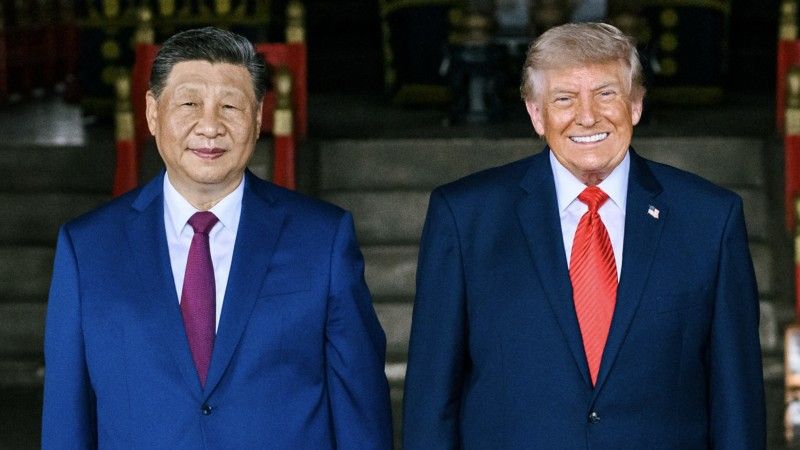
Photo. Daniel Torok / The White House / flickr
Donald Trump’s visit to China produced no breakthrough on Iran, which, in fact, was to be expected. Meanwhile, the exchange of documents setting out negotiating conditions indicates that neither side is approaching the talks realistically. The only clear position is Israel’s, which continues to seek maximum escalation of the conflict.
Donald Trump arrived in China with a broad offer of economic cooperation, hoping that in return Xi Jinping would help him on the Iran issue. Although Trump later denied that he had expected anything from China in this regard, this was merely putting a brave face on failure after he had achieved nothing on the matter. Whether the visit brought the United States any benefits in other areas is also doubtful. The problem is that the expectation that a visit to China would produce some kind of breakthrough in the war with Iran was extremely naive. It rested on the assumption that Iran is susceptible to pressure from China, and that China would be willing and able to force it into concessions. Yet such concessions would amount to the Islamic Republic’s capitulation without receiving anything in return — and at a time when it sees itself as the side that is winning.
#READ[ articles: 1066830 | showThumbnails: true ]
A summary of America’s unmet expectations may be found in the fact that, just moments after Trump’s visit to China ended, China’s ambassador to the United Nations criticized a draft UN Security Council resolution submitted by the United States and Bahrain concerning shipping in the Strait of Hormuz. Fu Cong stated that neither the content nor the timing of the resolution served any good purpose. It is worth adding that during talks with Trump, Xi Jinping stressed that China supports keeping the strait open to shipping. As some commentators note, however, openness does not preclude fees, and in this respect China appears to be flexible. This means that no anti-Iranian resolution will be adopted by the Security Council — especially not one that could serve as a basis for armed intervention under Chapter VII of the UN Charter. The same applies to China’s declarations regarding the nuclear program. Saying that China opposes Iran acquiring nuclear weapons changes nothing, since Iran does not declare that it is seeking them.
For Iran, its relationship with China has value only insofar as it does not contradict its raison d’état. In modern times, and especially in the 20th century, Iranian-Chinese relations were neither intensive nor particularly friendly. Only Iran’s isolation, linked to its nuclear program, opened the way for China to intensify cooperation with Iran, but this did not eliminate distrust among Iranians, including within the ruling elites. Xi Jinping’s visit in 2016 and China’s plans to include Iran in the Belt and Road Initiative were of pivotal importance. After the signing of the JCPOA, however, Iran was interested in balanced economic cooperation with both China and Europe. Only Trump’s withdrawal from the JCPOA put Tehran in a position with no alternative, which Beijing ruthlessly exploited, leading to the signing in 2021 of a 25-year Cooperation Plan. It envisaged Chinese investments in Iran worth USD 300–400 billion, but in practice nothing of the sort happened; the only real effect was that Iran sold its oil to China at a gigantic discount.
From the beginning, this agreement was criticized in Iran, including by representatives of the ruling elite, as a threat to Iranian sovereignty. But decision-making centers silenced those voices, because failure in negotiations with the West left Iran with no way out. On the other hand, China was interested in resolving the issue of Iran’s nuclear program, because that would open the way for Chinese investment in Iran, although it would also allow Iran to sell its oil and attract investment from the West. As recently as 2025, Iran was prepared to admit American investors as part of a comprehensive deal, but the war changed this approach. At present, it can already be expected that after sanctions are lifted, China would retain its privileged position, although Iran would not be completely closed to Europe. With regard to the United States, however, the situation would be different.
Iran was therefore prepared to accept an asymmetric economic deal with China because of its isolation and the expectation that this would lead to the creation of an Iranian-Chinese alliance — or, more broadly, an Iranian-Chinese-Russian alliance. Before the outbreak of the war, however, China was not interested in such an alliance, because it would limit its room for maneuver in relations with Sunni Arab states. Iran, meanwhile, had no leverage with which to make itself more attractive to China.
This description of the evolution of Iranian-Chinese relations is necessary in order to understand the current situation. Two points in particular must be kept in mind. First, although Iran was prepared to accept asymmetry in its economic cooperation with China, this was intended — in Iran’s assumptions — to strengthen its political position, not to make it submissive to American-Israeli demands. Second, the war has strengthened Iran geopolitically, because it has shown that it is capable of influencing the global economy, effectively blocking a key waterway, striking strategic targets in the region, and bringing the global superpower — the United States — to a strategic defeat. This has increased Iran’s attractiveness as an ally for China, and this is what the elites of the Islamic Republic now expect. That is why, in the context of Trump’s visit to China, voices appeared among Iranian conservative commentators saying that basing any negotiations with the United States on Chinese mediation would first require the conclusion of strategic bilateral Iranian-Chinese agreements. In other words, it is Iran that expects China to support its strategic interests, and it is not prepared to sacrifice them for the sake of relations with China. Those relations matter only if they serve the raison d’état of the Islamic Republic; in this respect, economic interests now play a secondary role to geopolitical interests and to the priority of regime security.
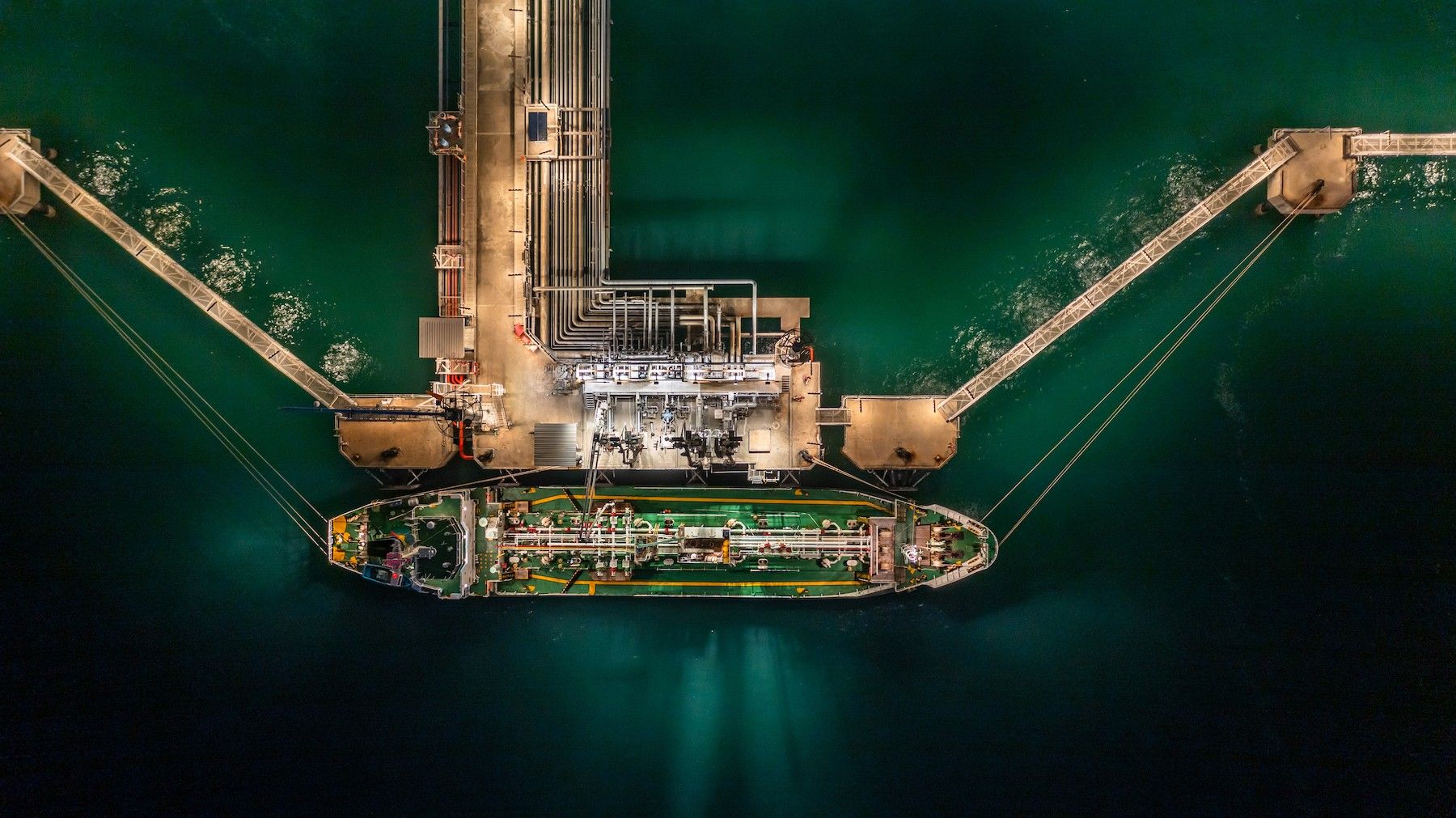
Iran also carried out a clever maneuver during Trump’s visit to China by allowing around 30 ships, including many Chinese vessels, to pass through the Strait of Hormuz. Although China denied paying a toll in line with Iran’s previously stated expectations, much indicates that some form of payment was nevertheless made. This move was intended to reduce the already small likelihood of any Chinese-American agreement on Hormuz, because it limited China’s interest in such an arrangement. Still, it must be remembered that for Iran, exerting global pressure on the world market is more important than trade relations with China. It is therefore out of the question that Iran would abandon its blockade unless the United States simultaneously lifts its blockade of Iranian ports. The only possible option is the introduction of specific exceptions. Meanwhile, the United States expects that its blockade will force Iran not only to restore the prewar situation in the Strait of Hormuz, but also to accept demands regarding its nuclear program — and it makes lifting the blockade conditional on that. These positions are therefore incompatible. If the parties — and it is worth stressing that this applies to both of them — do not show a willingness to compromise, or do not take escalatory action, such a stalemate may persist for months.
The calculations of both sides are completely contradictory and risky for them. It resembles two drivers racing toward a head-on collision, each convinced that the other will give way. Iran is counting on damage to the global economy and the resulting economic problems for Americans to prompt Trump to make concessions because of the approaching midterm elections. However, the American president has little inclination to take steps that would expose his failure, even if the alternative is self-destructive. It therefore cannot be ruled out that Trump will soon decide to resume hostilities, and may even attempt to overthrow the Islamic Republic — especially since Israel and its lobby in the United States continue to press for such an option. A ground invasion would be necessary for that, however, and even that would not guarantee success. War pressure without a ground invasion or the destruction of energy infrastructure has so far proved entirely ineffective, and some reports from credible sources say that Iran has recovered 90 percent of its original ballistic and drone capabilities.

Continuing the war at this level would fit the classic definition of insanity: doing the same thing and expecting different results. Yet Trump and his administration believe that the American blockade of Iranian ports will lead to the collapse of the state structure in Iran, and in particular to an inability to pay salaries to soldiers and other security forces, which in turn is supposed to trigger a revolt. So far, nothing indicates that this scenario is materializing. Iran has demonstrated highly advanced adaptive capabilities and, according to many assessments, may be able for many months to mitigate the effects of the blockade. Nor is there any indication that a revolt is likely within the IRGC; indeed, that formation is the most opposed to concessions. The greatest costs of the blockade will be borne by the society that was supposedly to be „liberated” by the United States and Israel.
The fate of further negotiations is therefore uncertain, and the lack of trust — especially Iran’s distrust of the United States — does not favor them either. Iran views Trump as unreliable and susceptible to pressure from Israel, which is seeking a full-scale war and is determined to torpedo any agreement.


