












- WIADOMOŚCI
- WAŻNE
Sweden picks France at sea

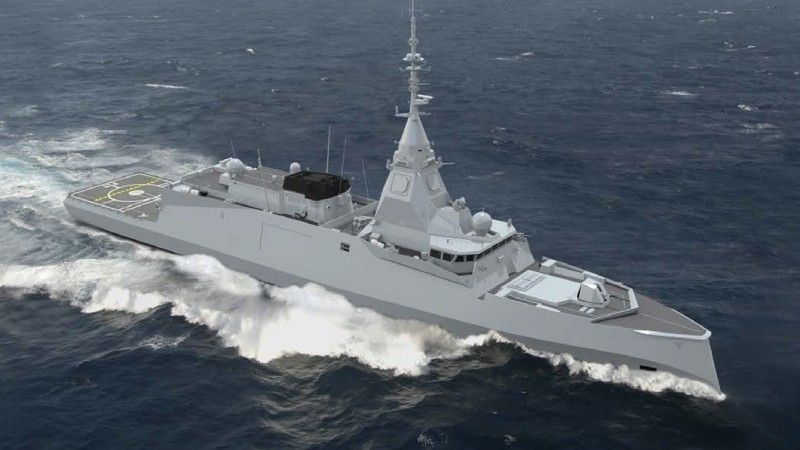
Sweden has selected France’s Naval Group for four new Luleå-class frigates based on the FDI concept. As reported by Nordic Defence Review, this is not only a naval procurement decision, but also a clear strengthening of Swedish-French defence cooperation at a moment when the Baltic Sea has become one of NATO’s most important strategic areas.
The Swedish government’s choice is based on three factors: speed of delivery, technical maturity and cost-sharing with France and Greece. Stockholm wants the first fully equipped frigate around 2030, which means it could not afford a long experimental programme. This is why the FDI proposal was attractive. It is already in use with France and has also been ordered by Greece, so Sweden is choosing an existing European design rather than building everything from the beginning.
La Suède a fait le choix de la frégate de défense et d'intervention de Naval Group pour moderniser sa marine.
— Emmanuel Macron (@EmmanuelMacron) May 19, 2026
Je remercie la Suède et je mesure la confiance faite à la France.
Après le choix fait par la France de se doter du Global Eye de Saab pour renouveler sa flotte d'avions…
The future Luleå-class frigates will be about 4,000 tonnes and designed primarily for air defence and anti-submarine warfare. They are expected to carry ASTER 30 missiles, capable of engaging ballistic threats, as well as CAMM-ER missiles for defence against cruise missiles and combat aircraft. This is important because Sweden is moving from a navy focused mainly on coastal defence towards larger platforms able to contribute more seriously to NATO operations in the Baltic and beyond.
At the same time, Stockholm wants Swedish industry inside the programme. The frigates are expected to include systems such as Saab’s RBS15 anti-ship missile, Torpedo 47, G1X radar, Trackfire weapon stations and BAE Systems Bofors 57 mm and 40 mm guns. This matters because Sweden is not simply buying French ships. It is trying to combine French shipbuilding and air-defence architecture with Swedish weapons and sensors.
For France, this is a significant success. Naval Group gains another important European customer after Greece, while Paris strengthens its argument that Europe can build serious naval capabilities without depending entirely on American systems. This fits the wider French vision of European defence industrial autonomy. Sweden, after joining NATO, is now becoming more deeply connected with French defence industry, which would have been much harder to imagine a decade ago.

The Baltic dimension is central. Russia’s war against Ukraine, the militarisation of Kaliningrad, undersea infrastructure risks and the accession of Finland and Sweden to NATO have changed the entire regional balance. Sweden needs ships able to protect airspace, hunt submarines and operate in a contested maritime environment. The Luleå class is therefore not only a replacement programme. It is part of Sweden’s adaptation to NATO and to a much more dangerous Baltic Sea.
Sweden’s choice of Naval Group is a strong political and industrial signal. Stockholm is choosing speed, European cooperation and proven capability. Paris gains influence in Northern Europe, and at the same time NATO gains stronger maritime capabilities in the Baltic Sea. The real test will be whether the first ship can be delivered on time and whether French-Swedish industrial cooperation can move from declarations to production. It is worth to note that France has been recently very focused on the Nordic region.


