












- WIADOMOŚCI
- ANALIZA
Spending more on defence is not enough to keep Europe safe

Europe is spending more on defence than at any point since the Cold War. But it is moving too slowly, and it has not yet done the harder thing: forged the kind of relationship with its own defence industry that produces effective deterrence. These are two connected challenges, and Europe cannot afford to fail either of them.
The post-2022 awakening is real. NATO members are spending more, conscription is returning in several countries, and production lines are reopening. Poland is committing close to five per cent of GDP to defence. Germany’s €100 billion Sondervermögen has begun to translate into procurement. Sweden has brought a capable military and a serious industrial base into NATO. Others are following suit. The direction is right. But the pace is still too slow.
Meanwhile, Russia’s military-industrial complex is running on three production shifts. It is manufacturing approximately three million artillery shells per year — roughly three times what the entire European Union can produce. Its armed forces, despite catastrophic losses in Ukraine estimated at more than 1,000,000 dead and wounded, are reconstituting. Western intelligence services assess that within a few years, Moscow could again threaten NATO’s eastern flank. A few years is not a lot of time. It takes European governments around five years to get major procurement cases to the delivery stage. The option of comfortable gradualism is gone, but too many Europeans still live under the illusion that we can afford to have other priorities.

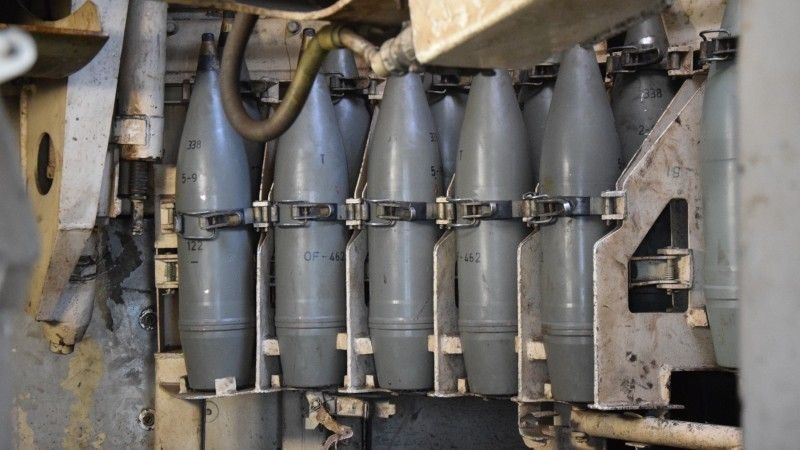
The ammunition gap illustrates where Europe stands. In February 2022, the EU could produce roughly 300,000 artillery shells per year. Ukraine was burning through that in weeks. European leaders delivered roughly half of their 1,000,000-shell pledge to Kyiv by early 2024. Production capacity has since expanded — the target is now 2 million shells annually by the end of this year — but even that figure leaves Europe short of what sustained high-intensity warfighting demands.
The deeper problem is the absence of a structural relationship between European governments and their defence industries. For decades, governments treated defence companies as contractors to be managed at arm’s length, placing small and irregular orders on unpredictable timescales. Industry optimised for margins rather than volume, maintaining minimal inventory, and running lean supply chains unsuited to sudden and prolonged surges in demand. The result is a defence industrial base that is genuinely innovative, but structurally unprepared for mass production at wartime scale.
Deterrence is not only built in Brussels. The European Defence Fund, joint procurement initiatives, and capability targets agreed at Alliance level are crucial instruments, but they are not substitutes for what only national governments can do: make binding, multi-year commitments that give defence industries and investors the demand signal they actually need to invest. A manufacturer does not build a new production line on the basis of a Brussels communiqué. It builds one when a government signs a contract. Too few European governments have been willing to do that. Poland, again, is the exception — its long-term contracts for K2 tanks, K9 howitzers, and HIMARS rocket systems have been structured precisely to build domestic capacity, not merely to fill an equipment gap. Romania’s agreement with Rheinmetall to produce Lynx infantry fighting vehicles on Romanian soil was structured as a long-term industrial partnership, not a one-off purchase. That structure, rather than the transaction itself, is bringing manufacturing capacity into the country.

The parallel failure is at the conceptual level. Most European governments still have no credible plan for what high-intensity warfighting on European soil would require of their economies, industries, and societies. And many defence companies are still not proactively investing in production capacity before contracts are in place. Governments and companies are in a mutual chokehold where both sides are waiting on the other to move first. Finland offers a good practice: its entire defence concept presumes that it must be capable of fighting sustainably largely on its own. That presumption shapes force structure, industrial policy, civil preparedness. It is the kind of strategic clarity that most European nations have not yet found the courage to articulate, let alone act upon.
Preventing these failures requires a new kind of relationship: one built on long-term demand signals, joint planning, and a mutual understanding that companies producing ammunition, air defence, armoured vehicles, drones, digital command backbones, etc. are not merely commercial actors but strategic national assets. Showing that the defence industry can deliver platforms and ammunition as long as it might take is a critical part of deterrence.
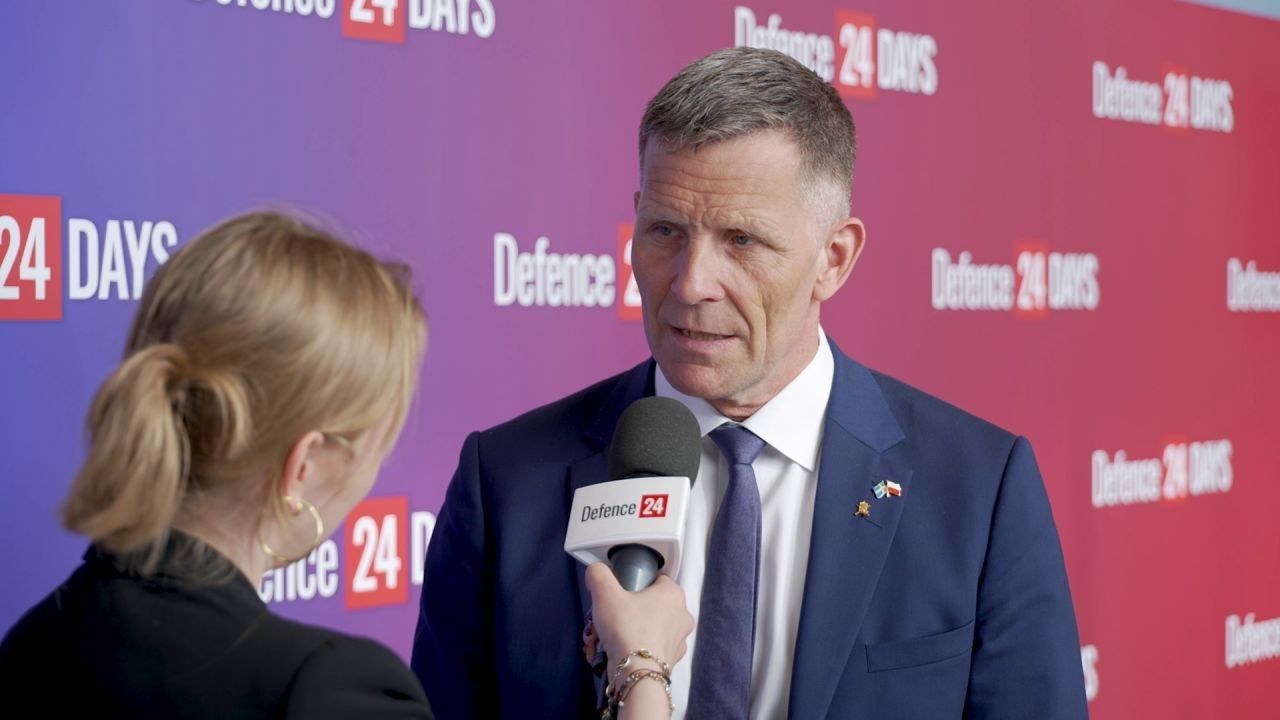
This is a call for the kind of committed, long-horizon partnership between government and industry to deliver defence industrial capacity. To support this transformation, GLOBSEC will be launching a new European Defence Initiative. It will bring together European defence industry, politicians, and the expert community to facilitate the creation of this new relationship — to speak plainly about requirements, gaps, and what governments and industry must commit to, together, right now. Because the conversations about long-term demand, investment, government guarantees and industry risks are not happening at the pace or depth the moment demands.
Europe has woken up to the threat. Now it needs to get out of bed and fulfil the harder task: turning bigger budgets into stronger deterrence…
Authors: Adm. Rob Bauer and Martin Sklenár (GLOBSEC)


