- KOMENTARZ
- WIADOMOŚCI
- WAŻNE
SAFE: France didn’t get the most, but sets the rules

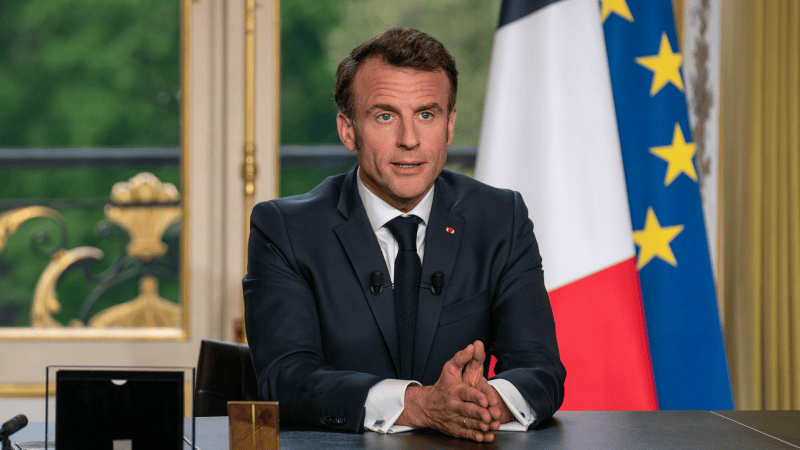
In France, the SAFE instrument is not seen as a breakthrough for security, but as a tool for industrial development. In the background remains the question of whether common financing will actually translate into increased military capabilities, the development of defence industries in Europe and – most importantly for Paris – whether French equipment will be purchased.
France receives around €16.2 billion in preferential loans, placing it among the largest beneficiaries, but clearly behind Poland and Romania. In the French debate this has political significance, as it shows that the eastern flank wants to invest in armaments. At the same time, Paris stresses the need for a European preference, meaning that funds should go to European producers and joint industrial projects. Put simply: buy from us.
See also 

Limits dependence on the United States?
Part of the political and industrial environment considers SAFE a sensible instrument because of its preferential conditions and its strengthening of the European defence industry. Moreover, the instrument is expected to enable investment in air defence, drones and cyber security and to encourage cooperation between European states. In practice this means an effort to increase orders in the European defence industry and strengthen domestic companies, linked for example to artillery programmes such as Caesar.
In France a common narrative is that the programme is beneficial because it limits dependence on the United States. Here the political environment of President Macron is clearly satisfied. Concentrating money in Europe, and persuading states such as Poland and Romania to procure on the continent, is viewed as a major success.
Emmanuel Macron supported SAFE from the outset, seeing it as a tool for implementing his agenda of European strategic autonomy in defence, with significant benefits for France itself. Possessing the largest defence sector in the EU, Paris expects to secure numerous lucrative contracts, hence the President’s strong emphasis on the importance of a European preference in procurement under the programme. Concerns over competition from the comparable British defence sector also led the Élysée Palace to firm opposition to London’s participation.
More sceptical viev
The initiative is viewed more sceptically by the main opposition party in the French parliament, the Eurosceptic National Rally of Marine Le Pen. The central criticism concerns indirect indebtedness via the European Commission, which the party argues undermines French sovereignty and transfers further powers over France’s governance to Brussels.
Additional criticism concerns the financing model itself. SAFE consists of loans rather than grants, which increases debt and does not solve differences in financing capacity between states. There is also the argument that countries capable of borrowing cheaply on their own have little incentive to use the instrument.
Analyses also highlight the decision-making procedure. Some solutions were adopted in an urgent framework, which increases effectiveness but raises questions about political oversight. SAFE is therefore perceived as supporting modernisation and cooperation, but not as a solution to defence funding problems.
It is worth noting that France is expected to push for additional solutions, alternatives, mechanisms and regulations allowing SAFE to be modified during its implementation, even before 2030. In Paris there is awareness that the programme was introduced quickly and that many shortcomings and political disputes may appear. Poland, Romania and France, as the main beneficiaries, will need to find common ground to protect their investments.
Paris holds a very strong position within the European Union. Within SAFE itself, significant regulatory changes may occur before 2030. If France demands major changes, considerable pressure should be expected. One should therefore be prepared for Paris setting conditions.
I assess that for France SAFE is primarily a tool of influence in Europe and a way of strengthening its own defence industry. It will not replace national defence spending and will remain complementary to ongoing modernisation and planned investments.
For France SAFE is one option. For Poland it is the primary project. This is the key difference in perception, use, lobbying and accountability of SAFE loans: for some it is a political instrument, for others a budgetary one.