












- WIADOMOŚCI
- OPINIA
Security is not only military—it is societal. Something worth learning from the Scandinavians

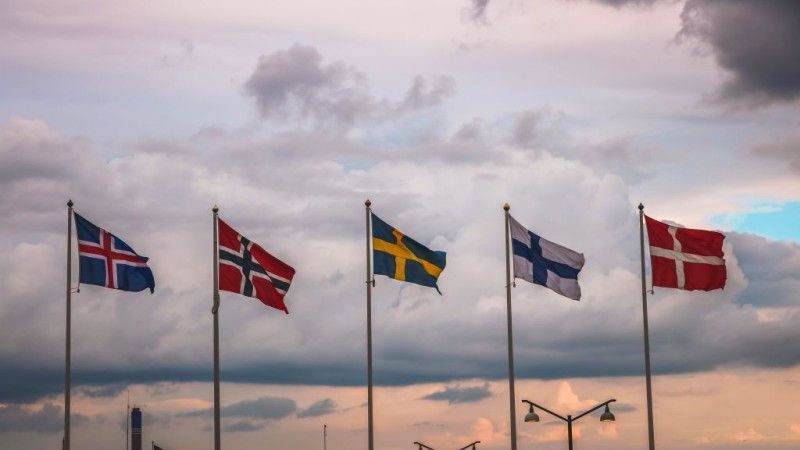
In the contemporary geopolitical landscape, national security extends far beyond the traditional boundaries of military defence. The rise of hybrid warfare—combining military force with cyber-attacks, disinformation campaigns, economic pressure, and political interference—has transformed the concept of national security into a comprehensive societal challenge. In this context, the strength, resilience, and civic engagement of the population have emerged as critical factors in a nation’s ability to resist external threats.
Author: Dr Michał Zgórzak
Countries possessing high standards of civil society, where citizens are not only aware of their rights but also deeply conscious of their responsibilities towards the state, demonstrate a unique capacity to counteract hybrid threats. Societies where transparency, accountability, and public integrity are valued and practised tend to foster trust in institutions, greater social cohesion, and resilience in the face of external influence—key elements of national security today (European Commission, 2016; Europarl, 2021).
This report investigates how the Scandinavian countries—Sweden, Finland, Denmark, Norway, and Iceland—embody these principles and how they serve as compelling examples of the connection between civic culture and security. It pays particular attention to the challenges posed by hybrid aggression, especially from Russia, and the increasing significance of cyber defence.

Sweden
Sweden’s strong democratic traditions and high level of social trust contribute significantly to its national resilience. The Swedish concept of”totalförsvar” (total defence) places responsibility not just on military forces but on the whole of society, including civilians (Ålander & Adamson, 2025). Swedish citizens are educated about both their civil rights and obligations, creating a sense of shared responsibility for national security.
In response to Russian disinformation campaigns and cyber threats, Sweden has taken proactive measures to enhance its cyber defences and improve public media literacy. Transparency and accountability in governance have helped maintain high levels of trust in public institutions, making Swedish society less vulnerable to propaganda and destabilisation efforts (Hybrid CoE, 2024). For example, Sweden established a role for a National Security Adviser to coordinate hybrid and cyber-threat responses across government. The focus on whole-of-society defence, including local municipalities and private sector actors, reinforces the civic dimension of national security (Hybrid CoE, 2024).
Finland
Finland’s history of resisting Russian aggression, particularly during the Winter War, has shaped a deeply-rooted national culture of resilience and preparedness. Finnish society places high value on civic duty, and citizens are educated about national defence from an early age. In Finland, national security is understood as a collective responsibility, not just a task for the government or armed forces (Ålander & Adamson, 2025).
The Finnish model of „comprehensive security” includes cooperation between public institutions, private companies, the media, and individual citizens. Notably, Finland established the European Centre of Excellence for Countering Hybrid Threats (Hybrid CoE) in Helsinki in 2017 to research and share best practices in hybrid threat response. Finland’s reforms include legal frameworks to enhance resilience to hybrid threats, cyber-attacks, foreign influence operations and screening of strategic investment (Gotkowska & Szymański, 2017; Hybrid CoE, 2024). Thus, Finland exemplifies how civic awareness, strong institutions and defence-oriented public culture converge in national security.
Denmark
Denmark places a strong emphasis on transparency, integrity, and public involvement in decision-making processes. Danish citizens enjoy high levels of press freedom and access to public information, which strengthens their ability to critically analyse the messages they receive, including those disseminated by hostile foreign actors (Europarl, 2021).
Danish society is well aware of the threats posed by Russian cyber operations and disinformation campaigns. In response, the Danish government has increased investment in cybersecurity infrastructure and civic education, reinforcing public resilience. Denmark’s strong tradition of volunteerism and decentralised governance also supports societal readiness during crises, further connecting civic culture with national security (Potter, 2025).
The emphasis on civil-military cooperation, public-private partnerships and open government forms a foundation for societal robustness in the face of hybrid threats.
Norway
Norwegian society is built on democratic participation, rule of law, and a strong social contract. These principles contribute to broad social trust and public engagement in governance, which are critical in resisting hybrid threats. As a NATO member sharing a border with Russia, Norway faces unique security challenges, including intensified digital espionage and disinformation efforts (Hybrid CoE, 2024).
To counter these, Norway has developed advanced cyber defence mechanisms and a national strategy based on civilian-military cooperation. The Norwegian government works to increase public awareness of digital threats and the role of individual responsibility in national security—extending the concept of defence beyond its conventional military meaning (Potter, 2025). The integration of civic readiness (e.g., through awareness campaigns and exercise participation) and institutional transparency strengthens Norway’s resilience.
Iceland
Although Iceland is not a member of the European Union and does not maintain a standing army, its approach to national security is rooted in strong civic values and a highly engaged populace. The Icelandic government places a high priority on education, equality, and trust in public institutions—all of which contribute to societal resilience (Hybrid CoE, 2024).
Iceland’s participation in NATO allows it to benefit from collective defence mechanisms, but its national strength also lies in civil cohesion and transparency. The country has been the target of cyber incidents and has responded by enhancing cybersecurity measures and public awareness. For example, the Icelandic Computer Emergency Response Team (CERT-IS) operates in a public-private partnership model and regularly collaborates with Nordic and European partners (Hybrid CoE, 2024). Despite its small size, Iceland demonstrates that civic responsibility and integrity are powerful tools in safeguarding national interests.
Conclusion
Scandinavian countries offer powerful examples of how strong civic standards, widespread public awareness of rights and responsibilities, and a culture of transparency contribute significantly to national security. In the current era marked by hybrid warfare and cyber threats, these factors are as vital as conventional military strength.
Through widespread civic education, trust in public institutions, and inclusive national defence strategies, Sweden, Finland, Denmark, Norway, and Iceland have created resilient societies capable of facing today’s complex security challenges. These models demonstrate that an engaged, informed, and responsible citizenry is perhaps one of the most effective deterrents to external threats—whether they come in the form of military aggression, cyber-attacks, or disinformation campaigns.
In essence, the security of the state is mirrored in the security of the citizenry; when citizens are empowered, transparent institutions abound, and societal duty is internalised, the nation’s resilience is deeply enhanced.
Policy Recommendations
The Scandinavian model illustrates how high civic engagement, institutional transparency, and shared responsibility for national security can form the bedrock of a resilient society in the face of hybrid and cyber threats. Based on this analysis, the following universal policy recommendations are proposed for countries seeking to strengthen their national resilience. These measures would also be highly suitable for implementation in Poland and other European states affected by the hybrid tactics of foreign adversaries.
1. Institutionalise Civic Education in National Defence Strategies
National resilience depends greatly on informed and engaged citizens. Governments should expand civic education programmes — not only within schools but across society — to raise awareness about modern threats such as disinformation, cyberattacks, and foreign interference. Teaching citizens their rights and responsibilities in the context of security fosters shared ownership of defence.
2. Develop „Whole-of-Society” Defence Frameworks
Like Sweden’s „total defence” and Finland’s „comprehensive security” models, states should adopt coordinated national frameworks involving government agencies, private sector actors, civil society, media, and individual citizens. Such frameworks allow for swift cooperation during crises and strengthen long-term resilience.
3. Strengthen Public Trust through Transparency and Accountability
Governments should reinforce democratic institutions and transparency in public life, as distrust in authorities makes societies more vulnerable to hybrid threats. Open access to public information, free media, and anti-corruption strategies reinforce societal trust — essential for combating external destabilisation efforts.
4. Foster Resilience against Disinformation and Psychological Operations
States should develop systems to counter disinformation through:
- Independent media literacy campaigns- Cooperation with social media platforms and civil society- Rapid response task forces to debunk hostile narratives\ This dual approach — educating the public while reacting to real-time threats — has proven effective in the Nordics.
5. Expand Public-Private Partnerships in Cyber Defence
Given the growing scale of cyber threats targeting public institutions and critical infrastructure, governments should establish permanent cooperation channels with private companies, research institutions, and cybersecurity experts. This includes shared threat intelligence, joint crisis simulations, and shared standards for infrastructure protection.
6. Ensure Regular National Resilience Exercises
Countries should organise nationwide hybrid-threat exercises combining civil and military actors. Such drills raise readiness levels, stress-test crisis mechanisms, and build mutual trust between institutions and society — a cornerstone of Scandinavian preparedness.
7. Establish Regional or International Centres of Excellence
The success of Finland’s hosting of theEuropean Centre of Excellence for Countering Hybrid Threats highlights the value of institutional leadership. Other countries should consider founding or hosting similar platforms for training, research, and strategy development in cooperation with NATO or the EU.
References
European Commission. (2016).Joint Communication: Increasing resilience and bolstering capabilities to address hybrid threats – EU response (SWD / 2016/173). European Union.\ Europarl. (2021).Best practices in the whole-of-society approach in countering hybrid threats (EXPO\_STU(2021)653632). European Parliament.\
Gotkowska, J., & Szymański, P. (2017).Between co-operation and membership: Sweden and Finland’s relations with NATO (OSW Report 3/2017). Centre for Eastern Studies (OSW), Warsaw.\ Hybrid CoE. (2024).Building resilience to hybrid threats: Best practices in the Nordics (Working Paper 31). European Centre of Excellence for Countering Hybrid Threats.\
Potter, R. (2025, March 10). „What Britain can learn from the Nordics about fighting hybrid threats.”The World Today. Chatham House.\
Ålander, M., & Adamson, E. (2025, July 23). „Nordic-Baltic total defence: easier said than done.”Heinrich Böll Stiftung Briefing Paper.


