












- WIADOMOŚCI
The Finns crushed it. Report of the Finnish Military Intelligence

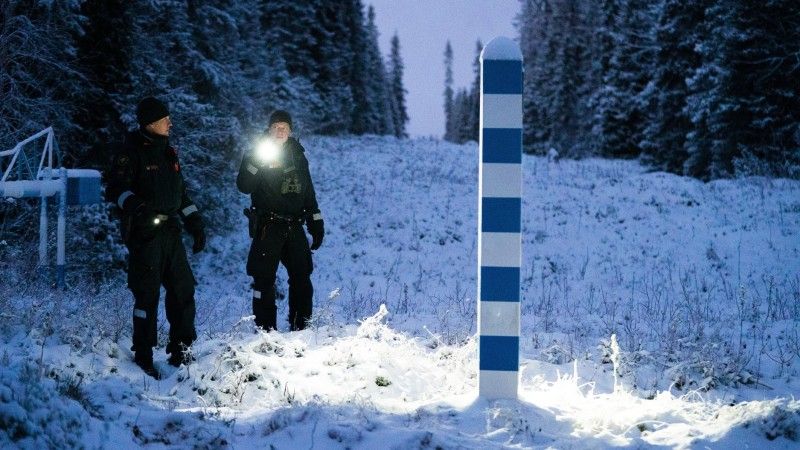
Finnish intelligence reports on Russian activities. The goal remains unchanged – increasing influence on world politics.
Russia perceives liberal democracies as a threat, the report emphasizes. „The regime regards Western liberal democracy as a threat and seeks to weaken the West, using the war in Ukraine, other conflicts, and hostile hybrid influence as tools. Russia focuses on the area of the former Soviet Union, particularly on the war in Ukraine, which it pursues at the expense of achieving other objectives.”
An analysis of Finnish military intelligence indicates that the Russian way of conducting warfare has now entered a stage of permanently limiting losses from outside. The fact is that the Kremlin effectively circumvents the sanctions imposed by the West. Russia owes this to the active participation of some third-party countries, which in practice keep its economic and industrial capabilities alive. This can be interpreted as a shift from a self-sufficient model to something like a war conducted within a network of various connections, where the transfer of capital, raw materials, and parts, especially outside the Western sphere, plays a significant role.
The importance of China and India in maintaining the stability of Russia’s influence in the energy sector is significant. According to Finnish intelligence, in the autumn of 2025, China and India together purchased nearly 90 percent of Russia’s oil exports. The fact that both countries buy so many resources not only mitigates the effects of losing European customers but also changes the way Russia views its trade relations. On one hand, it agrees to less favourable terms, but on the other hand, it can count on relatively stable demand. This allows for predictability and proper management of further war expenditures. This is problematic for those who assumed that economic pressure alone would be enough to limit Russia’s ability to conduct a prolonged conflict.
Supporting the Russian arms industry by countries such as China, Iran, or North Korea carries far more serious consequences. This is not just about specific deliveries of weapons or parts, but about reducing production risks. Those involve access to other supply chains, ways to bypass sanctions and the ability to maintain production pace. As a result, the chances of winning the economic war against Russia are lower than initially assumed at the beginning of the invasion.
From this perspective, it seems that Russia’s war with Ukraine has indirectly become a multilateral war. The further course of the war is no longer determined solely by Moscow’s own capacity to mobilize resources, but also by the strategic calculations of actors outside the West who have deemed that supporting Russia is in their interest. For us in Europe, this means that the effectiveness of exerting pressure on Russia is inextricably linked to policies towards these countries, and not just to successive rounds of sanctions.
Finnish intelligence confirms that the regime is currently focused on winning the war in Ukraine. At the same time, however, it is implementing a reform of the armed forces. If it were to be carried out, it will lead to a significant increase in military forces in the vicinity of Finland. The likelihood of a conflict breaking out in the region would then increase. Despite this, Finnish intelligence does not foresee a military attack directed at Finland in 2026.
Authors: Sylwia Kubica, Patryk Jagnieża


