












- KOMENTARZ
- WAŻNE
- WIADOMOŚCI
France builds new aircraft carrier

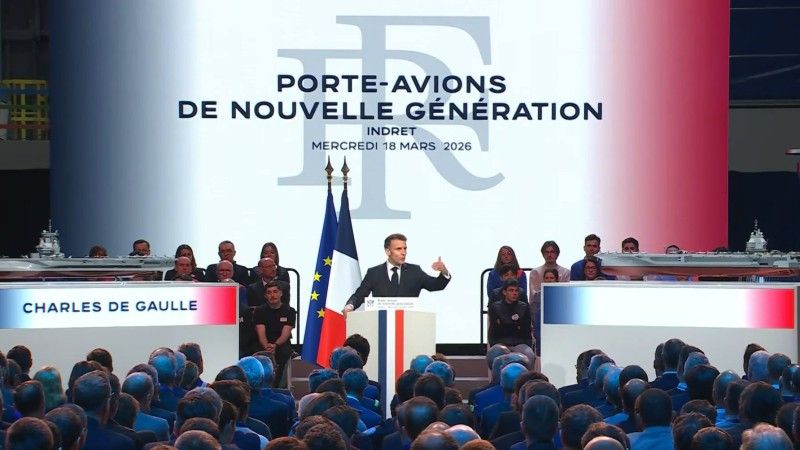
France is moving forward with its new aircraft carrier programme, France Libre, expected to enter service in 2038. The vessel will be the largest warship ever built in Europe and a key element in maintaining Paris« military capabilities and its much-discussed strategic autonomy.
France has officially launched the next-generation aircraft carrier programme, which will replace the current Charles de Gaulle. The new vessel, France Libre, will be approximately 310 metres long with a displacement of 78,000–80,000 tonnes, making it the largest warship in European history. Entry into service is planned for 2038, with sea trials expected around 2036 (initially projected for 2035).
The programme is officially valued at around €10–10.2 billion, although some estimates reach up to €15 billion. Originally, the cost was expected to be closer to €7 billion. The project will involve around 800 companies and generate nearly 14,000 jobs, with approximately 80% linked to small and medium-sized enterprises. At the same time, around 90% of the expenditure remains within the French defence industry, clearly showing that this is not only a military programme but also an industrial one, directly strengthening France’s domestic capabilities.
A key element of the project is propulsion. The ship will be powered by two K22 nuclear reactors, developed by TechnicAtome, offering significantly greater output than the systems used on Charles de Gaulle. Increased energy availability will support more advanced systems, including electromagnetic catapults, modern radar, electronic warfare capabilities, and future technologies expected to emerge over the coming decades, including those linked to artificial intelligence development promoted by President Macron.
The carrier will be equipped with EMALS and AAG systems, improving the tempo of air operations and increasing the efficiency and safety of launches and recoveries. The flight deck, exceeding 17,000 m², is designed to support high-intensity operations, which French military officials highlight as a key difference compared to the current carrier.
The air wing is expected to include around 40 aircraft, including 30–36 Rafale M fighter jets, E-2D Advanced Hawkeye early warning aircraft, helicopters, and unmanned systems. In the longer term, the vessel is expected to integrate the future Next Generation Fighter (NGF) under the FCAS programme, although its development remains uncertain due to ongoing tensions between France and Germany. Further discussions between Berlin and Paris are expected to continue.
The ability to operate in an environment dominated by modern air defence and missile systems is also a central consideration. The design includes an upgraded defensive architecture based on Aster missile systems and increased resilience against drone-based threats. In practice, this reflects the realities observed in current conflicts, particularly in Ukraine and the Middle East, where air and missile threats play a decisive role.
The France Libre programme also has a broader strategic dimension. France remains the only nuclear power within the European Union and one of the few countries capable of projecting military power at scale. The new carrier is intended to preserve these capabilities for decades, particularly as most European navies continue to face structural limitations.
At the same time, the project fits into the wider debate on European strategic autonomy, with France clearly positioning itself at the centre of this discussion. As the United States increasingly expects European allies to take greater responsibility for their own security, Paris is investing in capabilities that allow it to operate independently when necessary.
In practical terms, France Libre is not simply a replacement for Charles de Gaulle, but part of a broader strategy to maintain France’s position as one of the few countries capable of conducting large-scale military operations globally. Combined with its overseas bases and a pragmatic foreign policy, it is clear that France intends to continue competing as a global power.
The countdown to launch has begun.


