












- KOMENTARZ
- WIADOMOŚCI
- WAŻNE
French defence firms avoid Ukraine

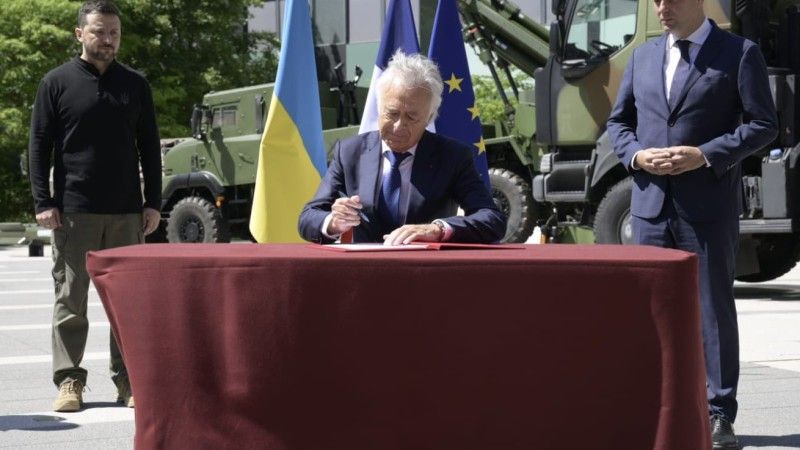
French support for Ukraine is expanding, but the gap between political declarations and industrial capacity is becoming increasingly visible.
French political declarations on Ukraine are increasingly colliding with industrial limitations, raising questions about credibility and delivery. According to La Lettre, despite repeated commitments by Emmanuel Macron and Sébastien Lecornu since 2022, Paris has not translated its announcements into a lasting industrial presence in Ukraine. Plans for local ammunition production and deeper defence cooperation remain largely unrealised. The central issue concerns KNDS, which—despite benefiting from increased demand for the Caesar system—has so far avoided investment on Ukrainian territory.
At the same time, France is actively building its position through operational engagement. More than 2,000 Ukrainian soldiers have been trained in France, including units equipped with modern artillery and armoured platforms. This is not only support in the form of deliveries, but also an attempt to shape Ukrainian military capabilities in a broader sense. Paris is investing in influence—training structures, doctrinal alignment and long-term presence—rather than limiting itself to ad hoc transfers of equipment.
However, even in this dimension, caution is evident. The issue of deploying French instructors directly to Ukraine remains unresolved. Political signalling has been strong, but decisions are delayed, reflecting the need to balance escalation risks with the desire to maintain leadership within Europe. France is active, but selective—engaged, yet not fully committed.
As reported by Le Monde, the industrial context confirms structural constraints. The order book of KNDS has more than doubled since the beginning of the war, and production capacity has been significantly expanded across European facilities. Output of Caesar systems and ammunition has increased several times, supported by new investments and plans to raise additional capital. Nevertheless, even with factories operating at full capacity, this remains insufficient to meet demand.
In practice, this case illustrates a broader trend within European defence. Strategic declarations and political ambition are not always matched by industrial execution. France seeks to position itself as a key actor in shaping the post-war security architecture, but without a parallel increase in production capabilities, this role may remain limited. The gap between ambition and capability is no longer theoretical—it is becoming operational.


