












- WIADOMOŚCI
- OPINIA
How Japan’s new leader may reshape Asian diplomacy?

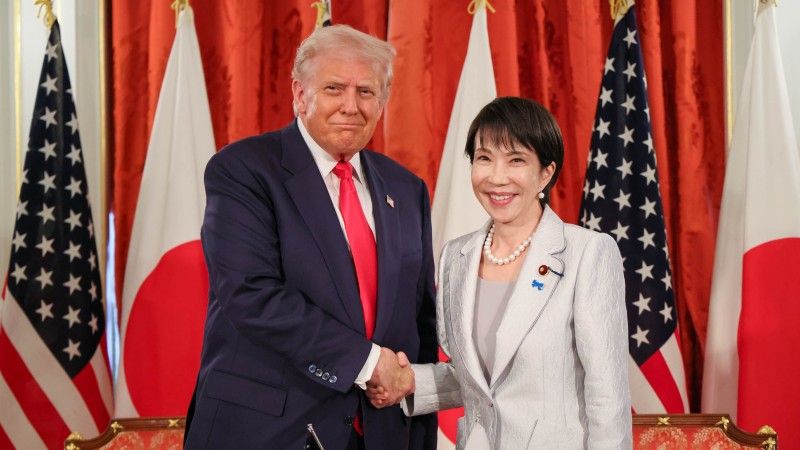
How the election of Japan’s new prime minister may affect the country’s relations with its Asian neighbors?
Takaichi political stance deeply rooted in conservative and revisionist traditions can complicate Tokyo’s relations with both Seoul and Beijing. Like some former Prime Ministers, Takaichi supports revising Article 9 of Japan’s pacifist constitution, which currently renounces war and the use of force. She advocates transforming Japan’s Self-Defense Forces into formal Armed Forces, a move that, while still politically difficult, will push the constitutional debate back into Japan’s political mainstream. Such discussions, however, are bound to provoke alarm in neighboring countries historically affected by Japan’s wartime aggression, particularly South Korea and China.
See also 

Relations with South Korea are especially vulnerable. Over the past year, both governments have worked to stabilize ties through pragmatic cooperation, focusing on security and political interests, and often silencing historical grievances. Yet Takaichi’s repeated visits to the controversial Yasukuni Shrine and her long-standing revisionist views on Japan’s wartime imperial history risk undermining that fragile progress. South Korean public opinion remains highly sensitive to issues related to Japanese occupation of Korea (1910-45), such as forced labor and the „comfort women,” and any sign of historical denial from Tokyo could easily reignite tensions.
Seoul has responded cautiously so far. The Presidential Office stated that President Lee Jae-myung hopes to maintain the foundation of the advanced South Korea-Japan relationship and continue active exchanges, expressing optimism about a potential meeting between Lee and Takaichi during the upcoming APEC Summit in Gyeongju. Still, South Korean media coverage has been mostly cautious and critical, recalling many controversial past statements of Takaichi and even her 1994 endorsement of the book, which praised Nazi election campaign methods. Such reminders reinforce the perception of Takaichi as a hardliner resistant to historical reflection.
China’s reaction is expected to be equally watchful. At the same time, China faces Takaichi’s premiership at a sensitive moment. This year marks the 80th anniversary of China’s victory in the „People’s War of Resistance Against Japanese Aggression,” one of the foundational narratives in PRC political identity. Takaichi’s records of visiting Yasukuni Shrine and questioning aspects of Japan’s responsibility of war crimes on Chinese people has already fueled public anger in PRC. On Chinese social media, she is accused of denying the Nanjing Massacre, described as „anti-China” or „extreme right-wing”.
Chinese state media can quite easily frame her views and leadership as proof of Japan’s remilitarization and nationalist resurgence – narratives that can strengthen China’s domestic legitimacy and bolster its diplomatic positioning in regional power competition. Although Takaichi has described China as an important neighbor, her emphasis on Japan’s national interests, policy orientation pointed toward deterrence through defense buildup and strengthened Japan-US alliance, as well as openness to closer cooperation with Taiwan will likely deepen mistrust between Tokyo and Beijing.


