- ANALIZA
- KOMENTARZ
- WIADOMOŚCI
Investment, vulnerability, and influence: Hybrid security risks for Ukraine’s energy sector

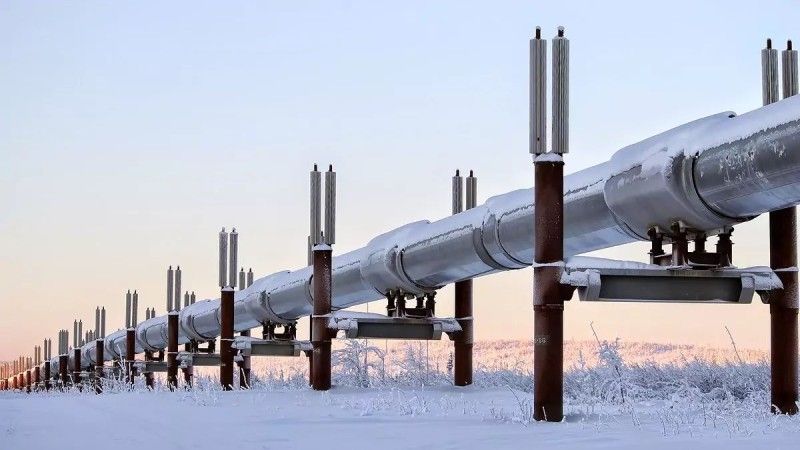
In the era of the new phase of the war in Ukraine, hybrid actions are a supplementary element to conventional military operations. However, the targets of the Russian Federation’s hybrid attacks are not only Ukraine but also the countries that support its defensive efforts.
The Russian Federation took advantage of the new political situation that emerged after 1991 and began to economicize its energy policy, at the same time making the Old Continent dependent on cheap energy sources that powered European economies. Building economic influence for nearly 30 years meant that already by 2014 a fundamental dilemma had emerged among representatives of European Union states: namely, security or inexpensive energy resources.
The first warning, the Russian attacks on Ukraine in 2014, brought no awakening or concrete result. What is more, arms were even sold to both Kyiv and Moscow. Only after the full-scale aggression of 22 February 2024 did European Union countries take steps to diversify energy suppliers; however, this did not end the energy blackmail employed by Russia.
Currently, the hybrid campaigns carried out by the Russian Federation, directed at energy infrastructure, pursue a twofold objective. First, to bring about an actual energy crisis in Ukraine and in NATO countries.
Second, to introduce elements of psychological warfare and an atmosphere of fear, where the target is the citizens of North Atlantic Alliance countries, since they ultimately experience the changes in electricity and water prices and will be the ones to elect governments.
Strengthening the narrative of resource shortages or the need to raise prices in selected states may lead to the emergence of both anti-Ukrainian and pro-Russian movements aimed at sustaining energy cooperation with Moscow.
Seeking energy alternatives involves very chaotic and dynamic choices—for example, becoming fully dependent on a new supplier from North America or the Arabian Peninsula. Ultimately, a complete break with Russia could at the same time mean dependence on another energy partner.
The Ukrainian context fits perfectly into the Russian Federation’s hybrid activities, as confirmed by the recent massed attacks on energy and civilian infrastructure across the country. The summer season does not create such high demand for electricity, yet attacks on power plants have a long-term effect because they tie up repair and modernization teams and increase the time required to rebuild infrastructure.
See also 
The true challenge (as in the past three years) is the autumn–winter period, when low temperatures force provision of continuous access to heating and electricity (including at the front for soldiers).
Hybrid attacks will cause both short- and long-term total loss of energy supply (blackouts), which in turn will force the Ukrainian population to undertake internal and foreign migration to seek shelter. In this context, an indirect target of Russian actions are the eastern-flank NATO countries, such as Poland, Lithuania, Estonia, Slovakia, and Romania, which both provide steady, active economic and military assistance and receive Ukrainian citizens by offering shelter.
Foreign direct investment in Ukraine may carry critical security risks for the energy sector. It may allow a hostile actor (Russians) access to sensitive information and technologies (including network structures). Moreover, takeover of strategic branches of industry could enable hostile actors to exert political influence on both Ukraine and foreign investors.
In parts of the country, especially its western regions, investment in and development of the energy sector are possible. At the same time, in the event of increased air raids or a sudden Russian counteroffensive, a significant portion of technology could be lost. For this reason, many NATO states are wary of financial engagement in Ukraine’s energy sector.
Unlike cyberspying, the primary direct aim of cyber operations against energy infrastructure is not to obtain information but to disrupt normal functioning or even to destroy infrastructure.
Cyber operations are difficult to attribute, and hostile actors have the advantage of plausible deniability; nevertheless, in most cases it is possible to identify them as part of Kremlin activity. For Ukraine this is particularly difficult because it does not conduct offensive operations at a scale that would threaten Russia.