












- OPINIA
- WIADOMOŚCI
Security events that defined 2025

After 2025, the global security outlook will never be the same. Here are the key security events that defined the year and set the stage for 2026.
World in fire: Ukraine, Gaza, Sudan, Pakistan, Iran and beyond
In 2025, the world grew even less peaceful, not from one event, but from the sheer scale of crises accumulating: the war in Ukraine continued, the situation in Gaza remained far from settled, Sudan’s civil war kept reaping a bloody harvest, the Pakistani–Indian conflict saw its largest escalation since 1999, and the first American bombardment of Iran since 1988. All this adds to a global picture of 59 ongoing state-based conflicts, with 78 countries involved in fighting beyond their borders. 2025 thus hands its successor a globe riddled with hotspots, many of which being at the edge of bursting.
Trump's Western hemisphere pivot & the end of American global primacy
The American refocus on domestic and nearby affairs in the Americas became increasingly obvious and consequential throughout the year. Tackling illegal migration and drug trafficking, pushing back against Chinese influences, and a wave of interventions and threats spanning Argentina, Venezuela, Panama, Mexico, Canada, and even Greenland — these moves consumed the new administration.
They all serve to consolidate the both continents back under the US primacy, based on the revived Monroe Doctrine with Trump’s corollary as laid down in the new National Security Strategy. This retreat from global primacy is also reshaping the Eastern Hemisphere, losing in importance in the eyes of Washington — a shift felt most acutely in Europe. The US has effectively ceased to act as a global provider of security and order, leaving a dangerous vacuum in the international system that feeds chaos and instability likely to persist into 2026.

Trump's Tariff Liberation Day
For many, April 2 was the day the US declared a trade war on the rest of the world, introducing a general 10% baseline tariff topped by additional reciprocal duties. It may be remembered as the end of an era in international trade, though it proved less devastating than many expected. A cascade of pauses, exemptions, and ad hoc deals diluted its real impact. Most important were two successive trade truces with China, which pulled mutual tariffs down from above 100% levels and helped drive a broader de-escalation of tensions.
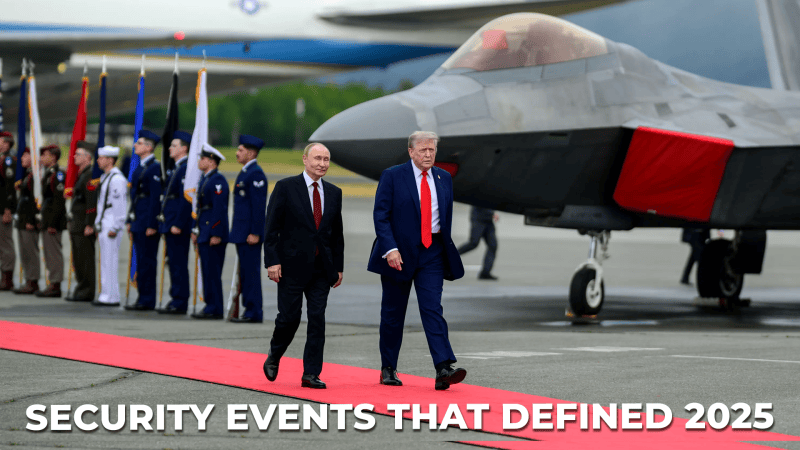
Trump–Putin Summit in Alaska & Russian-US detente
The new Trump administration broke with Biden’s policy of isolating Russia, most symbolically in the Trump–Putin summit in Alaska in August. This U-turn in US foreign policy is driven not only by the belief that re-engagement with Moscow can deliver peace in Ukraine, but also by perceived business and strategic opportunities, both for the American economy and for its rivalry with China. For now, those bets remain unproven and will be likely further tested in 2026.

Chinese export controls on rare earths
2025 was the year Beijing chose to reveal the full extent of its leverage over critical rare earth materials. In April, China imposed export controls on seven of them, followed by a November announcement that five more would be added. Although implementation of the later restrictions was suspended for a year, the measures that entered into force and the very prospect of their expansion triggered alarm globally, especially in Western capitals. They underscored an unsettling reality: China can, if it chooses, effectively cut the West off from critical minerals essential to defence, green, semiconductor and other strategic industries. The exposed vulnerability pushed Western governments to further prioritize economic security.
Adoption of the SAFE Mechanism
In May, the EU launched Security Action for Europe (SAFE), a mechanism providing €150 billion to support the continent’s rearmament. In a breakthrough move, it will be financed through European Commission borrowing on capital markets and will mandate European common procurement, notably with Ukrainian participation. SAFE is another step in the EU’s evolution into a full-fledged security actor, aiming to make the Union’s surging defence investments more coherent and effective.
Russian drone incursion into Poland
On 9 September, more than 20 Russian drones violated Polish airspace, with four shot down by Polish and NATO air forces. It was the first time NATO directly engaged Russian weaponry, marking a major escalation between the two sides so far. More broadly, 2025 saw an intensification of Russian airspace violations and hybrid warfare across a continent gradually awakening to this new, war-like reality. The incident triggered new eastern-flank initiatives, including NATO’s „Eastern Sentry” and EU proposals such as the „Drone Wall” and „Eastern Flank Watch,” focused on anti-drone defence.
See also 
EU loan for Ukraine
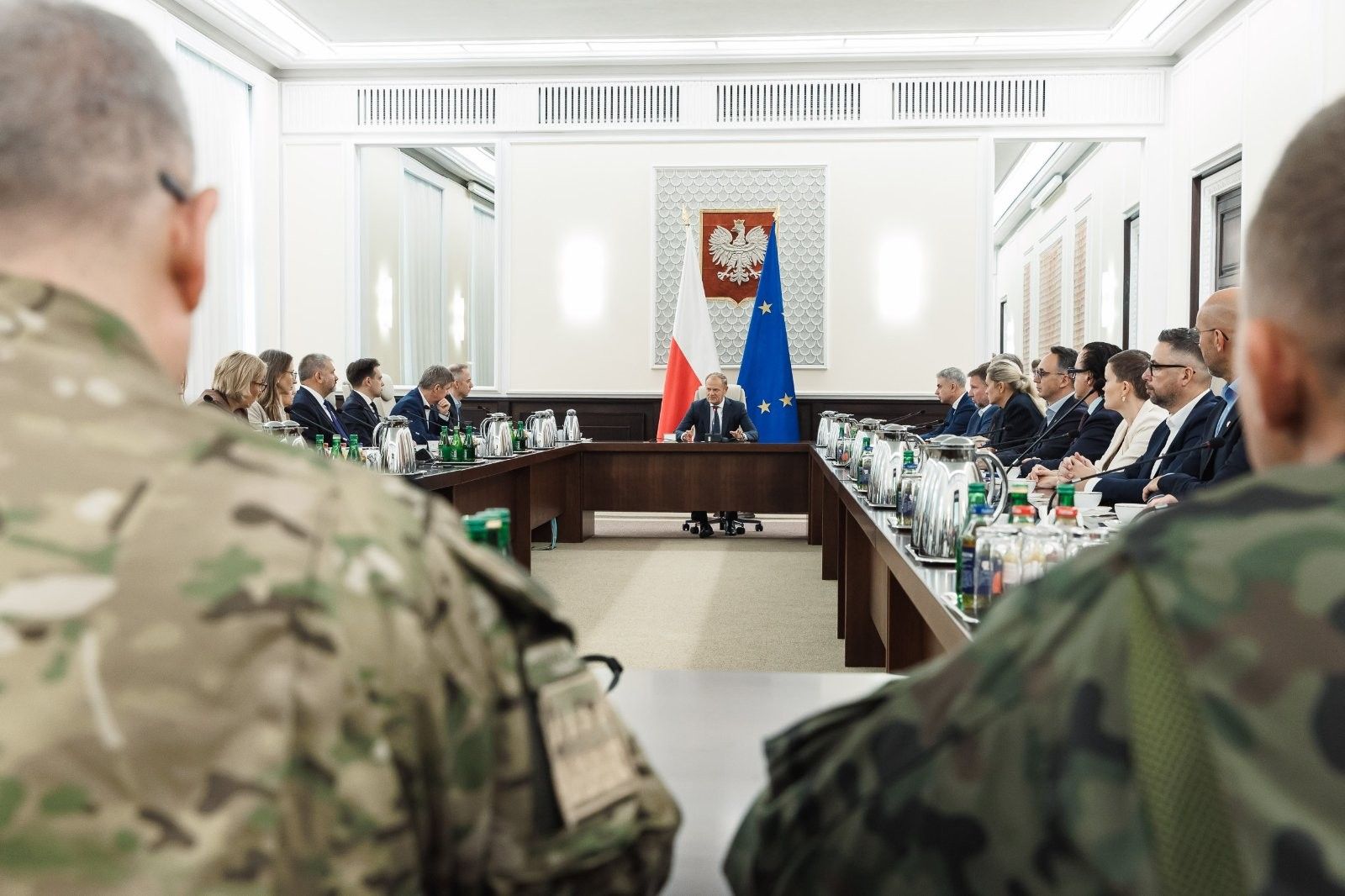
Despite the fiasco over mobilising Russia’s frozen assets, EU member states in December secured Ukraine’s financing for the next two years by agreeing a €90 billion loan raised through EU borrowing and backed by the EU budget. This makes it far more likely that Ukraine will remain financially and militarily afloat in 2026, greatly improving its position in ongoing negotiations. Meanwhile, the Russian assets in question remained permanently frozen. The loan concludes a year-long process of shifting the financial burden of supporting Ukraine from the US almost entirely to Europe.


