- WIADOMOŚCI
- WAŻNE
- KOMENTARZ
Poland Triggers NATO’s Article 4

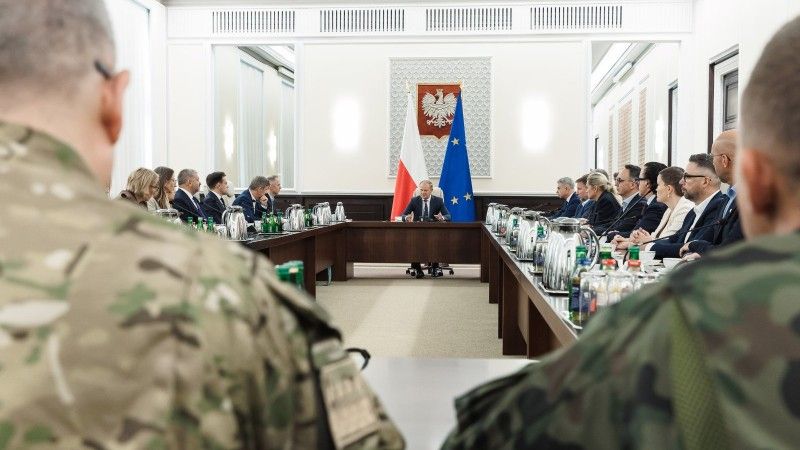
Poland has formally invoked Article 4 of the North Atlantic Treaty following last night’s Russian strike, requesting urgent consultations with its allies. This step underscores the seriousness of the situation: Article 4 has only been triggered seven times before in NATO’s history, making today’s move the eighth.
Throughout NATO’s history, Article 4 has been used only in moments of exceptional threat:
1) 2003 – Turkey and the Iraq War Turkey raised concerns that the U.S.-led invasion of Iraq could spill over into its territory.
2) 2012 (June) – Syria crisis Turkey requested consultations after Syria shot down a Turkish jet.
3) 2012 (October) – Syria crisis Turkey invoked Article 4 again after Syrian artillery fire killed five Turkish civilians.
4) 2014 – Russia and Ukraine Poland called for consultations following Russia’s aggression against Ukraine and the annexation of Crimea.
5) 2015 – Renewed attacks on Turkey’s border with Syria Turkey requested consultations after escalating violence along its southern frontier.
6) 2020 – Syria/Idlib airstrike Turkey invoked Article 4 after airstrikes in Idlib killed 33 Turkish soldiers.
7) 2022 – Russia’s invasion of Ukraine Eight Eastern flank allies, including Poland, triggered Article 4 on the very day Russian troops crossed into Ukraine.
8) 2025 – Russian strikes on Poland Warsaw has once again called on NATO allies after Russian missiles hit Polish territory.
Article 4 does not trigger military action; it is a political mechanism for consultations. Yet its importance lies in uniting the Alliance around a shared threat assessment. For Poland, the priority now will be bilateral diplomacy — pressing allies to back up their solidarity with concrete measures: the permanent deployment of additional air defense systems such as Patriot or SAMP/T, AWACS aircraft, and fighter jets.
Equally important is Article 3 of the NATO Treaty, which obliges all member states to maintain and develop their own defense capabilities and to assist each other in doing so. In practice, this means that allies should share equipment, technology, and operational support to strengthen the resilience of Poland and NATO’s entire eastern flank. Until national procurement programs are complete, temporary reinforcement from allies can help close immediate defense gaps.
By contrast, Article 5 — NATO’s collective defense clause — has been triggered only once, after the September 11, 2001 terrorist attacks in the United States. To consider invoking it today, there would need to be a clear, sustained, armed attack on Polish territory: a multi-stage strike with civilian casualties or damage to critical infrastructure. Current Russian actions represent dangerous escalation and probing of NATO’s resolve, but they stop short of the Article 5 threshold.
Poland’s decision to invoke Article 4 marks a serious escalation in the ongoing confrontation with Russia. But the real test will come in the days ahead: whether NATO translates political consultations into tangible military deployments. Together, Article 4 provides the framework for unity, while Article 3 demands that allies share the burden of defense. Both will be essential if the Alliance is to deter further aggression and protect its eastern flank.