- WIADOMOŚCI
- ANALIZA
- KOMENTARZ
Could the Iran conflict disrupt U.S. arms deliveries?

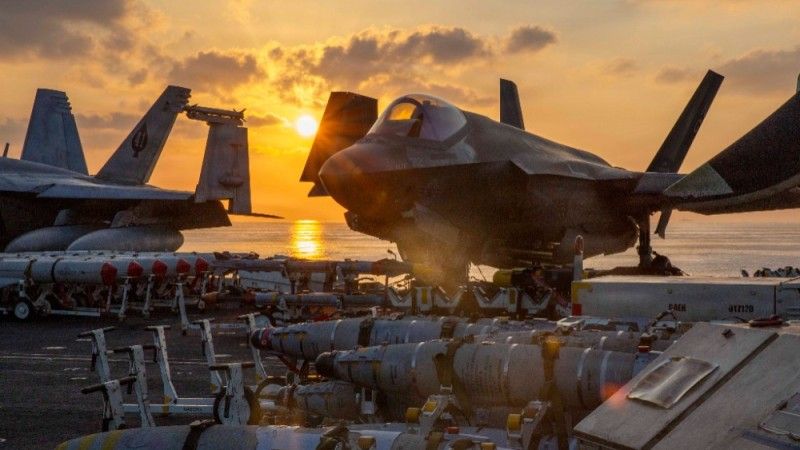
U.S. arms deliveries to Europe could face risks if the conflict involving Iran drags on, Polish Defence Minister Władysław Kosiniak-Kamysz said in Bratislava.
Polish MOD emphasised that while no delays in deliveries have been confirmed so far, the situation is being closely monitored. According to the minister, any escalation in the Middle East could place additional pressure on Western defence production, which is already operating near full capacity due to the ongoing war in Ukraine. “Polish, European and American defence industries must switch into sixth gear,” he said, stressing that the entire Western arms sector must move into what he described as a “full alert mode” in order to meet the rapidly growing demand for military equipment.
An estimated $2B worth of military losses so far
According to the report published on Wednesday, the U.S. lost approximately $2B worth of military equipment in the first 4 days of strikes against Iran, with costs likely to rise further. Reported losses include an AN/FPS-132 early-warning radar, three F-15E Strike Eagle aircraft, two SATCOM terminals, a component of the AN/TPY-2 radar used in the THAAD anti-ballistic missile system, and some SM-3 naval interceptors.
Sustained operations are placing growing pressure on U.S. munitions stockpiles, particularly high-end interceptor missiles and precision-guided systems. Patriot PAC-2 and PAC-3 interceptors are reportedly among the key assets currently being deployed. Taken together with operations against the Houthis, earlier clashes with Iran, and broader global commitments, including Indo-Pacific contingency planning, U.S. munitions stockpiles are becoming increasingly stretched.
Recent decisions in Washington illustrate how rapidly the current conflict is reshaping U.S. defence priorities. The emergency approval of a large-scale transfer of more than 20,000 bombs to Israel, authorised by the State Department under the Arms Export Control Act and bypassing the usual congressional review process, demonstrates the urgency with which the United States is now replenishing and redirecting munitions to the Middle East theatre. Such steps highlight the scale of consumption of precision-guided weapons in the ongoing campaign against Iran and inevitably raise questions about the availability of similar capabilities for other partners. In practice, this reinforces concerns that prolonged high-intensity operations could further strain American stockpiles and complicate delivery timelines for allies awaiting U.S. systems, including those in Europe.

What does Iran mean for Europe and Poland?
Although geographically distant from Poland, the military implications of the current conflict in Iran are tangible. Warsaw is currently acquiring a range of U.S. systems, including Patriot air-defence batteries, HIMARS rocket artillery, and additional armaments for its F-16 and F-35 multirole fighter aircraft. Many of these capabilities rely on the same categories of munitions and support assets now heavily utilised in ongoing operations.
Ukraine would likely face the most immediate consequences, given its heavy reliance on U.S.-supplied air-defence interceptors and other advanced capabilities. Notably, delays in certain deliveries had already occurred prior to the current escalation in Iran, suggesting that the latest developments may further reinforce an existing pattern of strained supply and production capacity. European allies awaiting U.S. equipment could also face additional delays.
Ukrainian President Volodymyr Zelenskyy has also warned that a widening conflict involving Iran could disrupt the steady flow of Western weapons to Kyiv. In an interview with the Italian daily Corriere della Sera, he recalled that a previous escalation between Israel and Iran had already slowed deliveries of certain military equipment. According to Zelenskyy, a prolonged Middle East conflict could place additional strain on Western defence resources and shift political attention away from the war in Ukraine. Analysts note that extended operations against Iran could consume significant quantities of interceptor missiles and precision-guided munitions, potentially limiting the availability of these systems for Ukraine at a critical stage of the war.
The overall impact of the conflict on the European procurement of American systems depends on whether the conflict in Iran remains short-lived or protracted. If the conflict drags into an attrition struggle between the industrial forces of the nations involved, given the urgency of the situation, the U.S. is likely to further de-prioritise Europe. Long-term, it is not unlikely that the U.S. will further decrease its funding for Europe to replenish its own stocks, depending on how much overall costs it reaches in Iran and other regions.
From a broader strategic perspective, the war with Iran once again highlights the global nature of American military commitments. The United States remains capable of projecting power across multiple regions simultaneously, yet every major conflict inevitably forces prioritisation within defence planning and industrial production. In Washington’s current strategic calculus, the Middle East crisis intersects with long-term competition with China in the Indo-Pacific and growing security concerns in the Arctic. In comparison, Central and Eastern Europe — including the war in Ukraine — remains important but does not necessarily occupy the top tier of U.S. global priorities. For European allies this reinforces a familiar conclusion: while transatlantic cooperation remains essential, greater responsibility for regional defence will increasingly fall on Europe itself.
See also 
No time to lose
Europe has run out of time long ago, but that does not mean its position is hopeless. There are still avenues to rapidly strengthen capabilities and deterrence, including increased defence funding at the EU level and renewed discussions with France on potential nuclear-sharing arrangements.
Polish Defence Minister Władysław Kosiniak-Kamysz also warned in an interview for RMF RM that escalating tensions in the Middle East could indirectly benefit Russia. Should disruptions to oil supplies through the Strait of Hormuz intensify, global energy prices could rise, potentially increasing Russian revenues. In response, Europe should closely monitor developments and be prepared to impose additional sanctions where necessary, including stricter action against Russia’s so-called “shadow fleet” operating in the Baltic Sea.
As for Poland, the urgency of the situation, coupled with an increasing potential for regional escalation, makes one thing clear: it cannot afford to lose any more time in building up its defences and must use any means available. In this context, the recent domestic disputes over access to EU defence financing mechanisms such as SAFE are highly counterproductive, as they risk slowing the acquisition of critical military systems.
At the same time, the growing polarisation between pro-American and pro-European camps within Poland’s political elite threatens to undermine the country’s long-standing security strategy. For decades, Poland’s defence architecture has rested on two mutually reinforcing pillars: the transatlantic alliance and European cooperation. That logic remains valid today. Strengthening one should not come at the expense of the other.
For Poland, what is now particularly important is that the SAFE programme is becoming increasingly prominent. It is also important that nearly 10,000 American soldiers are stationed on Polish territory, while the weapons that the United States is expected to deliver remain a symbol that the Warsaw–Washington relationship is still strong. The United States must therefore find the right balance in this matter, because Poland is not only planning to develop its own defence industry, but is also looking for European partners. At the same time, Western European countries also want to expand their own defence industries and increasingly see Poland as a partner. The question now is to what extent the United States also sees Poland as a partner?
It remains increasingly plausible that U.S. arms deliveries may face additional pressure. This does not mean that transatlantic cooperation will disappear. However, it does underscore the need for Europe, including Poland, to assume greater responsibility for its own security and to act with prudence and resolve regardless of how the conflict in Iran ultimately evolves.
Authors: Karolina Kisiel and Dr. Aleksander Olech