












- KOMENTARZ
- WIADOMOŚCI
- ANALIZA
Putin leaves China empty-handed?

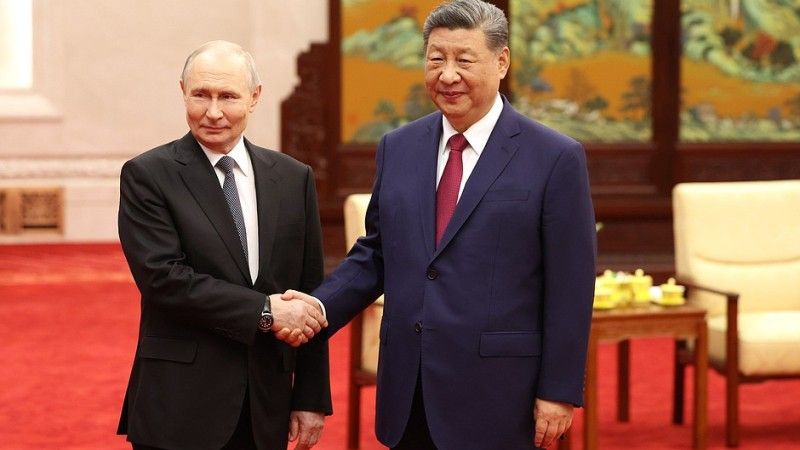
Photo. kremlin.ru
The NV text by Ihor Tyshkevych offers a very interesting reading of Vladimir Putin’s visit to China. At the propaganda level, Moscow may present the visit as another success, with dozens of signed documents and declarations of strategic partnership. Yet once we look at what was actually signed, the picture is very different: Beijing showed Moscow its place, politely but very clearly.
The most important point is that Putin’s visit looks successful only if we count documents, not their political or economic weight. Tyshkevych notes that two joint political declarations were signed, but one of them effectively meant Russia’s support for China’s concept of a global civilisation initiative, while the second did not introduce any new serious element beyond issues concerning cross-border bridges, which would belong to China. In most other areas, the language was simply that the sides would „continue” cooperation, which in diplomacy often means continuity without breakthrough.
From the Russian perspective, this was supposed to look like confirmation that Moscow and Beijing are building a deep strategic partnership. From the Chinese perspective, it looks much more like the careful management of a weaker partner. China does not need to humiliate Putin publicly, because it has no interest in doing so. It is enough to sign documents of limited value, strengthen its own infrastructural and resource position, and leave Russian propaganda enough material to declare success at home.
The most telling part is the list of the remaining documents. According to the NV text, out of around 40 documents, 22 were memoranda and statements. These are political and communication instruments, not hard agreements that fundamentally change the Russia-China relationship. The only real intergovernmental agreement concerned the construction of the second railway line between Manzhouli and Zabaykalsk, with a 1435 mm gauge, which is primarily useful for more convenient transport of Russian resources to China.

This is the core of the matter. Russia is no longer going to China as an equal great power. It is going as a state that needs markets, technologies, money, components and political cover. Beijing knows very well that Moscow has fewer and fewer alternatives. Europe is closed to Russia, Western sanctions remain in place, and the war against Ukraine is pushing the Kremlin into deeper dependence on the Asian direction.
The railway issue is symbolically important. If the most concrete result of the visit is infrastructure that makes it easier to move Russian resources towards China, then it is difficult to speak about a partnership of equals. It is rather a model in which Russia is gradually becoming China’s resource hinterland, while Beijing calmly and consistently builds its advantage without the need for open confrontation with Moscow.
The media and academic agreements also show this asymmetry. Tyshkevych points to several agreements on cooperation and information exchange between media outlets, and to university partnerships in which Russia is represented by top institutions, while the Chinese side is represented by institutions of a lower rank. This does not mean that such agreements are meaningless, but it shows the political imbalance. Russia needs proof that China is a partner. China can afford selective, technical and low-risk cooperation.
For the Kremlin, the domestic presentation is the most important part. Russian media can speak about the number of signed documents, information cooperation, joint declarations and the image of Putin being received by Xi Jinping. This creates the impression that Russia is not isolated. The problem is that behind this façade there is no qualitative breakthrough. What we can see instead is Russia’s growing dependence on China.
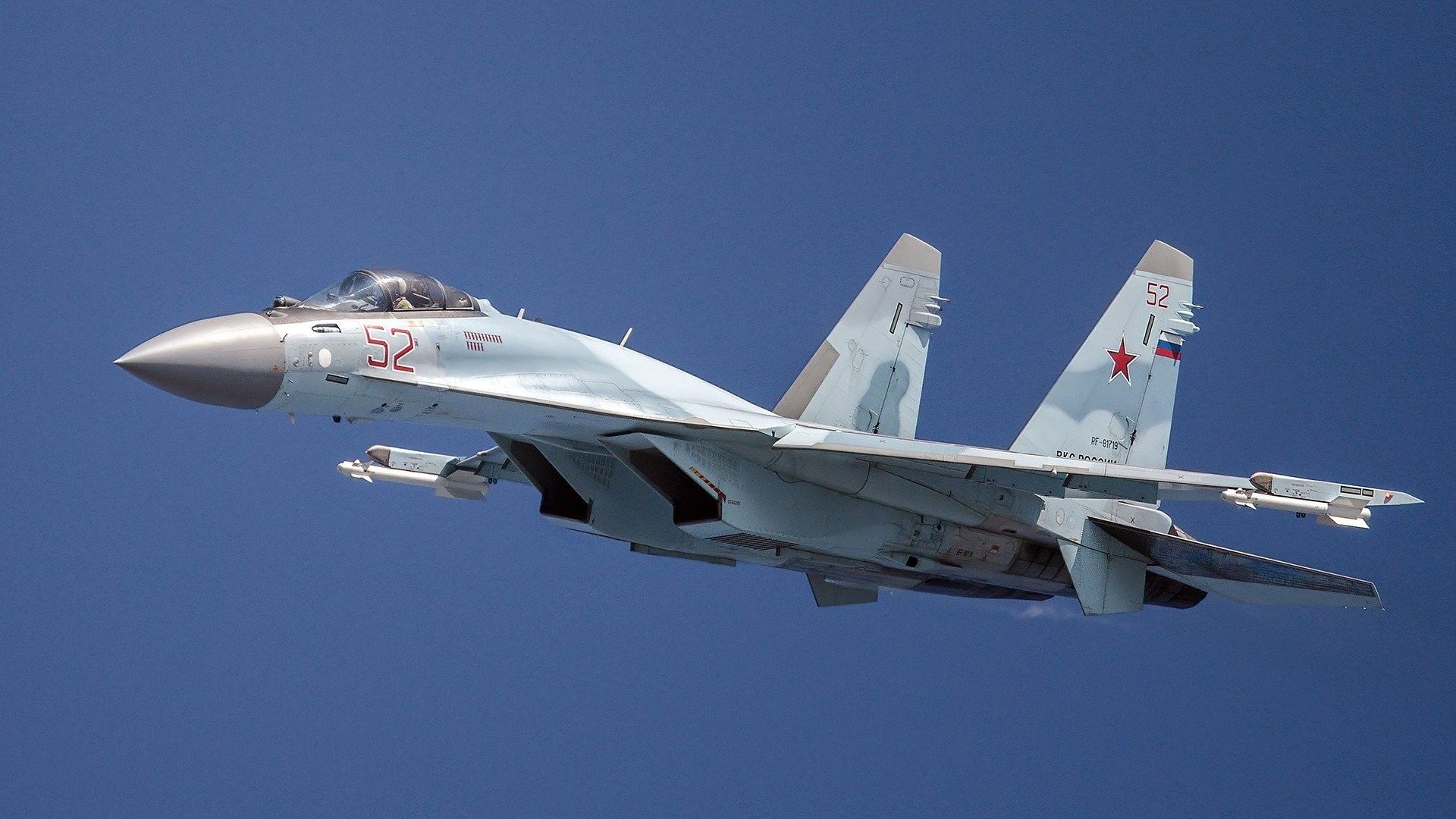
China is playing this much more patiently. Beijing does not have to say openly that Putin is weaker. It is enough not to give Moscow what it really wants: full political backing, breakthrough economic agreements, visible military protection or direct involvement in the confrontation with the West on Russia’s side. China supports Russia where it is profitable, but it will not pay the price for Russia’s war against Ukraine.
This matters for Europe. Russia’s growing dependence on China does not mean that Russia is less dangerous. It means that Russian policy will increasingly be shaped by the broader China-US rivalry. For Poland, Ukraine and the Baltic states, the key lesson is that Russia may be economically weaker, but it remains militarily aggressive and politically ready to destabilise Europe.

That is why Tyshkevych’s text is important not only because it describes Putin’s diplomatic weakness in China, but because it shows the mechanism of that weakness. There was no public humiliation, no sharp communiqué and no theatrical distance. There was something much more Chinese: a polite reception, many documents, little substance and a clear signal that Russia has far less room for manoeuvre than it wants to show its own society.
Of course, this assessment is based on the Ukrainian reading presented in the NV text. That matters. Russia and China will certainly present this visit differently and will emphasise continuity, partnership and anti-Western coordination. Ukraine also has its own view of relations with China. Kyiv understands that Beijing is important, but at the same time keeps its distance, because it knows that it will not receive much from China while Beijing continues to calculate its interests through the prism of Russia, the United States and its own global position.


