












- WAŻNE
- WIADOMOŚCI
War in Iran. And what's next?

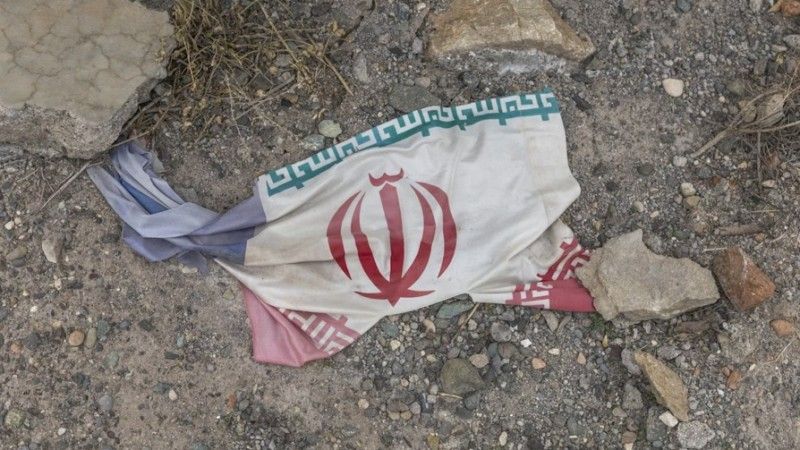
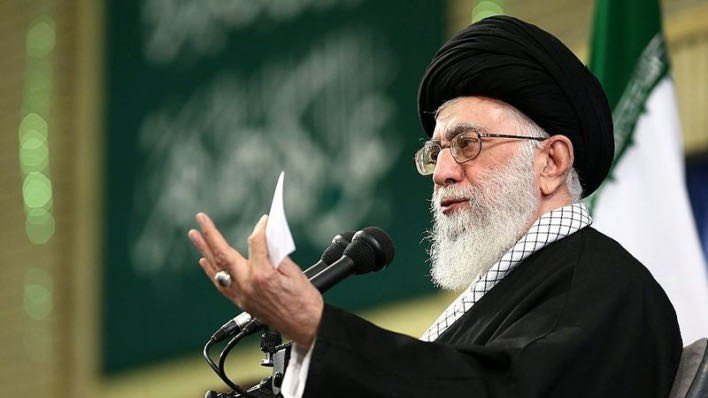
One of the objectives of the US and Israeli attack on Iran is regime change in the country. The airstrikes killed Ayatollah Ali Khamenei. The Supreme Leader of Iran had been in power for nearly 37 years. Will the elimination of the head of state allow for a complete change of power?
US Secretary of Defense Pete Hegseth assured that “the mission of Operation Epic Fury is laser-focused: destroy Iranian missiles (…), destroy Iran’s missile production, destroy their navy and security infrastructure so that they will never have nuclear weapons.” He added that the war was not designed for regime change, but the regime has certainly changed.
How does this align with reality? It should be noted that Khamenei’s death did not come as a surprise to Iran. The assassination of the country’s supreme spiritual and political leader—primarily by Israel—had always been a real possibility. During this time, the regime managed to build mechanisms ensuring continuity of power in the event of such an occurrence.

The duties of Iran’s Supreme Leader have been assumed by a temporary leadership council, which will govern the state until a successor is chosen. The council consists of three members: President Masoud Pezeshkian, Chief Justice Gholam-Hossein Mohseni Ejei, and Friday Prayer Imam in Qom, Alireza Arafi.
The regime should be eager to elect a new Supreme Leader as soon as possible to demonstrate continuity of power and state stability despite external pressure. The selection of the leader is decided by the Assembly of Experts—a clerical body composed of 88 members. At present, it is impossible for the Assembly to convene physically due to ongoing attacks. It should also be noted that any newly elected Supreme Leader will immediately become a potential target for further strikes.
In the context of regime change, the name of Cyrus Reza Pahlavi, the son of the last Shah of Iran, has resurfaced. He currently lives in exile in the United States with his family and from there continues his struggle against the Islamic Republic of Iran. He has declared his readiness to lead a transition of power in the country. In an interview with Fox News, he emphasized that he would pursue democratic reforms. “I am leading this transformation. I have the support of millions of Iranians. I have people inside the country joining us (…) the military will stand on our side. We have an action plan and a roadmap for change.” This process, he said, should lead to “a democratic outcome so that Iranians can choose their future government and system.” Pahlavi encourages Iranians to take to the streets and seize power, echoing the American stance.
At present, it is difficult to assess the politician’s actual public support due to the lack of independent polling. He enjoys backing from the Iranian diaspora but lacks political structures or documented ties to the internal opposition in Iran. The National Council of Resistance of Iran (NCRI), led by Maryam Rajavi, is also vying for power. It is an organization of the People’s Mujahedin with a leftist-Islamic program. The NCRI declares that it seeks to transform Iran into a democratic republic. It promotes slogans such as democracy, pluralism, freedom of speech, separation of religion and state, and autonomy for ethnic minorities, including Kurds. It should be noted that the NCRI strongly criticizes Pahlavi, accusing him of seeking a return to the Shah’s dictatorship (before the Islamic Revolution, Iran was a monarchy).

The issue of regime change in Iran is by no means settled. At present, there are no signs of mass defections from the ranks of the Islamic Revolutionary Guard Corps (IRGC), one of the key institutions ensuring the functioning of the Islamic Republic. As long as Iran’s religious authorities maintain their military wing, further protests and demonstrations will continue to be brutally suppressed. Moreover, none of the opposition forces currently stand out in terms of effectiveness or popular support among the Iranian population.


