












- ANALIZA
- WIADOMOŚCI
Romania's €16.7 billion bet: What Europe's second-largest SAFE allocation actually buys

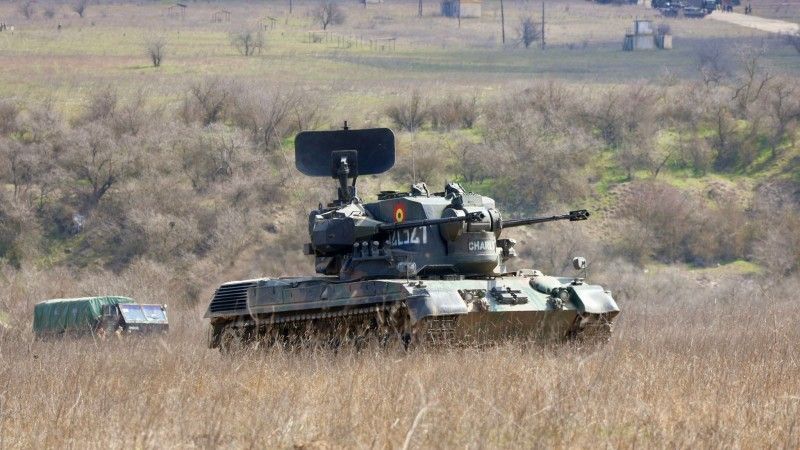
The European Commission officially countersigned Romania’s SAFE loan agreement, completing a process that had been building for months.
The number at the top of the document: €16.68 billion – the second-largest allocation under the SAFE instrument in the entire European Union, after Poland. For a country with a GDP of roughly €300 billion, that figure is staggering. For a country sitting on NATO’s eastern flank, with Ukraine fighting next door and Moldova sandwiched between them, it might also be overdue.
The money, broken down
The Romanian government decided to distribute the amount as follows: 9.6 billion euros will go on defence modernization projects handled by the Ministry of Defence; 2.8 billion euros will be used for equipment for the Ministry of Internal Affairs and other public institutions; and finally, 4.2 billion euros for strategic sectors of motorways A7 and A8 in Romania’s north-eastern region.
That last chunk is worth pausing on, because what does it mean – motorways under a defence instrument? The funding will cover military procurement projects, defence technology, related infrastructure, and transport projects of strategic importance. Under SAFE’s rules, dual-use infrastructure – roads that can move troops and equipment just as easily as trucks and tourists – qualifies. Romania’s north-eastern region, historically underdeveloped and geopolitically exposed, gets to frame its long-delayed highway connections as a matter of national security. Convenient? Perhaps. But also not wrong.
The terms themselves are quite generous. The funds will be borrowed by the Romanian government and repayable from the year 2035 for thirty years, at an interest rate not exceeding 3%, according to the authorities, which is highly advantageous. Each tranche, including pre-financing, will have an average life of 45 years, including a 10-year grace period. This means that Romania will borrow today, build today, and repay after nine years. The first tranche payment, which consists of pre-financing amounting to about €2.5 billion, equivalent to 15% of the loan, may be made in October 2026.

21 projects and one very large shopping list
Romania’s Defence Portfolio that is funded by SAFE encompasses 21 programs totaling €9.53 billion out of which ten joint European procurement programs and eleven national acquisitions. How about in terms of equipment?
Ground Forces Modernization Program comprises 139 8×8 Armored Personnel Carriers of Piranha 5 type for €761.2 million, 198 tracked infantry fighting vehicles for €2.98 billion, and no fewer than 1,370 wheeled logistical/transport trucks for €471.5 million. Naval programs include two Offshore Patrol Vessels for €700 million and seven Naval Strike Missile coastal defense missile systems worth €207 million. The programme also includes the acquisition of 12 H225 helicopters from France, 12 radars through a joint purchase with France, three air defence systems to complement the Patriot system through a joint programme with Germany, and two centralised anti-aircraft command systems, also in cooperation with Germany.
The headline item is the infantry fighting vehicle contract. The largest acquisition concerns 298 tracked infantry fighting vehicles procured through Rheinmetall Automecanica SRL under a €3.337 billion framework agreement intended to replace Romania’s MLI-84 fleet derived from Soviet BMP-1 vehicles. Romania has been trying to get rid of those Soviet-era platforms for decades and SAFE finally gives it the financing to do so.
The controversy nobody in Bucharest wants to talk about
The constitutional status of the domestic legislation enabling SAFE implementation is, as of this writing, actively disputed before Romania’s Constitutional Court. The president of the Chamber of Deputies and head of the Social Democratic Party, Sorin Grindeanu, filed a request with the Constitutional Court to resolve an alleged legal conflict of a constitutional nature between Parliament and the government, regarding the so-called „SAFE ordinance” adopted by the interim government. The Ombudsman filed a separate challenge. The former president of the Constitutional Court, Tudorel Toader, said that if the constitutional judges admit the Ombudsman’s complaint, the effects of the ordinance regarding defence investments under the SAFE programme will be annulled.
Why does this matter? Because the conflict comes less than two weeks before the deadline for sealing the contracts financed under the SAFE scheme. Billions of euros in procurement, years of planning, and NATO modernization commitments are potentially hostage to a domestic political fight between an interim government and an opposition party that smells an opportunity.
Grindeanu’s argument is constitutional, that a government dismissed by a no-confidence motion exceeded its powers. The government’s counter is procedural, that it merely re-approved a previously adopted ordinance. The former head of the Constitutional Court noted that, in his opinion, Grindeanu’s complaint would not be admitted, as there is no legal conflict of a constitutional nature between the government and Parliament. But the Ombudsman’s challenge is a different matter.
Procurement integrity question
Defence observers raised concerns that Romania’s SAFE-funded defence procurement framework is being used in a way that limits competition and undermines accountability. The IFV contract in particular drew scrutiny. Sources indicate that unit prices increased by over 10% in early 2026, with adjustments achieved primarily through volume reductions rather than meaningful price concessions. In effect, the perceived cost advantage appears to be achieved through reduced procurement volume rather than improved pricing terms. On localisation, the politically popular promise that Romanian workers and factories will benefit, the picture is also murkier than official statements suggest. Defence Minister Radu Miruță stated that the IFVs will be produced in Mediaș, where Rheinmetall took over the former Automecanica facility in 2024. But independent analysts point to a gap between the government’s headline localisation figures and what is likely to materialise in practice. The head of the Chancellery said the executive aims for as many components of the defence system as possible to be produced domestically, by Romanian public or private companies – language that is aspirational, not binding.
The strategic logic is real, even if the execution is messy
Strip away the politics and the procurement concerns, and the underlying rationale for Romania’s SAFE allocation is hard to dispute. Romania’s €16.68 billion allocation reflects its size and security role on the EU’s eastern flank. The country shares a border with Ukraine, hosts NATO’s ballistic missile defence site at Deveselu, and has a strategic position on the Black Sea, where Russian naval capabilities continue to pose a security challenge. Its ground forces have been running Soviet-era equipment long past the point of embarrassment. The SAFE-funded build-up includes new infantry fighting vehicles, air-defence systems, offshore patrol vessels, anti-ship missiles, and H225M helicopters designed to strengthen Romania’s ability to counter drone attacks, protect Black Sea infrastructure, and sustain NATO reinforcement operations near Ukraine and Moldova.
This is not discretionary spending, it is a country on a live front catching up with twenty years of under-investment, funded at rates no commercial lender would offer. Romania has secured access to €16.68 billion in EU-backed loans at historically favourable terms, with a clear spending plan, a functioning institutional structure, and a procurement list that maps directly onto real capability gaps. The first €2.5 billion could arrive in October so the motorways connecting Moldova to Europe are no longer a political promise, they now have financing behind them. However, the domestic legal framework now faces constitutional challenges. There are credible questions about whether the procurement process for the single largest contract – the Rheinmetall IFV deal – was genuinely competitive and there is a gap between the government’s localisation promises and what independent observers think will actually be delivered to Romanian workers and factories.


