












- ANALIZA
- WIADOMOŚCI
SMRs and microreactors in the military

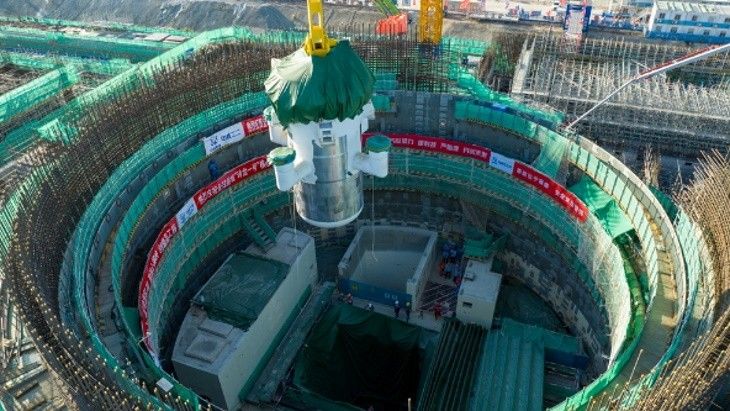
Photo. CNNC
Small modular reactors are not a technology that will solve every problem faced by an army during wartime. They will not replace fuel, the deployment of forces or existing sources of energy. On the other hand, they could become an important element in preparing the state for crisis and war. Modern armed forces need not only soldiers, tanks and artificial intelligence, but also a stable power supply for the systems on which military operations depend. It is from this perspective that the military importance of SMRs and microreactors should be developed.
Modern warfare is not limited to strikes against selected military units. Increasingly, it begins with an attempt to paralyse the state by depriving it of energy, transport capabilities, communications and the ability to exercise command rapidly. Russia has demonstrated this in its operations against Ukraine. Attacks against energy infrastructure are not an addition to a military operation, but part of the way in which war is conducted. Hybrid activities may also serve as a prelude to open conflict, while a strike against the state’s support infrastructure may precede direct action on the battlefield.
Therefore, the discussion about the use of small modular reactors by the military should not begin with deliberations about the technology itself, but with the question of what is required to strengthen state resilience. SMRs and microreactors could provide the military with a source of energy that does not depend exclusively on the civilian grid. This does not mean that a small reactor will replace power stations, generators, energy storage facilities or large fuel deliveries. However, a dispersed and adequately protected source of energy may be less vulnerable to the consequences of an initial strike against the national power grid.
It is necessary, however, to distinguish conventional SMRs from much smaller microreactors. In the military context, the greatest interest concerns designs with a capacity of several or perhaps more than ten megawatts, which can be manufactured in factories, transported in modules and commissioned at their final location. Their advantage is intended to lie not only in their small size, but above all in their ability to operate independently of the national power grid.
This is particularly important for facilities that must operate continuously. These include command posts, radars, air and missile defence systems, as well as airfields, naval ports and installations located in remote operational areas. The more extensively an army relies on data, artificial intelligence, unmanned systems and electronic warfare, the greater its need for uninterrupted access to energy.
Small-scale nuclear power is therefore ceasing to be an exclusively energy-related subject and is also becoming a matter of security and military preparedness. Civilian SMRs are designed primarily for the energy sector, industry and large consumers, whereas microreactors are intended to be significantly smaller, may operate for several years without refuelling and, in some projects, are designed to be transported to their installation site. Naval propulsion reactors used in nuclear-powered submarines and aircraft carriers remain a separate category. Possessing such vessels does not automatically mean that a state is also pursuing a programme of land-based microreactors for military bases.
The concept of mobility must also be understood quite broadly. A reactor contained within modules or shipping containers is not an ordinary generator that can be moved freely between military units. The ability to transport the system before commissioning is one matter, while its subsequent operation, protection, cooling and transport after the fuel has been irradiated are entirely different issues. Therefore, the most realistic military applications concern permanent and semi-permanent bases, remote outposts and Arctic installations, rather than units positioned directly behind the front line.
See also 
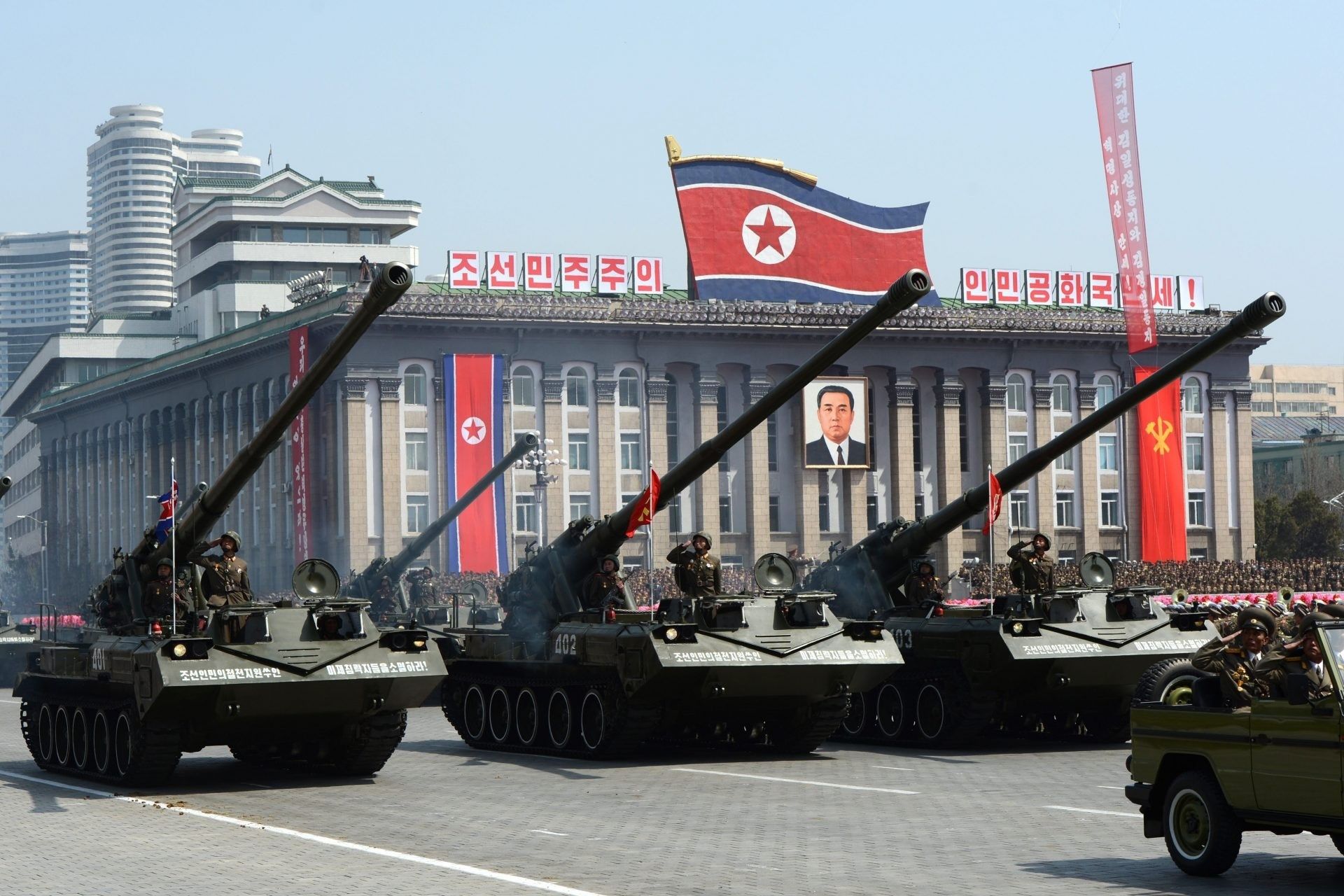
The United States, Russia, China and Europe
The United States is the most advanced country in the development of the military programmes described above. Project Pele is intended to demonstrate whether a transportable Generation IV reactor can power military installations in locations where energy is expensive, difficult to deliver or vulnerable to disruption. It is no longer merely a concept. Fuel intended for the prototype has been delivered to Idaho National Laboratory, where the reactor is to be assembled and tested. Importantly, however, even the United States, despite its enormous technological and financial capabilities, continues to speak primarily about demonstration and the gradual testing of this solution.
Another American undertaking is the Janus Program, which concerns the development of microreactors for permanent military installations in the United States. The US Army has identified nine potential locations, including Fort Bragg, Fort Campbell, Fort Drum, Fort Wainwright, Joint Base Lewis-McChord and Redstone Arsenal. The final number of reactors has not yet been determined, while the objective remains the deployment of a demonstration installation by 2030. Before a microreactor is used abroad, the technology will therefore be tested at home.
This shows that even the United States does not regard small-scale nuclear power as a solution ready for immediate use. The safety of the system, the method of protecting it and the real costs of operation must first be examined. Only then will it be possible to make decisions concerning the wider introduction of this technology into the armed forces.
Russia has different experience, as it has been developing reactors for submarines, nuclear-powered icebreakers and Arctic infrastructure for many years. The Akademik Lomonosov, a floating nuclear power plant operating in Chukotka since 2020, formally serves civilian purposes, but its significance for the presence of the Russian state in the north is considerable. Energy in the Arctic makes it possible to maintain infrastructure and the state’s support facilities in locations where conventional logistics remain expensive and difficult.
In the Russian case, it is not necessary to prove that every small-reactor project is an installation belonging to the Ministry of Defence. It must instead be emphasised that the development of small-scale nuclear power in the north has a dual-use character. A reactor may supply a town, mine or port, while at the same time strengthening Russia’s presence in a region important to its navy, nuclear-powered icebreakers, surveillance systems and control of Arctic routes. It is therefore not merely an energy project.
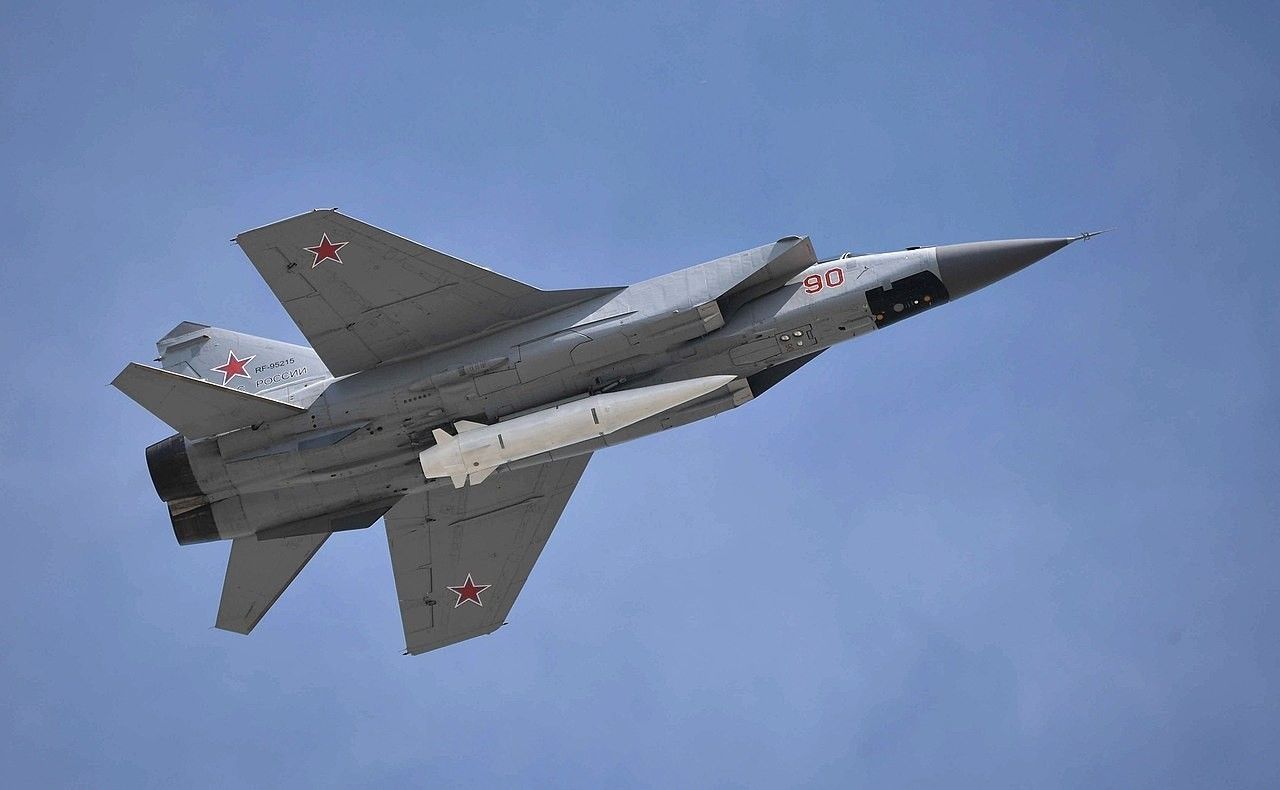
China is developing SMRs as part of a policy of technological self-sufficiency and an effort to increase its ability to maintain a presence in remote regions. At present, these are primarily civilian projects which may also acquire military applications in the future. The HTR-PM at Shidao Bay entered commercial operation in December 2023, while the ACP100, known as Linglong One, remained under construction according to the most recent available information, with commissioning planned for this year. Chinese entities have also been developing concepts for floating nuclear power plants, including the ACP100S, for many years.
At the same time, the HTR-PM and ACP100 should not be presented as existing Chinese military reactors. They are civilian projects. It must nevertheless be emphasised that the development of small-reactor technologies provides Beijing with capabilities that may be used to power infrastructure located far from the main electricity grid. This is particularly important at sea and in regions where China wants to maintain a permanent state and military presence.
Canada is developing small reactors primarily with the north of the country and the resilience of its infrastructure in mind. In April 2026, the Canadian government announced that it would allocate CAD 40 million to assess the possibility of using a Canadian-controlled microreactor to provide energy and heat to remote installations belonging to the Department of National Defence and the Canadian Armed Forces. This remains a research programme, but it demonstrates that Ottawa is beginning to link microreactor technology directly with defence requirements and the maintenance of a presence in the Arctic.
The United Kingdom, France, South Korea, Japan, Argentina and Australia possess technologies, requirements or an industrial base that may lead to the future development of small-scale nuclear power for military purposes. However, capabilities must be distinguished from existing programmes. The British Rolls-Royce SMR remains a civilian project with a capacity of 470 MWe, while Australia’s participation in AUKUS concerns primarily nuclear-powered submarines. Experience in nuclear energy or naval propulsion provides important expertise, but it does not automatically amount to a programme for land-based microreactors intended for military bases.
In general, the European debate on SMRs is significantly more complicated. On the one hand, the European Commission recognises that small reactors may strengthen energy security and strategic autonomy. On the other hand, Member States remain divided over nuclear energy itself. France, Poland and Slovakia support its development, while Germany and Austria take a much more critical approach to such projects.
At present, however, the European Union is operating primarily in the civilian domain. The strategy adopted by the European Commission in March 2026 aims to accelerate the construction of the first European SMRs in the early 2030s. The document concerns energy generation, industry, heat production and the supply of large consumers. It is not a programme for deploying microreactors at military bases.
European states will therefore have to answer the question of whether they want to develop military technologies independently or decide to purchase American designs. A lack of domestic industrial capabilities may lead to a situation in which a state obtains a more resilient source of energy while simultaneously becoming dependent on a foreign supplier for technology, fuel and technical support. In such a case, increased energy security will not automatically mean full strategic autonomy.
In NATO’s case, interest in the technology must be separated from projects that are actually being implemented. The Alliance is increasingly addressing energy resilience, while the NATO Energy Security Centre of Excellence is cooperating with entities developing new solutions, including Last Energy. This does not mean, however, that NATO is conducting a programme to build microreactors at its bases. At present, this is primarily an area of analysis, exchange of experience and research into possible applications.
Challenges
The greatest obstacle remains the fact that most military microreactor concepts are still at the design or testing stage. Advanced programmes exist in the United States, while civilian installations are already operating in Russia and China, but questions concerning costs, certification and the scale of production remain unresolved. Approval procedures for the most innovative designs may take many years.
There are also risks connected with cybersecurity. Modern reactors are expected to rely extensively on digital control systems and automation. This reduces some of the risks associated with human error, but at the same time creates new opportunities for an adversary. At a military base, a cyberattack against an energy management system could affect not only the reactor itself, but also every installation dependent upon it.
The issue of spent fuel and radioactive waste cannot be overlooked either. The fact that a reactor is smaller does not mean that the problem disappears. Radioactive materials will still require protection, storage and transportation. In wartime, the transportation of fuel may become a target for sabotage or attack. Placing a reactor underground or inside a suitably protected facility may make it more difficult to destroy, but it may also complicate emergency operations in the event of an accident.

Nor does a reactor automatically become resistant to attack simply because it is small. It will still require a system of protection, control and emergency procedures. Small-scale nuclear power may reduce the military’s vulnerability to the destruction of the civilian electricity grid, but at the same time it creates a new facility that an adversary will attempt to identify and attack.
The question of public acceptance also remains. In democratic states, the deployment of a reactor near a military base will require transparent procedures, consultations and responses to the concerns of local residents. Russia and China can take such decisions within a much narrower circle. The United States, Canada and European countries will have to convince public opinion that the risks have been reduced and that the installations will remain fully protected.
Small reactors may in the future change the way in which armed forces plan the security of their energy supplies. They could reduce dependence on civilian grids and limit some of the fuel deliveries that become easy targets during wartime. They will be particularly useful in the Arctic, on remote Indo-Pacific islands and at bases without permanent and stable infrastructure. It sounds like a solution intended primarily for conducting military operations far from a state’s own territory, where maintaining the necessary support facilities is one of the most important challenges.
This does not, however, mean the end of traditional logistics or a rapid transition of the armed forces to nuclear energy. Small-scale nuclear power will not replace every other source of energy and will not remove the military’s need for fuel. It may, however, secure some of the most important infrastructure and allow operations to continue even when the civilian grid has been damaged or completely cut off.

Ultimately, it must be made clear that SMRs and microreactors remain technologies with significant military potential, but their actual usefulness has yet to be confirmed and tested. At the same time, the states that are the first to connect reactor development with the requirements of their armed forces will certainly gain a significant advantage, including on the battlefield. Those countries, unfortunately probably including some members of the European Union, that limit themselves to observing foreign projects will later be purchasing not only energy, but also technological dependence in order to increase their own military capabilities. Europe must confront this reality now.


