- ANALIZA
- WIADOMOŚCI
Russia and Belarus held major nuclear drill

From May 19–21, the Russian and Belarusian militaries conducted a major nuclear drill that included joint presidential participation. The three-day exercise, held inside Russia and Belarus, focused on the preparation and employment of strategic and non-strategic nuclear forces under simulated aggression conditions.
It involved over 64,000 personnel, more than 7,800 equipment units, over 200 missile launch systems, more than 140 aircraft, 73 surface ships, and 13 submarines, including eight strategic ballistic missile submarines (SSBNs). Participating formations included the Strategic Rocket Forces (RVSN), Northern and Pacific Fleets, Long-Range Aviation Command, elements of the Leningrad and Central Military Districts, and Belarus within the Regional Troops Grouping (RTG). The previous Russia–Belarus nuclear exercise in 2024 was limited to non-strategic (tactical) nuclear weapons. The Russian Ministry of Defence said that the drill’s objectives were to improve command and operational staff proficiency during deterrence operations, verify the readiness of military command bodies, and evaluate formations’ practical ability to execute command, coordination, and comprehensive support functions.
The forces involved in the drill are similar to those required by Cold War-era strategic operation planning in the Western/European Theater of Military Operations (TVD) with nuclear weapons use. It usually combined theater-wide RVSN, Fleet, and Long-Range Aviation nuclear strikes and a first massive front-level nuclear attack. Soviet doctrine called for up to 120 operational-tactical and tactical missile launchers, supplemented by nuclear-capable artillery, totaling 149–169 delivery systems. Aviation was expected to deliver 200 nuclear bombs in a single coordinated sortie in two strike echelons. The Soviet Supreme High Command could allocate 500–1,200 warheads to a front, including 300–500 for an initial massive strike.
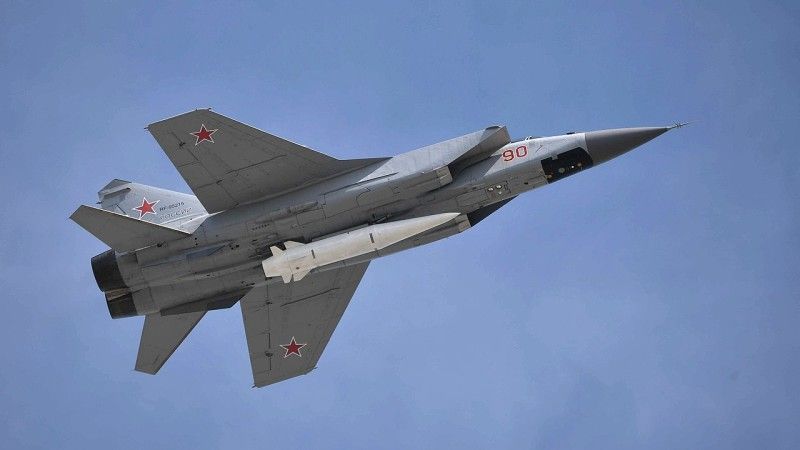
The May exercise unfolded in two phases. During the first phase from May 19–20, a surprise nuclear readiness inspection brought Russian and Belarusian units to combat readiness, including the delivery and issuance of nuclear munitions. The second phase, on May 21, involved launches of an RS-24 Yars Intercontinental ballistic missile (ICBM) from Plesetsk, a 3M22 Zircon hypersonic missile and an RSM-54 Sineva ICBM from the Barents Sea, Kh-102 cruise missiles from Tu-95MS bombers, and a Kh-47M2 Kinzhal hypersonic missile from a MiG-31I. Mock nuclear warheads are typically used to avoid perceptions of a nuclear attack preparation and adversary countermeasures.
Belarus announced its participation one day before the drills on 18 May. Minsk framed it as training in nuclear weapons employment and support to improve personnel standards, verify equipment readiness, and practice force employment across the entire territory of Belarus, with emphasis on concealment and strike employment calculations. The exercise involved Belarus’ 465th Missile Brigade based at Asipovichy, Mahileu Oblast. Belarus’ 1405th Artillery Ammunition Storage Base is just 7.5 miles away in the Malaya Harozha village, one of the probable storage sites/Repair Technical Bases (RTBs) for nuclear warheads in Belarus.

The Russian Ministry of Defence stated it delivered ammunition to field storage positions in Belarus and mounted it on Iskander missiles during the drill. Released footage, however, showed only Minsk Automobile Plant (MAZ) trucks, not the specialised 12th GUMO KAMAZ vehicles normally associated with nuclear weapon transport. Footage depicted vehicles departing—likely from the 1405th Artillery Ammunition Storage Base or 465th Missile Brigade hangars in Belarus—and Iskander missile loading from the transloader vehicle to the launcher, and launch preparation during night and day, but provided no direct evidence of warhead transfer. The absence of the specialised 12th GUMO KAMAZ transport equipment suggests warheads were likely loaded onto missiles at the 1405th Artillery Ammunition Storage Base before delivery to firing positions by transloaders. A newly built 7.5-mile railway line may also enable rapid transfer of pre-mated nuclear missiles from the ammunition base directly to Belarus’s missile brigade.
On May 21, Lukashenka visited his 465th Missile Brigade, inspecting the vehicle park and command post and observing an electronically simulated nuclear missile strike. Belarusian 465th Missile Brigade commander, Colonel Alexander Kravtsov, clarified that the electronic launch is functionally identical to a live firing in every respect except that the missile does not physically leave the launcher rail. One Belarusian missile battalion subsequently conducted real combat launches of Iskander missiles at a training ground in Russia. The presence of Russian Major General Roman Gromyshov, a senior 12th GUMO representative, alongside Lukashenka demonstrates Belarusian units’ integration into the broader Russian command-and-control and nuclear-technical support architecture. The missile and warhead were covered with a tent during the inspection. The 9M723 Iskander ballistic missile may be fitted with four nuclear warhead types: the 9N64 carrying the AA-75 device (with an explosive yield equivalent to 1–10 kilotons of trinitrotoluene (TNT)), the 9N39 carrying the AA-60 variable-yield device (equivalent to 10–100 kilotons of TNT), the 9N64 with AA-86 (equivalent to 5–50 kilotons of TNT), and the 9N64 with AA-92 (equivalent to 100–200 kilotons of TNT).

Su-25 aviation units from Belarus’ 116th Guards Assault Aviation Base in Lida, Belarus, participated in parallel. The Belarusian military armed carrier aircraft with air-delivered weapons, occupied airborne duty zones, and simulated delivery of nuclear munitions, rehearsing dispersal, camouflage, and occupation of infrastructure for aircraft survivability. Participation of Su-30SM/SM2 nuclear-capable aircraft from the 61st Fighter Aviation Base in Baranavichy, Belarus, was not publicly reported. In both cases, the 2631st Aviation Base of Missile Weapons and Ammunition near Prudok railway station in Vitebsk Oblast—another potential nuclear warhead RTB—would first arrange mobile RTBs and deliver warheads to their basing or dispersal airfields. Su-25s can carry RN-40 (30–40 kilotons), RN-41 (10–20 kilotons), and RN-28 (5–10 kilotons) tactical nuclear bombs. Su-30SM/SM2 can carry both nuclear bombs and guided air-to-surface missiles Kh-59 Ovod, Kh-59M, Kh-59MK, Kh-59MK2, and the new-generation Kh-69 with TK-57-08 nuclear warheads (100-kiloton yield) or TK-43 nuclear warheads.
Russian and Belarusian officials framed the nuclear drills within a broader geopolitical context. Russian Foreign Minister Sergey Lavrov argued that a world war is underway in Eurasia, with Western-backed Ukrainian aggression against Russia as one element. Lavrov supported potential nuclear use to create conditions for successful Russian military operations in Ukraine. Belarusian Deputy Foreign Minister Igor Sekreta briefed foreign diplomats, comparing Belarus’s arrangements to North Atlantic Treaty Organisation (NATO) nuclear sharing and asserting Treaty on the Non-Proliferation of Nuclear Weapons (NPT) compliance, despite Russian military experts characterising NATO’s model as violating the treaty. Sekreta argued that Polish, Lithuanian, and Latvian defence spending exceeds Belarus’s by 25 times, making nuclear deterrence Minsk’s most rational security instrument.
On June 3, Russian Deputy Foreign Minister Sergei Ryabkov warned that threats to Russia’s territorial integrity, even by non-nuclear states, could trigger a nuclear response and urged serious attention to Russian nuclear doctrine. Deputy Foreign Minister Mikhail Galuzin stated that Russia and Belarus remain ready to use all available means, including nuclear weapons, to ensure Union State security. Belarusian Organisation for Security and Co-operation in Europe (OSCE) Representative Andrei Dapkyunas urged the West to abandon hopes of defeating nuclear-armed Russia through a proxy war in Ukraine, warning that continued attrition risks dangerous escalation among nuclear powers.

Russian military expert Vadim Kozyulin stated that delivery of special munitions is essential to practice the full nuclear employment cycle and predicted that the Union State—the economic and defence union of Belarus and Russia—nuclear drills will become routine. He stressed that nuclear-use authority remains exclusively Russian, while Belarus provides infrastructure and training support. Kozyulin said that Russia included the Leningrad and Central Military Districts in the drills because NATO is reinforcing its western and northwestern borders. Russian military analyst Dmitry Kornev pointed to the exercise coinciding with Russian President Vladimir Putin’s state visit to the People’s Republic of China (PRC), interpreting it as a demonstration that command and control of the Russian nuclear arsenal functions without interruption, regardless of the president’s physical location.
Belarusian military expert Aliaksandr Alesin argued in May that rehearsing command and authentication procedures is essential because Russian nuclear warheads are paired with Belarus-based delivery systems. Alesin linked the drills to what he described as “unprecedented nuclear escalation” from Europe, citing French proposals for joint exercises with Poland to simulate strikes against Russian and Belarusian military infrastructure and French President Emmanuel Macron’s expanded European deterrence initiative.
At the St. Petersburg International Economic Forum (SPIEF), Russian Orthodox oligarch Konstantin Malofeev and ultra-nationalist philosopher Alexander Dugin presented the use of nuclear weapons as a necessary condition for achieving a favorable outcome for Russia in its confrontation with the West. Russian military expert and Air Defence Museum director Yuri Knutov argued in a subsequently removed Rossiyskaya Gazeta column that Russia is approaching a point where battlefield use of tactical nuclear weapons may arise. He attributed this to an operational deadlock caused by Ukraine’s extensive use of drones and precision weapons, slowing Russian offensives and increasing escalation risks. Knutov claimed the General Staff is developing new offensive tactics, including possible use of 152-mm nuclear artillery shells to breach Ukrainian defences and sustain further advances.

Igor Korotchenko, editor-in-chief of the Russian Natsionalnaya Oborona publication, outlined three escalation scenarios on June 21. The first scenario featured the use of tactical nuclear weapons against Ukrainian logistics infrastructure near the Polish and Romanian borders to disrupt Western arms deliveries. Conventional Oreshnik missile strikes against military-industrial and defence-production facilities in European NATO states involved in supplying the Ukrainian military or participating in a blockade of Russian maritime shipping and the Kaliningrad region were the second scenario. Lastly, in the case of full-scale NATO aggression without U.S. involvement, a retaliatory response by the RVSN, including the employment of silo-based ICBMs.
The exercise culminated in a joint command-and-control session via secure videoconference on May 21. Lukashenka participated from the Belarusian Armed Forces’ command post alongside Belarusian Defence Minister Viktar Khrenin, Chief of the General Staff Paval Muraveyka, and State Secretary of the Security Council Aliaksandr Valfovich. Putin joined remotely while on a state visit to the PRC, maintaining real-time connectivity with Russia’s National Defence Management Center (NDMC), Russian Chief of the General Staff Valery Gerasimov, Defence Minister Andrey Belousov, Commander of Long-Range Aviation Sergey Kuvaldin, RVSN Commander Sergey Karakaev, Northern Fleet Commander Konstantin Kabantsov, and an NDMC duty general.
Russian nuclear launch authorisation requires a coded order from Putin, successively appended and authenticated by codes of the defence minister, chief of the general staff, and service commanders. Automated systems then unlock Permissive Action Links (PALs) and activate warheads, preventing unauthorised use. In theory, Belarusian leadership within the RTG Joint Command would provide final authentication code sequences for nuclear weapons stationed in Belarus, though this remains unconfirmed.

Lukashenka noted that while this was the first joint presidential-level exercise, both countries’ General Staffs and Defence Ministries conduct analogous drills at the operational level quarterly. These are most likely command and staff exercises where nuclear strike target lists for the European TVD are marked on military maps. He declared that both states are prepared to defend their common territory from Brest to Vladivostok. Putin described nuclear weapons employment as an exclusive and extreme measure of national security for both states, affirming that the Union State’s nuclear triad must serve as a reliable guarantor of sovereignty, fulfilling strategic deterrence, nuclear parity, and global balance-of-forces objectives.
Russian strategists in 1999 said that a regional nuclear de-escalation operation—the concept that Russia could use a limited number of nuclear weapons in a regional war to coerce an adversary into stopping or negotiating on favorable terms—would require two to six nuclear-capable aviation regiments (approximately 48–216 aircraft) and three to five missile brigades (36–60 launchers), depending on TVD parameters. Belarus fields an estimated 8–12 Iskander launchers, 16 Su-30SM/SM2 fighters, and about 20 nuclear-capable Su-25s, providing roughly 13–33 percent of the missile component and 17–75 percent of the aviation component required. This underscores Belarus’s growing role as the host of forward-deployed nuclear infrastructure and a launch platform within Russia’s regional nuclear posture.

Belarus’s role in Russia’s nuclear command system remains unclear, ranging from a subordinate function to command decisions and PAL-related authentication. Available footage suggests Lukashenka authorised missile launches rather than warhead activation. By Cold War analogies, the drill’s command session resembled a Supreme High Command war council combined with an RTG Joint Command/Nuclear Planning Group responsible for a front-level nuclear strike with distributed nuclear assets within assigned strike zones. The Kremlin’s public display of the session appears intended to share political responsibility for potential nuclear use against Ukraine and NATO with Minsk, making Belarus a plausible target for retaliation.
Authors: Jamestown Foundation/Alexander Taranov and Arseny Sivitsky