












- WIADOMOŚCI
- ANALIZA
Nuclear Non-Proliferation Treaty Review Conference 2026: The third scream of deadlock

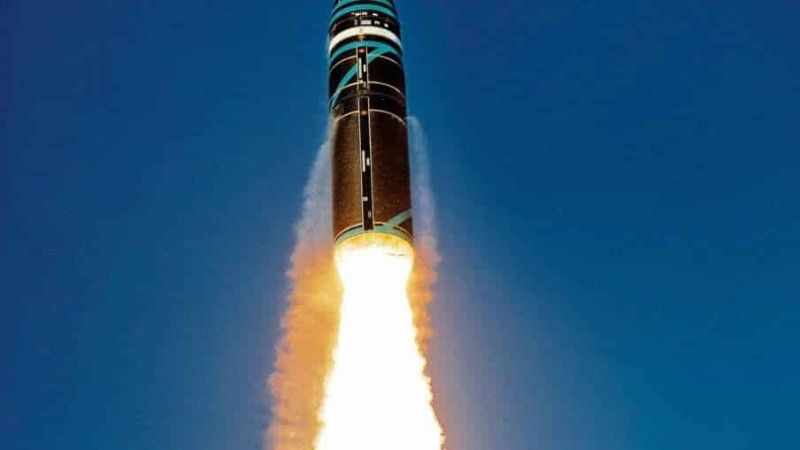
Photo. Arianespace
Even before the 2026 Review Conference of the Treaty on the Non-Proliferation of Nuclear Weapons (NPT RevCon), expectations for any major progress were low. The last successful adoption of the final document happened in 2010 – sixteen years ago. Since then, three consecutive Review Conferences – in 2015, 2022, and now 2026 – failed to produce any consensus outcome. More importantly – none brought meaningful momentum for strengthening the regime or advancing disarmament commitments.
The 11th NPT Review Conference took place at United Nations Headquarters in New York from 27 April to 22 May 2026. The Zero Draft looked very promising and Ambassador Đỗ Hùng Việt of Viet Nam – President of this year’s RevCon – promised to stop the negative trend and make this Conference successful. However, with ongoing State Parties’ negotiations, the Zero Draft got shorter and shorter, and in the end – as announced on 22 May at the Press Conference concluding the RevCon – it was not even presented for the final vote.
In short – another failure. This year therefore marks the 16th year without any NPT progress. It can be said that instead of reversing the negative trend, this RevCon confirmed the growing political paralysis of the whole nuclear non-proliferation regime.
For decades, the NPT has been described as the cornerstone of global nuclear governance. Yet its internal tensions have become increasingly visible. The divide between Nuclear-Weapon States (NWS) and non-Nuclear-Weapon States (NNWS), blocs and alliances remains unresolved. RevCon should be a place of dialogue on mutually beneficial norms, not the confrontation of state interests. Therefore, the lack of progress on Article VI – the commitment to pursue negotiations in good faith toward global nuclear disarmament – brings even more frustration.

Now, all nuclear powers are modernising their arsenals, which raises questions about the credibility of disarmament rhetoric.
Some of these dynamics were seen during the RevCon, but some had already emerged during the 2025 Preparatory Committee. The United States, traditionally one of the key actors, appeared surprisingly passive. The US delegation lacked senior political representation and contributed little beyond procedural interventions. During the RevCon, there was one major speaker – Christopher T. Yeaw – to read American statements and give reactions (especially to Iran and China).
China, by contrast, arrived with a well-prepared delegation, having sent at least five statements before the start of the conference and having a clear political message. Chinese diplomats strongly emphasised multilateralism, the central role of the United Nations, and opposition to what Beijing describes as “double standards” and a “bloc mentality”. At both the General Assembly and side events, a group of Chinese representatives was extremely active, attentive, and prepared, giving a clear message – “we care”.
This reflects a broader trend. China is no longer satisfied with being a passive participant in the non-proliferation regime. It increasingly seeks to influence its future direction. Through official statements, Beijing presents itself as a defender of stability and a responsible stakeholder in global governance. Whether other states accept this claim is a different question, but China’s growing ambition is increasingly difficult to ignore. At the same time, Chinese diplomats are clear – China does not want to offer alternatives to the non-proliferation regime. It is satisfied with the current architecture.

At the same time, the structural weaknesses of the regime are still evident. Like the elephant in the room, India, Pakistan, Israel, and North Korea continue to exist outside the NPT framework (though the DPRK is a more complex case as the only country which officially decided to withdraw from the NPT – and this decision is contested). The treaty’s definition of a Nuclear-Weapon State in Article IX leaves these states in a permanent grey zone. Article IX defines a NWS as a state that “manufactured and exploded a nuclear explosive device prior to January 1, 1967”. Therefore, thesede facto NWS – as they possess nuclear weapons –de jure remain outside the treaty’s legal structure.
Outside the NPT, the broader arms-control architecture has steadily weakened with the collapse of the Intermediate-Range Nuclear Forces (INF) Treaty and New START. The US would now prefer not only bilateral (US–Russia) arms control treaties, but also trilateral ones – with China as the third biggest nuclear power. This, however, faces significant objections from the Chinese side. Still – according to the latest SIPRI Yearbook – Russia and the US possess together around 83% of the global nuclear stockpile.
Overall, the greatest danger is not the collapse of the NPT. The treaty is likely to survive institutionally for many years. The real risk is gradual irrelevance – a situation in which the NPT continues to exist while losing its ability to influence state behaviour and shape strategic outcomes. In the words of Dr Hassan Elbahtimy – Senior Lecturer in the Department of War Studies at King’s College London, Trustee and Executive Committee member of the British International Studies Association and co-editor of the Non-Proliferation Treaty (NPT) Briefing Book – the biggest threat is a growing normalisation of the lack of progress in the non-proliferation regime – hopelessness.

The question today is no longer whether the non-proliferation regime faces a period of transformation, but rather what form that transformation will take, and which State Party it will impact the most. Now, as strategic competition intensifies and new actors seek greater influence, the future nuclear order may become less universal, more fragmented, and increasingly contested.
The 2026 Review Conference did not fundamentally change the trajectory of the regime. What it actually did was make the crisis impossible to ignore. It was the third – and hopefully the last – scream of the current deadlock.
Author: Martyna Szoja


