












- WIADOMOŚCI
US strengthens nuclear umbrella for Japan

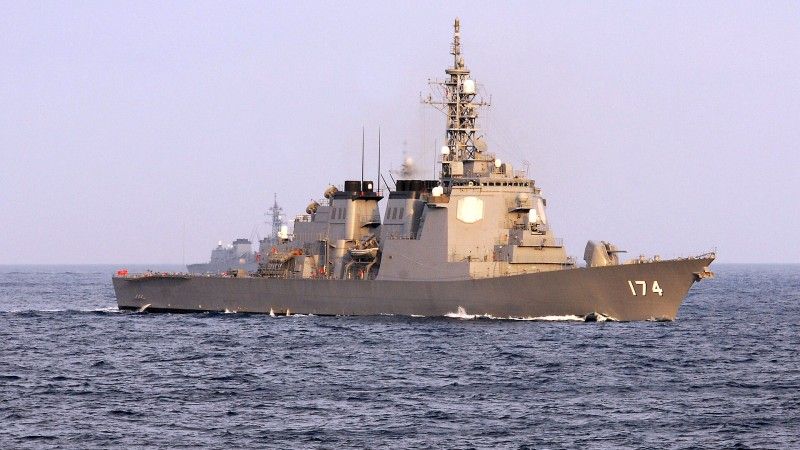
The U.S.-Japan Extended Deterrence Dialogue in Tokyo was not just another allied consultation. Washington again confirmed that the defence of Japan includes the full range of American capabilities, including nuclear weapons. In East Asia, this message is aimed mainly at China, North Korea and Russia.
The meeting took place on 8–9 June 2026 and involved the U.S. State Department, Department of War, U.S. Strategic Command, Indo-Pacific Command, U.S. Forces Japan, and Japanese defence and foreign policy officials. The format matters because extended deterrence is not only a political promise. It requires military planning, exercises, procedures and constant reassurance.
The most important point is China. The U.S. and Japan discussed Beijing’s rapid and opaque nuclear build-up. This is becoming one of the central problems for security in the Indo-Pacific. China is expanding its nuclear forces, while also developing missiles, naval power and pressure tools around Taiwan and the East China Sea. Japan sees this directly.
North Korea was the second issue. Washington and Tokyo rejected the Russian argument that Pyongyang’s nuclear programme should be treated as a closed matter. They again supported the complete denuclearisation of North Korea, even if in practice this goal is becoming increasingly difficult.
See also 

Japan also encouraged the U.S. to pursue strategic stability talks with China and Russia. This is important because Tokyo wants strong American deterrence, but it also wants more transparency, arms-control dialogue and lower nuclear risk. Japan does not want an uncontrolled arms race in its region. The military part of the meeting included a tabletop exercise and a visit to Yokosuka, where the delegations observed JS Kirishima.
For Japan, the conclusion is clear and highly significant as its defence build-up is accelerating, but the American nuclear umbrella remains central, while for the United States, Japan is becoming not only a protected ally, but also a key partner in managing nuclear, missile and conventional threats in the Indo-Pacific.


