












- WIADOMOŚCI
- KOMENTARZ
India challenges France over Rafale technology

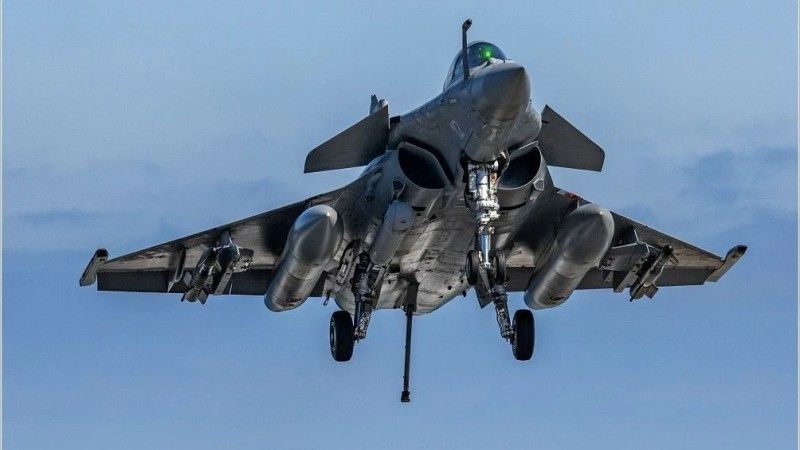
Photo. Dassault Aviation - C. Cosmao
France is once again demonstrating that it wants international partners for the Rafale programme, but remains reluctant to share the technologies that determine real operational sovereignty. This approach protects French intellectual property, yet it also creates a growing risk that India will view the aircraft not as an independent capability, but as a long-term technological dependency.
According to reports concerning the proposed Indian acquisition of up to 114 additional Rafales, Paris does not intend to provide access to the source codes of the RBE2 AESA radar, the MDPU mission computer and the SPECTRA electronic-warfare suite. These are not secondary systems. Together, they form the central digital architecture responsible for sensor fusion, threat detection, survivability and electronic combat.
This is therefore not an isolated dispute. France had already faced tensions with the United Arab Emirates over the transfer of sensitive technologies connected with the future Rafale F5. Now, a similar problem is emerging with India. Paris is prepared to discuss local assembly and industrial cooperation, but it continues to retain control over the most important software and systems.
From New Delhi’s perspective, the issue concerns more than the purchase of another fighter aircraft. Without access to the Rafale’s digital architecture, India may remain dependent on French approval when integrating its own weapons, modifying electronic-warfare parameters or introducing future upgrades. This could include indigenous systems such as the Astra missile and potentially the air-launched BrahMos.

At the same time, Russia is reportedly offering India much broader access to the source codes and design documentation of the Su-57E. Whether Moscow would ultimately fulfil all these promises is another matter. Nevertheless, the offer strengthens India’s negotiating position and exposes the weakness of the French model: France wants to sell advanced platforms, but is unwilling to share the tools required to modify them independently.
On the one hand, Paris is right to protect technologies developed over decades. On the other, India is not looking merely for another aircraft, but for industrial autonomy extending over the next thirty or forty years. If France continues to limit access to the Rafale’s critical systems, it may preserve technological control while gradually losing the partners needed to finance and develop the programme. As of now, Paris does not have any partners for the future Rafale F5 and could lose the order for 114 Rafales.


