











- WIADOMOŚCI
- ANALIZA
French Rafale fighters land on a Finnish road. NATO prepares for war with Russia

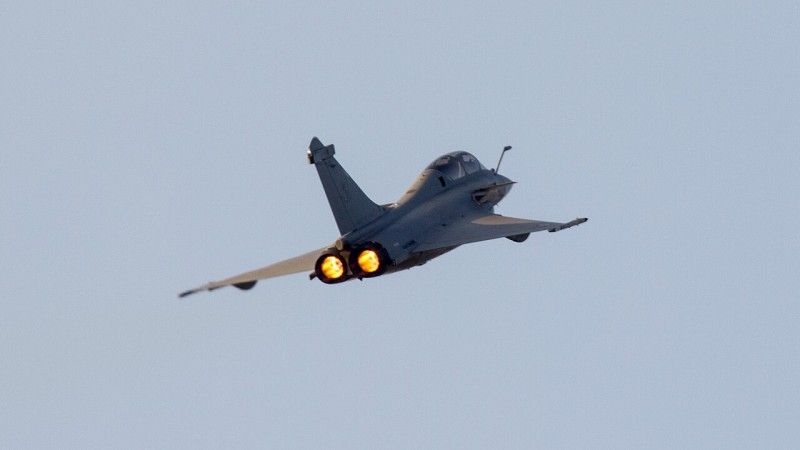
Photo. Clemens Vasters / Wikimedia Commons / CC BY 2.0 (https://creativecommons.org/licenses/by/2.0/)
French Rafale fighters have conducted landings and take-offs from a Finnish road for the first time. More than 4,100 military personnel and 40 aircraft are participating in Exercise Protective Fence 26. France is increasing its military presence on NATO’s northern flank while preparing its aircraft to operate in conditions where conventional air bases could be targeted by Russian strikes. Paris is also expanding its nuclear deterrence cooperation with Finland.
On 21 November 2026, three French Rafale fighters conducted a series of landings and take-offs on the Jännevirta highway strip, located along Finland’s National Road 9 near Kuopio. This was the first operation of its kind for the French Air and Space Force.
The aircraft belong to the 1/30 Côte d’Argent Fighter and Experimental Squadron, based at Mont-de-Marsan, which is responsible for testing weapons systems and developing new methods of air operations. During the exercise, the Rafales are stationed at Rovaniemi, while Dutch F-35As operate from Rissala and Swedish Gripens from Kallax.

More than 4,100 troops. NATO disperses its aircraft
Protective Fence 26 is taking place from 19 to 27 November. More than 40 aircraft are participating, including Finnish F/A-18 Hornets, French Rafales, Dutch F-35As and Swedish Gripens. Military personnel from the United States and the United Kingdom are also involved.
What matters most is what the French are learning from the Finns. Finland and Sweden have spent decades preparing their air forces to operate from public roads and alternative airfields. In the event of a Russian attack, air bases, runways and aircraft support infrastructure would be among the first targets.
Dispersing fighter aircraft reduces their vulnerability to such strikes and allows combat operations to continue. The French are therefore testing capabilities they have not previously developed on a comparable scale. Importantly, France does not yet have equivalent prepared highway strips on its own territory.
France increases its military involvement in Finland
The November exercise is another step in France’s growing involvement on NATO’s northern flank. In March, French Alpine troops participated in Exercise Cold Response 26, while approximately 180 French soldiers took part in Northern Star 26 in May. The latter exercise involved more than 5,000 military personnel from seven countries: Finland, France, Poland, the United States, the United Kingdom, Italy and Hungary. The troops trained for operations in the difficult terrain and climatic conditions of northern Europe.
Furthermore, on 8 July, during the NATO Summit in Ankara, France announced its intention to join Forward Land Forces Finland, a Swedish-led multinational formation. Its purpose is to reinforce Finland’s defence in the event of a threat from Russia. Nuclear cooperation is another important element. In September, Finland joined the French Forward Deterrence initiative, and on 27 October, the first meeting of the Franco-Finnish Nuclear Steering Group took place.
Meanwhile, from 16 to 18 November, France conducted Exercise Excalibur in Sweden. Rafale aircraft belonging to the French Strategic Air Forces operated alongside Swedish Gripens as part of efforts to develop European nuclear deterrence cooperation.
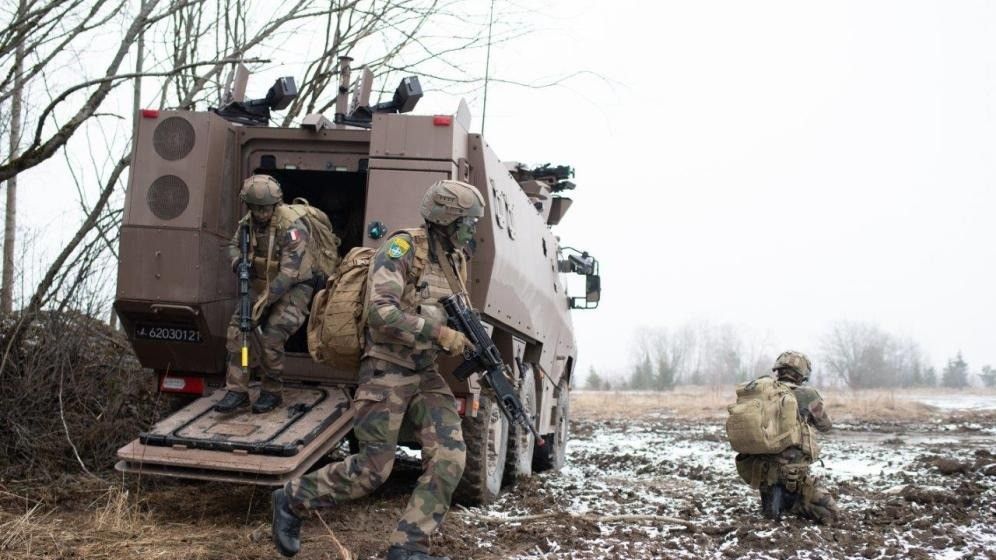
France is becoming more active on NATO's northern flank
France is also expanding its military involvement elsewhere in Europe. In Poland, it is preparing to support air defence around Rzeszów. It maintains ground forces in Romania, participates in NATO’s forward presence in Estonia and is now developing air, land and nuclear cooperation with Finland.
These activities are taking place in parallel. French ground forces are training in northern conditions, Rafale crews are practising operations away from conventional air bases, and Paris is preparing to contribute troops to the multinational force assigned to Finland’s defence.
The highway operations are particularly interesting because they address a practical problem: how to keep fighter aircraft flying when their main bases are under attack. Finland and Sweden have considerable experience in this area, and the French are now putting that experience to use. We should welcome these developments – we do need more Allies on the eastern flank.