












- WIADOMOŚCI
France faces a difficult Rafale M transition

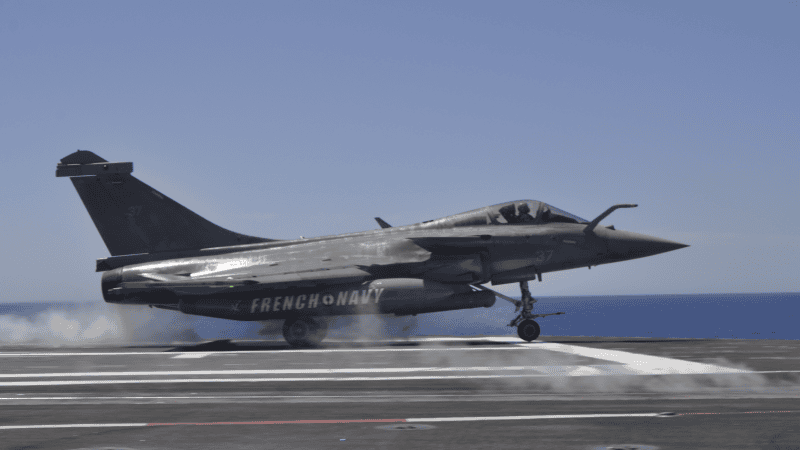
The French Navy is approaching a sensitive period in which its ageing Rafale M fleet will have to remain operational while France decides how quickly to move towards the F5 standard and what aircraft will eventually replace it. The problem is not the lack of ambition, but the growing risk that operational requirements will move faster than procurement decisions.
As Laurent Lagneau notes, Admiral Nicolas Vaujour warned that the transition would be “sensitive and complex to manage”. The French Navy currently operates 41 Rafale M aircraft, although its recognised requirement is 51. Moreover, naval aircraft age faster because of carrier landings and the corrosive maritime environment.
Studies are therefore being conducted with Dassault Aviation to assess the condition of the airframes. This is important because the Navy was the first French service to receive the Rafale and will consequently also have to replace its aircraft first. A negative assessment could reduce the available fleet before the next generation of aircraft is ready.
The central question is whether France should purchase additional Rafale F4 aircraft or move directly to the F5. At present, priority is being given to the Strategic Air Forces, as the F5 will be integrated with the future ASN4G nuclear missile. The timetable for the naval F5 fleet therefore remains uncertain and is expected to be aligned with the entry into service of the new aircraft carrier France Libre, planned from 2038.
See also 

At the same time, the abandonment of the FCAS/NGF programme has created another problem. France still needs a future combat aircraft operating alongside drones and artificial intelligence, but it has not yet decided what will replace the Franco-German-Spanish project. Éric Trappier has called for the immediate launch of a demonstrator, warning that further delays could weaken French industrial capabilities.
Ultimately, France risks entering the 2030s with an ageing and insufficient naval fighter fleet, while the Rafale F5 and its successor remain subject to political and industrial decisions. The French Navy will continue to operate, but it may have to manage the transition with fewer aircraft than required. In this case, further hesitation will not postpone the problem. It will only make it more difficult and more expensive to resolve.


