












- KOMENTARZ
- WAŻNE
- WIADOMOŚCI
Qatar armed itself for years. Now Iran tests it

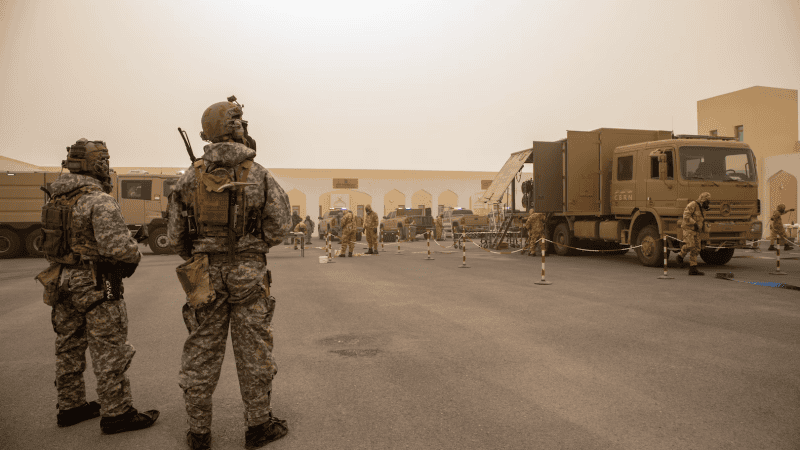
Qatar spent more than a decade building one of the most modern armed forces in the Gulf under the political cover of hosting the 2022 FIFA World Cup. Today, amid escalating tensions between Israel and Iran, Doha has activated the very systems it invested in — intercepting hostile drones while maintaining a formally defensive posture and signalling readiness to support partners if required.
Following FIFA’s decision in 2010, Qatar launched a comprehensive military modernisation programme. Defence spending increased by 434% within a decade, reaching USD 11.6 billion in 2021 — nearly 5% of GDP — with projections of up to USD 19 billion by 2027. The objective was clear: protect LNG infrastructure, deter Iran, counter asymmetric threats and elevate Qatar’s geopolitical weight.
Between 2010 and 2022, Doha built a modern force structure across all domains.
In the air domain, Qatar acquired 96 fighter jets in three separate packages — F-15QA from the United States, Rafale from France and Typhoon from the United Kingdom — deliberately diversifying suppliers to avoid strategic dependence. The air force was further reinforced with NH90 helicopters and advanced training aircraft, while investments in unmanned systems expanded both surveillance and strike capabilities.
On land, Qatar strengthened its armoured and artillery units with German Leopard 2A7+ main battle tanks and PzH 2000 self-propelled howitzers. Although some artillery units were later rotated out and transferred back into the European supply chain, the procurement phase significantly enhanced operational capacity and interoperability.
At sea, a new fleet was constructed with Italy’s Fincantieri: four advanced corvettes, two offshore patrol vessels and an amphibious transport dock. These assets form the backbone of maritime protection for LNG terminals and shipping routes in the Gulf.
Air and missile defence became the strategic core. Patriot systems were deployed alongside the Air & Missile Defence Operations Centre (ADOC), integrating radars and missile batteries into a unified, layered defence network. In recent years, Doha prioritised counter-drone capabilities, procuring fixed anti-UAV systems with interceptor missiles to protect urban centres, energy facilities and critical infrastructure. A USD 1.96 billion contract for eight MALE-class drones further strengthened persistent surveillance and precision response options — essential for a state geographically small but strategically exposed.
These investments are now operational. As regional hostilities intensify, Qatar has intercepted multiple Iranian-origin drones approaching sensitive areas. The country is currently acting strictly defensively, focusing on airspace protection and safeguarding energy infrastructure. At the same time, officials signal that Qatar stands ready to assist partners should regional stability require coordinated action.
The strategic context is unforgiving. LNG exports are not only Qatar’s economic backbone but also a pillar of European energy security. Drone attacks, missile strikes or maritime disruption would carry immediate geopolitical consequences. Iran remains the primary structural concern, given its regional posture and asymmetric capabilities.
The World Cup was never the end goal. It was a milestone in a broader security doctrine. Fifteen years after launching its modernisation drive, Qatar is no longer merely a wealthy host of global events. It has built layered deterrence, diversified partnerships and operational capacity. The current crisis demonstrates that this was not symbolic spending — it was preparation.


