- ANALIZA
- WIADOMOŚCI
5.5 trillion PLN later ($1.3 trillion USD) — the true cost of war for Poland

A total of PLN 5.5 trillion (approx. USD 1.5 trillion): that is the estimated total cost of rebuilding Poland after the war. Add to this the destruction of 40% of the nation’s fixed capital stock, unemployment surging beyond 43%, a collapse in GDP of 55%, and inflation spiralling to 850%, and the scale of this extreme Polish–Russian war scenario becomes almost unimaginable. Beyond the economic devastation lies a deeper national trauma: the emigration of the country’s most highly skilled citizens – engineers, scientists and specialists – together with severe ecological damage, including chemical contamination that could render large areas of agricultural land unusable.
On 7 May, during Defence24 Days at Warsaw’s PGE Narodowy Stadium, the report Economic Costs of War for Poland (2026) was unveiled. Prepared by the Union of Entrepreneurs and Employers (ZPP) on the initiative of its President Cezary Kaźmierczak in collaboration with the Defence Institute, under the media patronage of Defence24, the publication was more than just another analytical exercise. It was, rather, a moment of confrontation with a stark, at times unsettling, vision of what armed conflict would mean, seen not only through the lens of military operations but, crucially, through its economic and social consequences.
Much of the report’s tone is shaped by the foreword written by Lieutenant General (ret.) Dr Jarosław Gromadziński, President of the Defence Institute. His contribution anchors the analysis in practical and strategic reality. Drawing on operational experience and direct exposure to contemporary conflicts, he frames the scenarios not as abstract models but as an attempt to organise knowledge about how war affects a state. As he notes, even the most precise simulation remains only an approximation: the true costs of war extend beyond numbers, reaching deep into the social, psychological and institutional fabric of a nation. This observation becomes one of the report’s central reference points.
The first scenario, a limited conflict involving missile and air strikes, already points to severe economic disruption. Falling GDP, surging inflation and paralysed infrastructure illustrate how, even without a full-scale invasion, a country can slide rapidly into crisis. In the light of General Gromadziński’s remarks, this serves as a particularly stark warning: war does not need to entail occupation to destabilise a state.

The second scenario, involving a limited ground invasion and partial occupation, deepens this picture. It highlights mass internal displacement, the collapse of entire sectors of the economy and the erosion of territorial cohesion. Here, Gromadziński’s emphasis on decision-making under pressure becomes especially resonant. Choices concerning evacuation, force deployment and crisis management shape not only the course of military operations but the fate of society itself.
The most extreme scenario, full-scale war, leads to systemic collapse. Hyperinflation, the breakdown of public finances and widespread destruction of infrastructure point not merely to crisis, but to civilisational regression. At this point, the general’s reflection takes on force: war strikes people first, and only then the indicators. Understanding that order is key to understanding the report.
At the core of Economic Costs of War for Poland are the chapters authored by Jakub Palowski and Associate Professor Konrad Trzonkowski, who attempt a precise description of the mechanisms of modern warfare, not as a purely military event, but as a complex process of state degradation. Their analysis stands out for consistently linking the operational and economic dimensions, demonstrating that the course of military action and its economic consequences are inseparable.
A particularly valuable aspect of their work is the integration of military scenarios with macroeconomic analysis. Rather than merely cataloguing destruction, Jakub Palowski and Konrad Trzonkowski identify the mechanisms that drive crisis escalation. They point to financial system instability, capital flight, rising borrowing costs and collapsing market confidence as factors capable of triggering systemic economic breakdown within a short period. War emerges here not only as destructive, but as self-reinforcing, each disruption generating the next.

Their chapters also include a detailed examination of reconstruction costs. The authors take a methodical approach, breaking the problem down into sectors and components, from bridges and roads to energy systems and logistics. What emerges is a clear conclusion: the greatest challenge lies not in individual investments, but in the scale and interdependence of the entire infrastructure system. Rebuilding one element without restoring others has little effect, prolonging recovery. Infrastructure, in this sense, is the backbone of the state, and its destruction determines both the pace and the feasibility of reconstruction.
Jakub Palowski and Konrad Trzonkowski also outline strategies for recovery, varying depending on the scenario. What unites them is a departure from traditional thinking about rebuilding. Instead, they advocate a systemic approach: decentralising the economy, relocating industry, developing new energy sources and accelerating digitalisation. Reconstruction, in their view, is not about returning to the pre-war status quo, but about creating a more resilient model of the state.
Their analysis leads to a fundamental conclusion: modern war is systemic in nature, even when it does not take the form of total military confrontation. Its defining feature is the ability to affect multiple dimensions of state functioning simultaneously, infrastructure, economy and society alike. It is this multidimensional character that makes the costs of conflict both so difficult to estimate and so difficult to reverse.
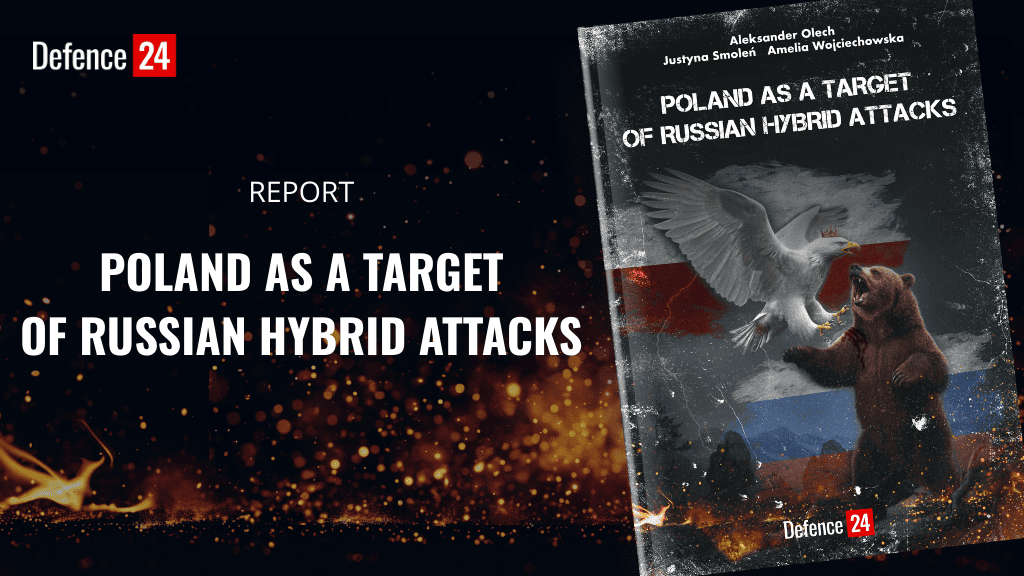
The presentation of the report on 7 May made it clear that its purpose is not to construct a vision of catastrophe, but to provide a basis for rational reflection. This message resonated both in the publication itself and in the accompanying discussion. Awareness of the potential costs of war is meant to inform responsible decisions on security, investment and national preparedness. In this context, the question of stable, long-term funding for the Polish Armed Forces takes on particular significance.
Ultimately, Economic Costs of War for Poland can be read both as a warning and as a strategic tool. By connecting military, economic, and social perspectives, it becomes more than a standard economic analysis. It is a narrative about a state on the edge, and about how the decisions made today may determine its future.
The report is available in Polish here