- WIADOMOŚCI
- KOMENTARZ
“Cyberwar is already in Poland,” Polish deputy prime minister says

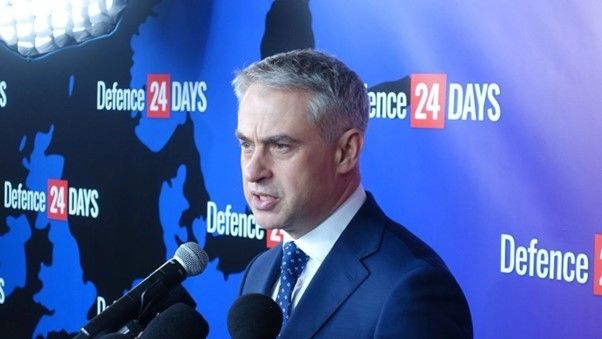
Photo. CyberDefence24
Poland is already at war with Russia in cyberspace, and its deputy prime minister, Krzysztof Gawkowski, believes the country must be clear-eyed about it.
Deputy Prime Minister and Minister of Digital Affairs Krzysztof Gawkowski used Defence24 Days, the largest security conference in Central and Eastern Europe, held in Warsaw on 6–7 May, to underline Poland’s growing cyber resilience against Russia’s ongoing cyberwar.
He admitted that although the cyber domain has become central to national security, Poland is still correcting years of “neglect and delay”. Gawkowski particularly emphasised cybersecurity’s cross-cutting nature, noting that there is now virtually no major area of the Polish state where cyber does not play a role.
A Russian war that is already here
Cybersecurity gained particular public attention after the Polish government revealed in January that the country’s energy infrastructure had come under a major cyberattack at the end of last year. Although Poland successfully defended itself, the incident exposed the very real risk of blackouts and large-scale energy disruptions resulting from hostile cyber operations.
”Cyberwar is already in Poland,” the deputy prime minister declared, adding that it is being waged by Russia with support from Belarus. Poland now faces hundreds of cyberattacks every day, and their number is rising. Gawkowski argued that ”transparency about threats builds resilience,” both by naming the attacks and identifying their source. He also claimed that Poland is already among the leading countries in countering cyber operations, with its cyber forces neutralising 99% of attacks.
Gawkowski also argued that the Polish government had “done everything necessary” on the legislative front. He pointed to two recently adopted cyber-related documents: the Cybersecurity Strategy of the Republic of Poland 2026–2029 and the amendment to the National Cybersecurity System. The latter will expand the list of protected entities from several hundred, mostly critical-infrastructure operators, to more than 40,000 organisations across 19 sectors.

Digital sovereignty and fact-checking against Russia and tech giants
In the discussion, he also stressed the importance of digital sovereignty, especially vis-à-vis foreign tech giants that often control strategically sensitive data. In Gawkowski’s view, Poland must secure greater control over the data centres, servers, and cloud infrastructure that handle its public data in order to better protect critical state systems, warning that leaving them in the hands of external actors would be a serious mistake.
The deputy prime minister also insisted that Poland must develop its own fact-checking platforms, pointing to the failure of tech giants to effectively counter disinformation. This tied into Gawkowski’s announcement later that day of a new public-media initiative, „Sprawdzam To” („I’m checking that”), aimed at combating manipulation and false narratives. At its centre will be the website sprawdzamto.pl, which is set to regularly publish news, analyses, and reports identifying and explaining cases of media manipulation.