- ANALIZA
- WIADOMOŚCI
Maneuvers “Zapad 2025” kicks off, meaning Russian politics is all about a show of force

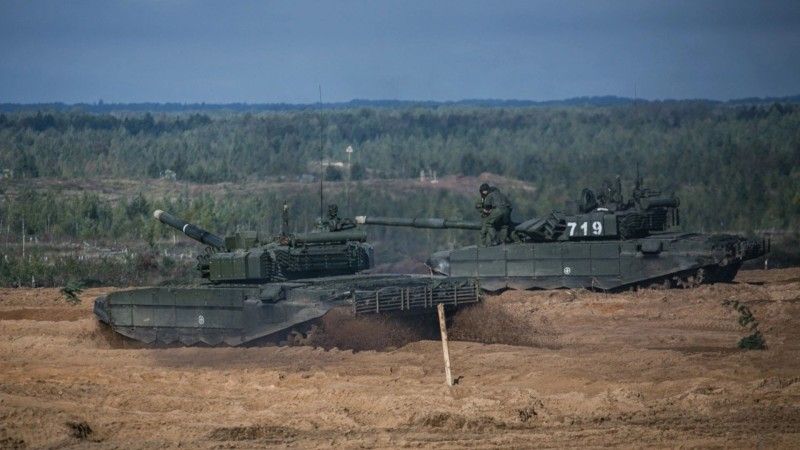
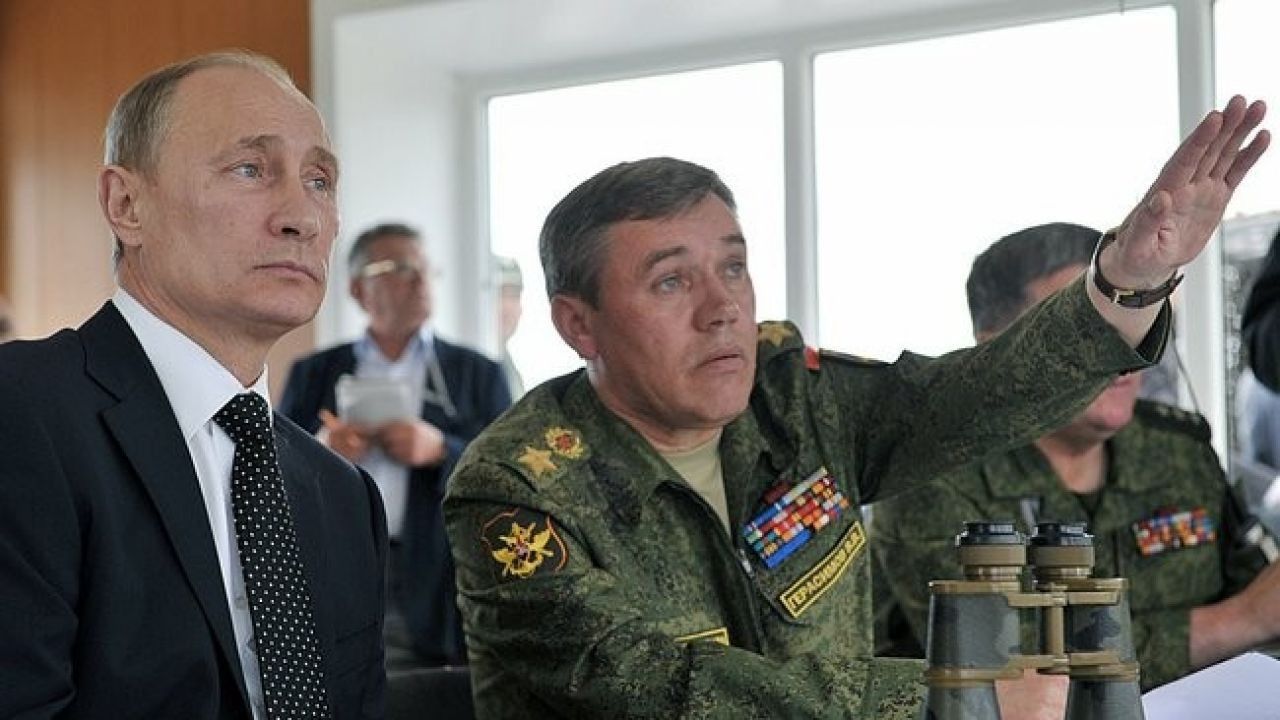
Photo. mil.ru
Military maneuvers are an integral part of the functioning of any armed forces, whether in terms of building national or allied capabilities. However, in the case of Russian military maneuvers, we see another, much more critical dimension—the political one. It is evident in the location where they are conducted, as well as in the scale of the equipment used and the number of people involved. Zapad-25 is a perfect example of this—another cyclical manifestation of creating a threat to the countries on NATO’s eastern flank.
For modern Russia, diverse military exercises (whether limited to a particular branch of the armed forces or combined) have been and continue to be a policy tool. It is particularly true when significant resources are involved regarding the soldiers participating in the exercises, the equipment and weapons used, or the exercise plans. They often go far beyond their purely military purpose of building domestic and allied military capabilities.
This approach is reflected in the Zapad-25 (West) military exercises currently taking place once again on NATO’s eastern flank. It can also be observed in the context of Russia’s almost 360-degree political and military influence. It is manifested in the desire to demonstrate the strength of relations with the PRC (for example, Wostok), and to show the ability to support countries outside Europe and Asia through exercises with, for instance, South Africa, and in selling Russian weapons to various countries of the so-called Third World. At the same time, the Zapad maneuvers are a priority because they are directly and almost openly integrated into undermining the European security architecture.
Russia wants to show its military strength again
Firstly, to create space for a more or less controlled discussion about the threat posed by the Russian Federation’s conventional armed forces to NATO’s eastern flank and the entire defense alliance. We are talking about a real need to reinforce Russian messages about the military capabilities of the whole state, which wants to play the role of a superpower, at least regionally, for the time being. However, in its own imagination, it remains the rightful heir to the power of the USSR.
The USSR was also famous for its massive, large-scale maneuvers directed against NATO and Western countries. Currently, such displays of force are significant for the Kremlin authorities, given their difficulties in conducting effective aggression against Ukraine and the need to engage significant forces in fighting on its territory. The strategic weakness in the conflict with Ukraine clearly weakens the political and military threats directed at other neighbors, which, since Vladimir Putin came to power, has been part of Russia’s political agenda, linked to its neo-imperial vision of the state.
The Russian armed forces have long been a standard tool in state policy—both contemporary and historical—for demonstrating power, even below the threshold of full-scale invasion. In order to effectively exert pressure on other countries, the Russian army must have a complete picture of its resources, capacity for sudden action, and ability to achieve the element of surprise, including by testing combat readiness and conducting unannounced exercises. At the same time, diverse narratives about Russian military technologies are being constructed, attributing specific achievements and capabilities to individual army units.
In each case, after the 2022 aggression against Ukraine, a collapse and erosion could be observed, particularly in Western media and socio-political debates. Let us recall that earlier, the Russian side had developed propaganda models that quickly resonated in Western mass media and within, for example, bubbles of people more interested in issues related to politics and the military. To this day, the creation of a propaganda construct in the style of the „Gerassimov doctrine” is considered a masterpiece, but close behind it is the famous impenetrable Russian „A2/AD anti-access bubble,” which immunizes entire regions against the possibility of foreign combat aircraft flying into them, as well as the operation of naval and land forces.
See also 
Being capable of further aggression
Currently, the Zapad-25 maneuvers are likely seeking a new format, incorporating classic elements such as the ability to launch rapid and unexpected aggression against NATO, as well as the mass use of Russian unmanned systems to overload Western weapon systems and show them to be costly and often ineffective. This signal indicates that the experience gained during the invasion of Ukraine has been fully implemented by the Russian side, enabling the development of a range of capabilities to create tactical superiority. In this context, it can be hypothesized that the entry of several unmanned aerial vehicles (UAVs/UAS) into Polish airspace was related to preparations for the active, field training phase of the Zapad-25 maneuvers.
The „Zapad” maneuvers and the accompanying discussion are primarily intended to provide propaganda content, instill fear, and reinforce the Kremlin’s policy, regardless of the limited scale of the current edition. These difficulties are evident even when compared to various military parades in 2022–2025, which, like the exercises, have served a political and propaganda function since the days of the USSR. There are clearer analogies to the Cold War era in parades and maneuvers today. It is because the Russian side has deliberately destroyed the basic mechanisms of military confidence-building (although Belarus pursues a more dual-track policy in this regard) and introduced KGB-style practices that limit the use of standard diplomatic and intelligence tools aimed at creating even a minimal form of trust in relations with the West and NATO.
Synergy of conventional and non-conventional forces
The Russians will therefore want—and, given their political agenda, will have to—regain the initiative in deterrence, or more precisely, intimidation.
To this end, it is necessary—and this may happen—to supplement such maneuvers with references to, among other things, the use of nuclear weapons (tactical warheads or signaling their use by activating delivery systems, including missiles and dual-use DCA combat aircraft, as well as issues related to the Oreshnik IRBM) and, more broadly, WMD. In this way, the Russian side is subliminally trying to show that it has reserves allowing it to conduct operations in the format of two conventional wars, so to speak, and that with limited capabilities, it can cover any weaknesses—e.g., in terms of materials and equipment—with its umbrella of unconventional measures and new technologies, including unmanned systems.
A tool for controlling neighbors
Thirdly, any maneuvers of this kind, taking place in countries weaker than Russia and bordering it, serve as a deterrent to the Kremlin’s vassals and partners. In this case, it is clearly a matter of exerting pressure on Belarus’ internal politics, particularly emphasizing the country’s security forces. Belarus was not ultimately forced to actively participate in the invasion of Ukraine (i.e., to send its troops). At the same time, North Korean soldiers, for example, are taking part in the fighting. That is why it is vital to signal to the Belarusian side that, through maneuvers such as Zapad, Russia remains in control of the situation in that country.
The scale of intimidation remains a matter of debate, as do the real divisions within the security forces of the regime in Minsk and its readiness to play on different fronts (Russia, the West, China). It is worth noting, however, that conducting maneuvers using significant forces and resources (but still incomparable in terms of scale to the maneuvers before the invasion of Ukraine) on Belarusian training grounds, given their geographical location, also has an internal dimension and does not only affect NATO.
The question arises as to how „controlled” the Belarusian side’s cooperation with Poland was in the context of the recent violation of airspace by what were most likely Russian UAVs, which took part in the attack on Ukraine or were camouflaged as part of it, and could in fact pose a threat to Poland. Moreover, Belarus seems to be taking a different approach to the confidence-building tools known from the post-Cold War period, at least in the realm of symbolism.
Testing new forms of aggression below the threshold of war
Fourthly, Zapad-25 may unfortunately be part of preparations for aggression below or above the threshold of war. The aim is to conceal one’s own activities in terms of logistics, troop deployment, and coordination. In this context, however, this hypothesis is controversial, as virtually no NATO country or its intelligence services remain passive in the face of these maneuvers.
Therefore, we are seeing an intensification of work on all intelligence sources—from SIGINT and IMINT to HUMINT. It is difficult to achieve the element of surprise when the opponent is closely monitoring Russia’s actions and knows the modus operandi of aggression against Ukraine in 2022, even if exercises essentially mask it.
After these few years, it can be assumed that the West is much better prepared to decode similar scenarios. At the same time, Ukrainian support is significant, as Ukrainian intelligence services can take greater risks in connection with the ongoing armed conflict with Russia.
However, we must consider a scenario in which Zapad-25 and the accompanying incidents are intended to channel emotions and trigger a high level of readiness in the countries on NATO’s eastern flank and throughout the Alliance. The goal would be to take advantage of the natural weakening of vigilance after the maneuvers end. In other words, not only the active phase of Zapad-25 may be dangerous, but also the period after the exercises, which may pose a risk of escalation.
Zapad provides an opportunity for large-scale espionage
The fourth point also relates to the Russian analysis of NATO’s and individual countries’ reactions to Zapad-25. A show of force naturally provokes both visible and covert responses from countries and the alliance system, especially in the context of Russia’s ongoing war of aggression against Ukraine and threats against other countries, including NATO members.
Therefore, a significant increase in the activity of Russian intelligence services can be expected, as they seek to obtain a complete picture of NATO and individual countries’ responses to a sub-threshold situation (show of force) or even a threshold situation, should Zapad-25 be combined with other uses of force.
It is therefore crucial to strengthen the protective umbrella in counterintelligence over our own activities in Poland and throughout NATO. We should remember that this also applies to emotional and narrative aspects in the socio-political and media spheres, which the Russians can analyze in depth using professional OSINT tools.
First conclusions and assessments
In conclusion, Zapad-25 will probably be one of the most closely watched examples of Russian political and military maneuvers in many years. Various incidents may accompany it, and a whole range of activities in the information domain will undoubtedly accompany it. Beyond strictly military issues, it will be essential to determine whether Russia will once again be able to build narratives necessary for its regional and global interests, primarily related to military power. Without this, the system of power functioning in Russia may suffer more than losing thousands more soldiers on the battlefield.
In some Western circles, Russia is also trying to convey a diverse range of emotions – from fear to admiration for its military power. Examples include the almost euphoric reactions to news of Armata MBT, new intercontinental missiles, and new-generation aircraft, which continue to appear, albeit to a lesser extent, on various forums and social media.
The question of military aspects remains unchanged: to what extent can Russia diversify its military resources while continuing its aggression, to what extent has it eliminated the shortcomings revealed in 2022, and has it used the experience gained during previous military operations?
In this context, the intelligence aspects should also be taken into account—the Russians must be aware that the old methods of creating myths around their equipment or doctrines no longer work effectively in the West. However, this state of affairs is most worrying when we consider extending the maneuvers to include covert operations or provocations that could lead to incidents or even accidental escalation.