












- KOMENTARZ
- WIADOMOŚCI
NB8 – why not? A Nordic perspective

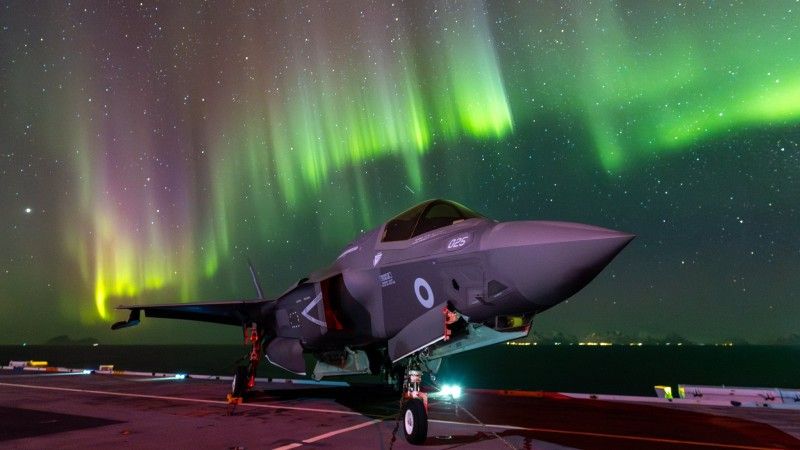
Photo. Portal X/Royal Navy
In the Baltic Sea basin there exists an entire ecosystem of alliances, bilateral and multilateral agreements, organizations, initiatives, associations, working groups, and consultative bodies in which Poland already plays an important – if not key – role. Much has already been said and written about Poland’s favoring of the Nordic-Baltic Eight (NB8) format. The Nordic-Baltic Eight stands out in the Baltic Sea region for its exceptional political and strategic agency.
Unlike other forms of regional cooperation, which are primarily consultative or project-based, NB8 operates as a cohesive bloc of states capable of formulating a common, unanimous policy in response to threats such as Russian aggression or hybrid challenges. This format combines a high level of trust, a unified political stance, and readiness to coordinate actions in the security sphere, giving it real influence over decisions within broader EU and NATO structures. Why, then, is Poland still not a formal member of NB8?
Observing Poland
„We here in the North have long had a natural inclination that when our representatives meet on the international stage, they strive for mutual understanding and support” - this is one of many quotations from well-known and widely respected Nordics who consistently echo efforts aimed at consensus as the best and safest possible way of resolving problems. This applies both at the microscale of everyday interactions and to visions of regional order, or even ideas of global order. It is a skill acquired already in childhood, which later results in order and stability, and which has long been held up as a model to follow (as reflected, for example, in the frequency with which Nordics are chosen for prominent positions in international organizations).
Consensus in the Nordic countries is so deeply rooted that on their political scenes, despite fundamental ideological differences among political groupings, many shared overarching values function as the foundation of agreement. One of these is the approach to Nordic welfare state models, whose necessity is not questioned by the right, the center, or the left. Their dispute concerns only the degree of expansion of this model - some advocate more social versions, others more liberal ones.
Nordic countries closely observe the situation on the Polish political scene, which is currently highly polarized. The sharply conflicted camps of PiS and KO, where the sole strategy is often a binary, automatic opposition to adversaries aimed at hardening the electorate, serve merely as fodder for proponents of the pejorative term „Polsk riksdag.” And while the PiS–KO tandem is aware of the Russian threat, there is no shortage of markedly different attitudes toward Russian imperialism. This raises concerns in the Nordic countries and undermines the stability of Poland’s aspirations for NB8 membership. It should be remembered that Nordic consensualism does not end once a common position is adopted; rather, it endures, constantly seeking agreements and minimizing conflicts - not only in the purely political sphere.
There are also overarching values of a socio-cultural axiology that have a significant impact on political support. One of the most well-known, today forming an element of the self-image and soft power of the Nordic countries, is the approach to nature. At the level of individuals, there exists an uncodified right of every person (SwedishAllemansrätten) to access nature. Thanks to this, in practice anyone - whether a tourist, a citizen, or a foreigner - may enter forests and meadows, camp, pick berries and mushrooms, and generally interact with nature, provided they respect the environment and private property. This principle naturally links rights with responsibility for environmental protection, makingAllemansrätten one of the foundations of the Swedish (and generally Nordic) understanding of ecology and the relationship with nature.
See also 

What's with ecology?
In the context of relations between the Nordic countries and Poland, approaches to ecology may today constitute one of the greatest barriers to deepening mutual relations. In the eyes of Nordic societies, the Polish economy remains insufficiently oriented toward environmentally friendly solutions. As a result, political groupings (from right to left) forming governments in the Nordic countries, fearing a loss of support, approach closer relations with Poland very cautiously. Importantly,Allemansrätten and its regional equivalents are not linked to EU requirements created in Brussels. They are an expression of national concern for native ecosystems.
It should be remembered that Poland is today an exceptionally attractive ally for the Nordic countries. This creates a natural balance of interests on both sides, which favors articulating expectations and needs through mutual understanding.
Relations between Poland and NB8 must be conducted steadily, with an attitude open to consensus. The condition for good cooperation is not so much achieving consensus as maintaining it. Göran Sandberg, a Swedish scholar and mentor of research cooperation, used to say: „Swedish consensus can be very difficult, but once it is achieved, it is an incredible force.” Militarily, economically, socially, and politically alike.
Author: Wojciech Lieder, Instytut Nordycki


