












- WIADOMOŚCI
Return of the Ministry of Energy. Minister Motyka Faces a Series of Colossal Challenges

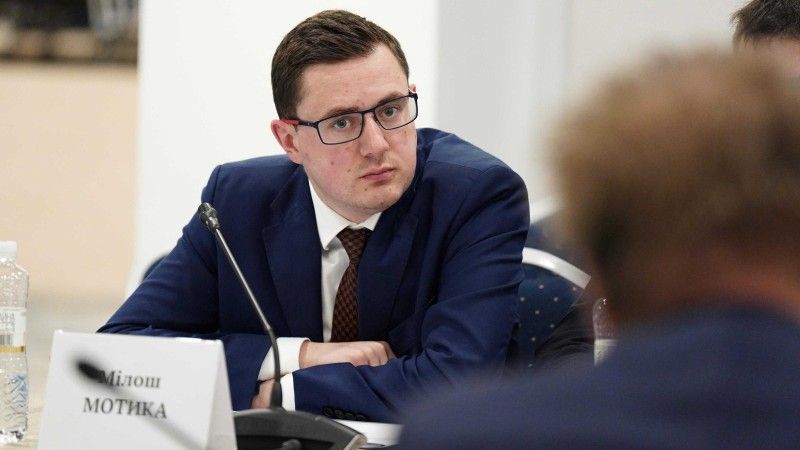
The government reshuffle has brought, among other things, the return of the Ministry of Energy. However, its new head, Minister Miłosz Motyka, is facing very difficult years ahead. Poland’s energy sector has reached a critical turning point—and it is unclear how it will navigate through it.
Talks about changes in ministries dealing with energy-related matters had been ongoing for quite some time. It was well known that the existing arrangement—dividing responsibilities between the Ministry of Industry, the Ministry of Climate and Environment, and, to a lesser extent, several other ministries—was simply dysfunctional. The change came as part of a general government reconstruction, when Prime Minister Tusk decided to create a centralized Ministry of Energy, to be headed by Miłosz Motyka, the former Deputy Minister of Climate and Environment. He is already facing a series of massive challenges, unprecedented in the history of Poland’s energy sector.
Return to the Centralized Concept
Creating a relatively centralized Ministry of Energy is essentially a return to the concept from the first term of the Law and Justice (PiS) government. Back then, there was also a strong, influential ministry consolidating energy-related competencies, headed by Minister Krzysztof Tchórzewski. Over time, however, its powers began to shift to other entities—largely due to Tchórzewski himself, who is now viewed as a politician focused on conventional energy and coal mining, expressing strongly conservative—if not obstructive—views on energy transition. Interestingly, current issues in the coal sector were one of the reasons for the (re)creation of the Ministry of Energy.
Behind the scenes, it is openly said that the government leadership was disappointed with the Ministry of Industry’s handling of mining. Minister Marzena Czarnecka failed to quell miners« dissatisfaction and contain union demands for sector support—despite close cooperation between her ministry and companies like Polska Grupa Górnicza. Another reason was problems with the nuclear power project. Consequently, the Ministry of Industry will disappear from the government map, while the Ministry of Climate and Environment, led by Paulina Hennig-Kloska, will remain.
As for the personnel decision, according to Energetyka24, the choice of Miłosz Motyka as Minister of Energy was due to his successful work at the Ministry of Climate and Environment and his strong communication skills. Another advantage was his good relations with key figures such as Wojciech Wrochna, the government’s plenipotentiary for strategic energy infrastructure.
A Series of Challenges
What exactly will the new Minister of Energy handle? Technically speaking, this remains unclear, as his precise competencies will only be defined after the law on government administration divisions is updated. However, we can already point to the biggest sectoral challenges facing Motyka—their number and scale evoke the tenure of former Minister Anna Moskwa, who began with the Turów crisis and ended amid Russia’s full-scale war against Ukraine and the ensuing energy crisis.
Poland’s energy sector now faces the looming threat of a serious generation gap, and in the worst-case scenario, real risks of electricity supply restrictions, stemming from decades of neglect. At the same time, Poland is entering a turbulent debate on ETS2, the EPBD directive, and other elements of the Fit for 55 package, while also moving into the decisive phase of the nuclear power project—still awaiting the European Commission’s decision on state aid. All of this is happening under time pressure—the clock is ticking on the decommissioning of coal capacities (e.g., Bełchatów Power Plant). Meanwhile, Poland’s hard coal mining industry is literally collapsing—it is no longer possible to gloss over this reality, and continued financial support is simply wasteful. On the other hand, Poland must safeguard the extraction of coking coal, which is a critical raw material listed as such by the EU.
At the same time, the issue of onshore wind farms must be urgently resolved—even the system operator admits off the record that without them, Poland’s energy security in the 2030s will be seriously at risk. Offshore wind farms will soon join the mix, further marginalizing coal, which is already losing ground to renewables. This also raises new questions about a possible takeover of coal assets by an entity like NABE. Meanwhile, the power system requires massive investments in transmission and distribution infrastructure—curtailment of renewable generation is becoming a growing problem. And there are more challenges: rising sabotage risks, trade pressure from the U.S., volatile energy prices, and the implementation of new tools such as dynamic pricing and direct lines.
As we can see, the new Minister of Energy will not lack work. The question remains: how will he steer his ministry’s ship through all these shoals?


