












- WIADOMOŚCI
Russia Won’t Strike in 2027 — U.S. Bracing for Worst-Case Scenario, Says Ex-Polish General

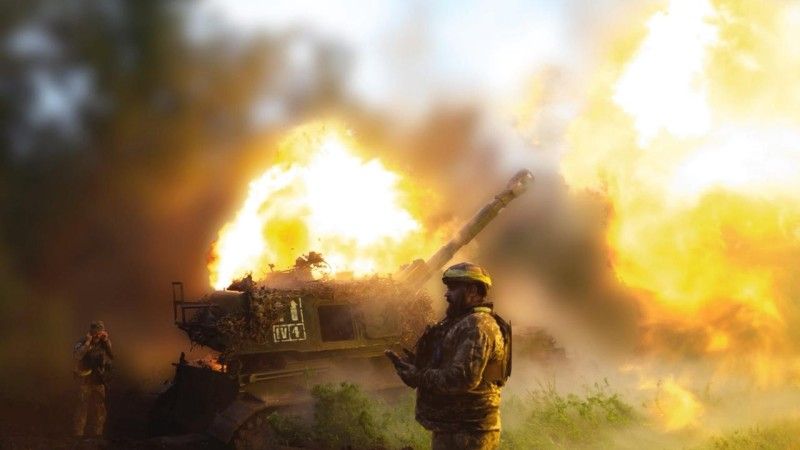
Photo. 53rd Mechanized Brigade/Defense of Ukraine (@DefenceU)/X
”There is no reason for us to scare each other, but we must remain truly vigilant and concentrated,” said the Prime Minister, Donald Tusk. As an independent security expert, I recognize the value of this statement for its concern for national security, but I also see a need to clarify its broader strategic context, writes for Defence24.pl General (Ret.) Dr. Jarosław Gromadziński.
Prime Minister Donald Tusk stated on Friday that General Alexus Grynkewich, the new commander of NATO forces in Europe, confirmed U.S. assessments indicating that Russia could be ready for a conventional confrontation with Europe as early as 2027.
While this assessment has recently gained significant media attention, it rests on a simplified view of the broader geostrategic context and overlooks the actual capabilities of the Russian Federation. As an independent national security expert – with many years of service in both Polish and international military structures – I wish to address this claim by highlighting its strategic omissions and the risks associated with its further popularization.
The U.S., not Russia, is setting the „timeline” for 2027
Many commentators mistakenly interpret statements by American commanders such as General Grynkewich — Supreme Allied Commander Europe (SACEUR) and commander of U.S. forces in Europe — as a direct warning about Russia’s readiness for war. In reality, his remarks are part of a broader strategic planning process within the Pentagon, rather than a product of NATO-wide internal assessments. In fact, it is the United States — anticipating a potential confrontation with China in the Indo-Pacific — that estimates the restructuring of strategic forces and the attainment of full readiness could take place by 2027.
In this sense, the issue is not a „date of a Russian attack,” but rather a point in time after which the United States could become so deeply engaged militarily in the Indo-Pacific that its ability to respond rapidly and effectively in Europe would be significantly constrained. Under such conditions, the Russian Federation — as China’s strategic partner — may seek to exploit the operational window and undertake destabilizing actions on the European continent.
Russia – Militarily Weakened but Still Dangerous
An analysis of Russia’s military potential clearly shows that the country will not be able to rebuild its conventional forces to pre-invasion levels within the next two to three years. Russia is currently losing over 80% of its trained personnel in positional warfare, and its defense industry — despite support from Iran and North Korea — is unable to compensate for these losses at such a rapid pace.
The key shortcomings include:
- a shortage of trained personnel and frontline officers;
- dwindling reserves of equipment and artillery ammunition;
- difficulties in maintaining the quality of modernized systems (e.g., T-90 tanks, Su-57 aircraft);
- chronic issues with logistics and operational-level command.
Russia is not rebuilding its military with a view toward a full-scale war against NATO, but rather to sustain long-term hybrid pressure by sabotage, border provocations, cyberattacks, and nuclear blackmail. This does not exclude the possibility of regional aggression, but it does rule out a large-scale war with the entire Alliance.
Is NATO Ready?
The United States currently views the scenario of a two-front war — against both China and Russia — as highly undesirable but plausible. In such a case, U.S. ground forces, strategic airpower, and naval assets would be concentrated in the Pacific. This, in turn, means that Europe — and in particular NATO’s eastern flank — must take responsibility for its own security.
And this is precisely the message behind the increasingly frequent statements by U.S. generals, who suggest that European states must develop capabilities not only for defense, but also for offensive operations. General Donahue explicitly speaks of the possibility of seizing the Kaliningrad Oblast in response to aggression — something that would have been unthinkable in official U.S. military discourse just a few years ago.

Poland – In the Spotlight
Poland plays a key role on NATO’s eastern flank. Its geographical position in the proximity of Ukraine, Belarus, and the Kaliningrad Oblast places it at the center of both military support routes and potential front lines. Therefore:
- we must maintain high combat readiness and continue the modernization of our armed forces;
- we should develop intelligence, surveillance, and electronic warfare capabilities;
- we must also invest in civil resilience;
- including logistics, cyber defense, early warning systems, and medical infrastructure.
Poland should not, however, succumb to fatalistic rhetoric — we are not destined for war. We are part of the largest and best-equipped military alliance in history, which — if consistently reinforced — will serve as an effective deterrent against any potential aggressor.
Concluding Remarks
The year 2027 should not be mythologized as a „date of war.” It is not a countdown to an inevitable conflict with Russia. Rather, it is a deadline the United States has set for itself to prepare for a potential confrontation with China — and, at the same time, a moment by which Europe must be ready to act more independently.
Russia has not disappeared, nor has it abandoned its geopolitical objectives — but it is weakened, exhausted by war, and aware of the potential consequences of an open conflict with NATO. Our task is not to fuel panic, but to build genuine deterrence capabilities based on facts, not media speculation.
Therefore, as a former commander and now an independent national security expert, I call for rational, responsible, and long-term thinking about the security of the Polish Republic and the entire North Atlantic Alliance.
Author: General (Ret.) Dr. Jarosław Gromadziński – former commander of the Eurocorps in Strasbourg and founder of the 18th Mechanized Division; a longtime officer within NATO structures, currently an independent expert in international security.


