












- KOMENTARZ
- WAŻNE
- WIADOMOŚCI
Russian intelligence operations inside France

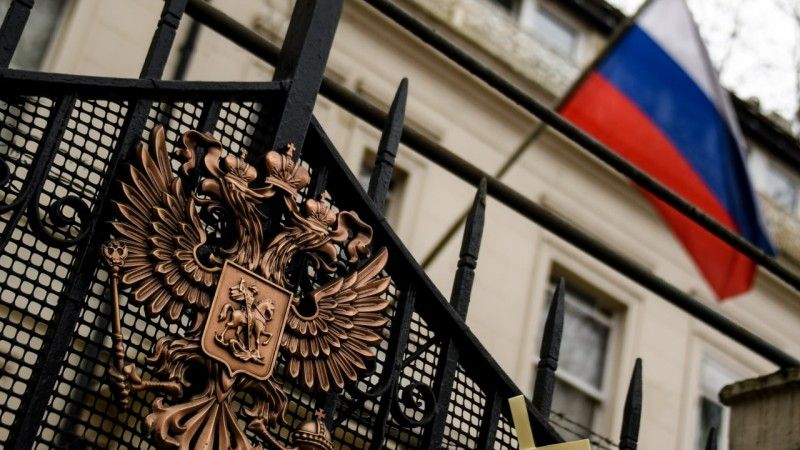
Photo. Russian Embassy, UK (@RussianEmbassy)/X
Internal documents obtained by French intelligence show that the Kremlin approved operations against both Jewish and Muslim communities in France. The aim is clear: turn existing tensions into open fractures and use France as a laboratory for old-style Soviet „active measures” in the heart of the EU.
French services now have something they rarely obtain in this field: paperwork. Internal documents from the Russian presidential administration, accessed by French intelligence, describe a plan to stoke hostility between Jews and Muslims in France by using divisive debates and symbolic attacks. The objective is not subtle. Moscow wants Paris to appear at once antisemitic and hostile to Muslims, to weaken national cohesion and to punish France for its support to Ukraine. This is not a one-off operation, but a methodical campaign that treats French society as a target in a long game.
The last two years show how this method works in practice. First came the symbols aimed at Jews: hundreds of Stars of David sprayed on walls in the Paris region, then red hands painted on the Shoah Memorial. In May 2025, synagogues, a Jewish restaurant and the memorial were hit again, this time with green paint. A few months later the direction of fire changed. Nine mosques in Paris and its suburbs woke up to pigs heads dumped outside, some marked with the name „Macron”. Two communities, two series of attacks, one logic: convince each side that the other – and the French state – are turning against them.
The operational chain behind these actions follows a familiar pattern. At the top sits an officer in Russia. Below him, intermediaries based in countries such as Serbia or Bulgaria handle logistics and money. At the bottom are small groups of hired men who travel briefly to France, carry out the visible act and disappear. Communication runs through encrypted applications, with detailed instructions on targets, routes and escape. In the French cases, names are known: the Serbian coordinator Aleksandar Savić, suspected of directing the green-paint and pigs« heads operations, and the Bulgarian Nikolay Ivanov, convicted for funding the „red hands” at the Shoah Memorial. They never needed to set foot at a single French place of worship to have an impact.
This is a direct continuation of Soviet-era „active measures”, updated for today’s environment. In the past, the KGB sprayed swastikas in West Germany and forged racist letters in the name of American extremists. Now the themes have changed – immigration, Islam, antisemitism, distrust of the EU and NATO – but the principles are identical: find the cracks, widen them with a provocative act, then amplify the outrage through media and social networks. France is a convenient target because it combines visible religious communities, polarised debate and a high-profile president who openly confronts Moscow.
The response must match the nature of the threat. These are not only hate crimes or isolated provocations; they are components of a hostile campaign running in parallel to the war in Ukraine. France – and other EU and NATO states – will need closer work with partners such as Serbia and Bulgaria, faster public attribution when foreign direction is proven, and more support for communities that are deliberately targeted to trigger over-reaction. Above all, governments must explain to their own citizens what is happening: that the real objective of these operations is not the paint on a wall or the carcass on a pavement, but the day when neighbours stop trusting each other and when democracy starts to doubt itself.


