- WIADOMOŚCI
The Kremlin has stopped hiding it. Russia’s economy in crisis

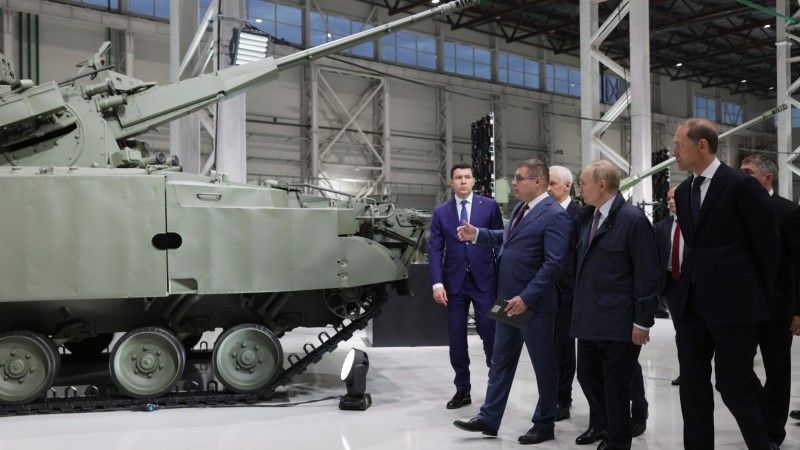
Photo. kremlin.ru
The difficult situation in the Russian economy is beginning to be discussed openly at the highest levels. Putin is demanding explanations, confirming the decline in Russian GDP.
The sanctions imposed on the Russian Federation, along with the enormous costs of waging a four-year war in Ukraine, are finally beginning to produce the expected economic effects. Russia’s economic situation has deteriorated so much that the Kremlin has finally started talking about the problem at all. One example is an interview with Maxim Oreshkin, deputy chief of staff in the administration of the President of Russia, given to Vesti.
He stated bluntly that the Russian economy is in a „very difficult situation.” Other media outlets in Russia later reprinted that assessment (for example, RBK Radio, Voennoye Obozreniye, and Forbes.ru), because Oreshkin is a very well-informed figure who oversees the economic bloc in the presidential administration. He therefore knows perfectly well what he is talking about.
This assessment did not identify the main cause of the slow collapse, but it was not a lie either. Oreshkin was therefore not mistaken when he said that Russian economic development is being held back by a shortage of resources and personnel, the slow pace of structural change, and the implementation of new technologies.
The economic situation is truly very difficult. There is a shortage of resources and labor, which is holding back economic development. Structural changes are taking place slowly, as is the implementation of technology.
Maxim Oreshkin, Deputy Chief of Staff of the Presidential Administration of Russia
He also confirmed in his interview that:
- Import substitution is progressing, but slowly;
- Technological sovereignty has indeed been declared, but it remains far from being achieved;
- An economy based on oil and gas must be restructured;
- There is a shortage of personnel not only for production, but also for implementing new technologies.
Oreshkin also addressed the blocking of the Telegram messenger in Russia and the slowdown of YouTube introduced in April 2026. He argued that these two factors did not contribute in any way to economic stagnation. According to Oreshkin, the causes of the situation are „deeper and more systemic.” Unfortunately, he did not specify exactly what the accusations concern, although he may soon be forced to do so.
President Vladimir Putin himself officially „noticed” the slowdown in Russia’s economic growth back in December 2025. At the time, however, he claimed that it was a deliberate move by the government and the Central Bank to reduce inflation and maintain the „quality of the economy and macroeconomic indicators.”
That assessment changed dramatically on April 15, 2026, when Putin officially announced a 1.8% decline in Russia’s GDP in January-February (2.1% in January and 1.5% in February). He also pointed out that „growth in the manufacturing sector and industrial production has fallen below zero.” At that point, he was already „wagging his finger,” demanding explanations from the government and the Central Bank for why macroeconomic indicators had fallen below expectations. He did note, however, that the blame for this stagnation also lay with so-called „objective circumstances” (which he said included fewer working days and bad weather).
Even so, Putin demanded concrete action from his associates to stimulate economic growth. He also stated that „the economy must return to a path of balanced growth, with low inflation and stable employment.”
So far, all this has amounted only to Oreshkin’s statement that the government was considering accelerating the process of structural change. Meanwhile, the Russian Central Bank believes that „weak economic results in the first quarter should be offset in the following periods.”
The difficult situation will worsen, because growth in production is really visible only in the defense industry. However, the effects of that „growth” are later burned away in Ukraine and in no way improve the overall level of the Russian economy. The oil and gas sector is also suffering, not only because of the embargo imposed on Russian oil and gas, but also because of growing damage to infrastructure caused by ongoing Ukrainian drone strikes.
For now, however, such an assessment of the situation in Russia cannot be counted on.