












- KOMENTARZ
- WIADOMOŚCI
- WAŻNE
Ukraine’s political and military presence in Africa

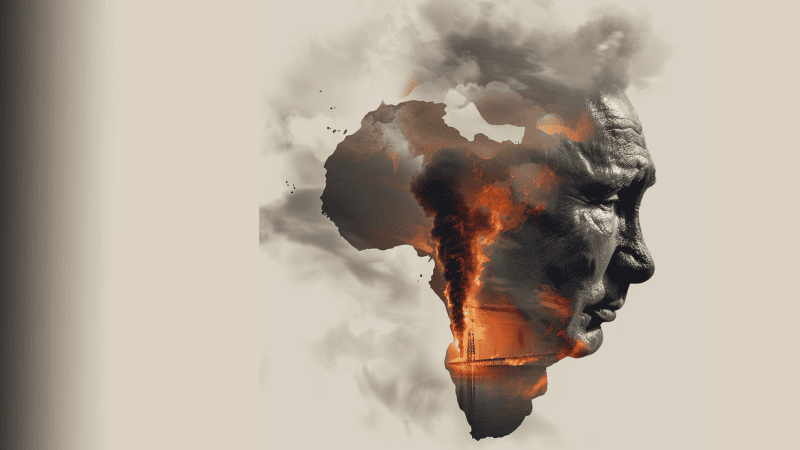
While the world watches the trenches in Ukraine, another contest is unfolding far from the battlefield. In Africa, Ukrainian officers, Russian mercenaries and competing diplomatic missions are vying for allies, access and legitimacy. The struggle between Kyiv and Moscow is no longer regional — it is global.
Ukraine’s political and military presence in Africa has developed only over the last few decades and began with Kyiv regaining independence. Earlier, especially after the Second World War, relations between socialist countries and African states developed well. Support from the socialist bloc for anti-colonial and national movements in many African countries caused political ties to tighten. At the same time, Africa gained a convenient opportunity for international cooperation with partners outside the region as a counterweight to relations with former colonial powers. However, Ukraine as a republic within the USSR did not conduct a sovereign foreign policy. Therefore, when analysing Ukraine’s relations with African states and its presence on the continent, the starting point must be Kyiv’s policy after the collapse of the USSR and the restoration of independence.
The beginnings of Ukrainian foreign policy revolved around creating a strategy to strengthen independence and sovereignty. After transferring its nuclear potential to the Russian Federation, Ukraine began balancing between East and West. The aim was to build a „non-aligned” state which, under international guarantees of territorial integrity (the Budapest Memorandum), would develop relations and build its international position while maintaining neutrality. Such a foreign policy, especially visible during Leonid Kuchma’s presidency (1994–2004), meant Africa initially played a marginal role for Kyiv, which began building its position there through participation in United Nations peacekeeping operations. Long-term military engagement created foundations for Ukrainian diplomacy to strengthen relations with African states, and today Ukraine’s presence in Africa is far more comprehensive, especially after Russia’s full-scale invasion.
The issue is important from Poland’s perspective. With war beyond Poland’s eastern border and Warsaw’s strong support for Kyiv, it is necessary to assess how Ukraine’s presence in Africa is developing, how Ukrainian–Russian rivalry extends into other regions, and what Kyiv’s foreign-policy plans are. Ukraine plans to expand diplomatic missions, and in the coming years it may have more embassies in Africa than any other Central-Eastern European state.
Military Presence
One idea for Kyiv to actively participate in international politics and strengthen its position while maintaining neutrality was participation in UN peacekeeping operations. By deploying soldiers, Ukraine could increase prestige as an active member of the international community and improve the training and interoperability of its armed forces without joining a military alliance.
Ukrainian Armed Forces have participated in UN peacekeeping operations since 1992, with their largest engagement on the African continent. The first deployment took place in 1996 in the United Nations Observer Mission in Angola (MONUA). The Ukrainian contingent, consisting of a pontoon-bridge engineering unit of about two hundred personnel, carried out engineering support tasks, particularly repairing roads and building crossings, until 1999.
From 2000 Kyiv sent further contingents. In Sierra Leone (UNAMSIL), Ukrainian forces conducted logistics, humanitarian transport, observation flights, personnel transport and medical evacuation. Ukrainian officers were also deployed to Ethiopia and Eritrea (UNMEE) and the Democratic Republic of the Congo (MONUC, later MONUSCO). In 2012 a helicopter unit equipped with Mi-24 and Mi-8MT aircraft carried out reconnaissance, fire support for UN ground forces and search-and-rescue operations.
Further Operations
In 2004 Ukrainian troops were sent to Liberia (UNMIL), where a helicopter unit conducted reconnaissance, transport, air support and evacuations. In 2005 Ukrainian personnel were deployed to Sudan (UNMIS), and later to UNMISS and UNISFA. In 2010 Ukraine joined the operation in Côte d’Ivoire (UNOCI), where engagement included aviation tasks and staff officers.
The last peacekeeping mission was MINUSMA in Mali, where Ukraine deployed observers and staff officers in 2018. In 2020 Ukrainian contingents still served in six UN operations, three of them in Africa. On 7 March 2022 Presidential Decree No. 114/2022 ordered the withdrawal of all contingents from international peacekeeping missions to defend Ukraine’s sovereignty and territorial integrity.
Participation brought military and diplomatic benefits. It improved training and experience in multinational operations and provided knowledge of local conditions, culture and political realities, preparing ground for Ukrainian diplomacy to expand activity in Africa.
Russia and Ukrainian Special Operations
In recent years the Wagner Group, now operating within the so-called African Corps, has become an important instrument of Russian foreign policy in Africa. It establishes relations with governments, providing military services and regime security in exchange for mining concessions and political influence. Rather than building real defence capacity, the group profits from instability and prolonged insecurity.
Ukraine has responded. Ukrainian special forces have conducted operations against Russian mercenaries supporting the Rapid Support Forces in Sudan, including drone strikes near Khartoum and ground operations. The meeting between President Zelenskyy and Abdel Fattah al-Burhan in September 2023 signalled political support for Sudanese authorities. Reports also indicate Ukrainian presence in Mali, where Ukrainian personnel train and advise Tuareg rebels opposing pro-Russian authorities and Wagner forces. Some African states fear that the Russian-Ukrainian conflict could shift onto the continent.
Diplomatic Expansion and Arms Competition
Before 2022 Ukraine was not viewed as an influential political partner in Sub-Saharan Africa, although North Africa was important economically and commercially. After the Russian invasion Kyiv increasingly recognised Africa’s political and economic potential. Ukraine plans new embassies, partnerships and military cooperation and intends to expand diplomatic representation to around twenty missions on the continent.
Ukraine also considers organising a Ukraine–Africa summit to compete with Russia’s Africa policy. Moscow currently maintains an advantage through security cooperation, arms exports and political influence, reinforced by information campaigns and paramilitary presence.
Russia remains the largest arms supplier to Africa, providing missiles, artillery, small arms and armoured vehicles. Ukraine has begun talks with several states on arms production and modernisation, though war limits its capabilities. Another risk is the diversion of Western-supplied weapons from Ukraine onto African black markets, which could affect future military assistance.
Conclusion
Competition between Russia and Ukraine in Africa and the expansion of political-military presence on the continent should remain a subject of further research. Africa’s importance will grow, and both opportunities and risks must be monitored, especially the activity of Russian paramilitary structures. Ukraine is opening a new chapter in relations with Africa through embassies, economic cooperation, military training and security activity.
Previously Ukraine participated in numerous UN peacekeeping missions, including many in Africa, but these were not direct offensive actions. This is now changing as Ukraine confronts Russian actors abroad. Experience gained by Ukrainian soldiers on the continent provides knowledge and contacts that may support future initiatives. Russian operations in Africa finance wider military activity, including in Ukraine, while Kyiv increasingly engages globally to counter Moscow. For Poland and Europe, developments in Africa are therefore directly linked to the broader international security situation.


