












- WIADOMOŚCI
- KOMENTARZ
Warsaw declared a gun-free zone. Interior Ministry imposes temporary ban


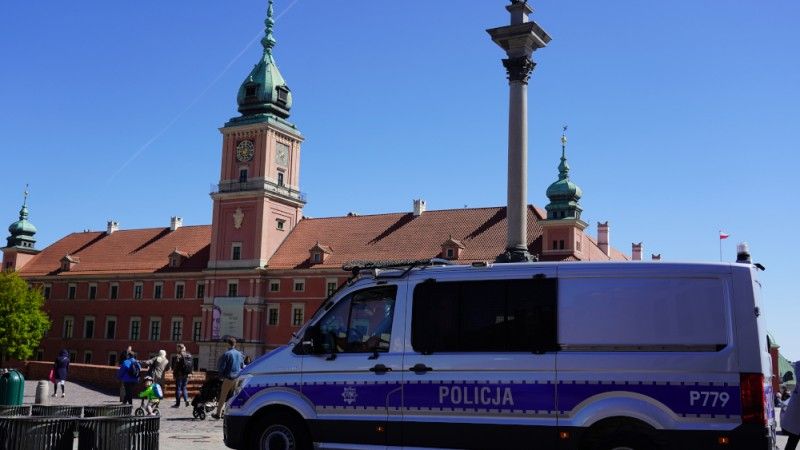
A temporary ban on carrying weapons or transporting them unloaded is in force across Warsaw on 11 November 2026. The restriction was introduced in connection with Poland’s National Independence Day celebrations and applies to people legally possessing weapons under the country’s weapons and ammunition legislation. Poland’s National Police Headquarters has warned that anyone violating the ban could face a fine or detention.
The regulation issued by Poland’s Ministry of the Interior and Administration was published in the Journal of Laws on 6 November. Under its provisions, the ban covers the entire territory of Warsaw and applies throughout 11 November 2026. The restriction was introduced to ensure an appropriate level of security for participants in Independence Day celebrations. The ministry stressed that tens of thousands of people travel to the capital for the commemorations, making additional preventive measures necessary.
„Given the scale of this undertaking, additional preventive measures are necessary to temporarily increase the level of security and public order in the area specified in the regulation,” the government’s justification states. The ban applies to individuals legally possessing weapons under the Act of 21 May 1999 on Weapons and Ammunition. However, the regulation does not impose an absolute prohibition and provides for several exceptions, depending on the legal status of those carrying weapons and the duties they perform.
The restrictions do not apply to individuals possessing weapons under certificates issued to certain authorised entities. These include businesses and organisations that have established internal security services, as well as licensed private security companies. The exemption applies when weapons are necessary to perform duties specified in the relevant authorisations and security plans. Such provisions allow designated security personnel to continue carrying out their responsibilities despite the temporary restrictions imposed across the Polish capital.
The exemption also covers government offices, institutions, businesses and other organisations whose employees require weapons for personal protection because their professional responsibilities expose them to a particular risk of attacks against their lives or health. Members of diplomatic missions and consular offices, as well as individuals granted equivalent status under international agreements, are also exempt. They may possess weapons and ammunition under international agreements or the principle of reciprocity for personal protection, hunting, sporting, collecting and commemorative purposes.
Another exception applies to foreign nationals carrying weapons necessary to protect diplomatic missions, foreign consular offices, international organisations and members of official foreign delegations. It also covers other purposes permitted under international agreements or the principle of reciprocity, subject to the relevant legal provisions. The regulation therefore distinguishes between ordinary civilian possession of weapons and situations in which firearms are necessary for authorised security, diplomatic or other protected activities.
Poland’s National Police Headquarters has reminded the public of the consequences of violating the restrictions. „Carrying weapons in breach of a prohibition introduced by the minister responsible for internal affairs constitutes an offence under Article 51(2)(10) of the Act of 21 May 1999 on Weapons and Ammunition,” the police headquarters stated. The police added that violations are punishable by a fine or detention, reinforcing the legal consequences of ignoring the temporary ban.
Similar restrictions have already been introduced in Poland and elsewhere in Europe
The Warsaw ban is not unprecedented. Identical one-day restrictions were introduced across the Polish capital on 11 November in both 2024 and 2025. Similar measures were also imposed on 5 April 2023, during Ukrainian President Volodymyr Zelenskyy’s official visit to Warsaw. These examples demonstrate that temporary restrictions on carrying and transporting weapons have been used repeatedly by successive Polish governments to secure state celebrations, visits by foreign leaders and major public gatherings.
Earlier, in December 2018, Poland introduced considerably broader restrictions in connection with the COP24 climate summit in Katowice. Between 1 and 15 December, the ban on carrying or transporting weapons covered the entire Silesian and Lesser Poland voivodeships. Unlike the one-day restriction imposed in Warsaw in 2026, those measures remained in force for two weeks and affected two administrative regions. Poland has therefore previously introduced restrictions extending over substantially larger areas and longer periods.
Other European countries have introduced comparable measures. During the Paris Olympic Games in 2024, French authorities prohibited the carrying, transporting and use of firearms, including replicas, ammunition and other potentially dangerous weapons, across Paris and the neighbouring departments of Hauts-de-Seine, Seine-Saint-Denis and Val-de-Marne. The restrictions applied around the opening ceremony from 25 to 27 July and the closing ceremony from 10 to 12 August, with limited exemptions for authorised activities.
The French authorities explicitly cited the heightened terrorist threat when introducing these measures. Germany also prohibits the carrying of weapons at public gatherings, festivals, sporting events and markets under Section 42 of its Weapons Act. Additional restrictions on knives were strengthened in October 2024, following concerns over violent attacks. Unlike the one-day ban covering all of Warsaw, German restrictions primarily target particular public events and designated areas, reflecting a different approach to preventing armed violence in public spaces.
Independence Day march poses a major security challenge
Security concerns surrounding this year’s Independence Day March have also intensified. Rafał Jankowski, chairman of Poland’s Police Trade Union (NSZZ Policjantów), warned that securing the event could be one of the most difficult policing operations in recent years. He pointed to rising political tensions following events at the Constitutional Tribunal, the mobilisation of different political and social groups, and the risk of provocations that could subsequently be exploited for political purposes. According to Jankowski, as many as 500,000 people could travel to Warsaw for the march.
The Warsaw Metropolitan Police has deployed additional officers from other regions to secure state ceremonies, demonstrations, public gatherings and other events across the capital. Police also reported detaining eight individuals over online posts allegedly intended to spread fear and undermine public confidence in security arrangements. With the nationwide BRAVO and BRAVO-CRP alert levels in force, authorities have urged participants to remain vigilant. Jankowski stressed that police officers must remain politically neutral and respond to any violations of the law, regardless of who is responsible.


