












- KOMENTARZ
- WIADOMOŚCI
Why Europe still struggles to build a common defence industry?

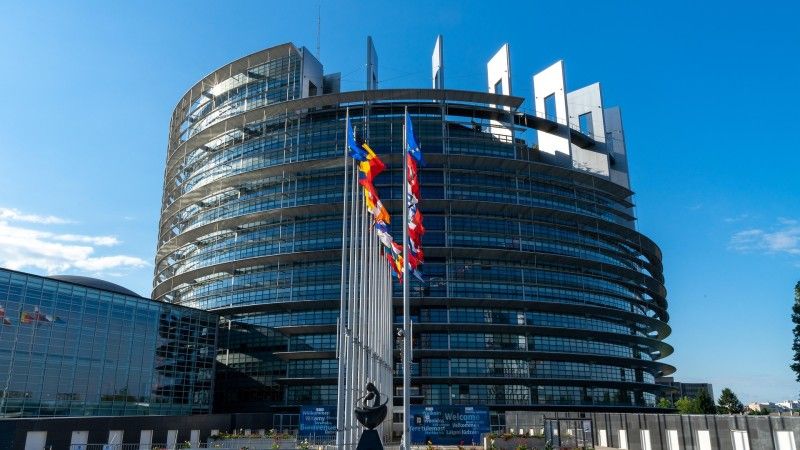
Photo. USA-Reiseblogger/Pixabay
The war in Ukraine has laid bare both the necessity of a robust defence technological and industrial base and the stark reality of its near absence in Europe. In response, the EU has produced a cascade of reports, compasses, and strategies diagnosing the problem and prescribing ambitious remedies. Yet, despite their overall soundness, the vision of building a powerful, integrated European defence industry often collides with deeply entrenched political realities that may prove insurmountable.
The European defence sector today is plagued by fragmentation, inefficiency, dependency, undercapitalization, and inflated costs. European armies operate 5-6 times more military systems than the US (179 versus 33), a disparity particularly evident in main battle tanks (17 versus 1) and fighter planes (20 versus 6), while collectively spending three times less on defense. The resulting lack of standardisation poses problems for interoperability and logistics that were brought to light in Ukraine.
European defence equipment is also burdened by inflated prices, driven by fragmented markets and limited order volumes. The contrast is stark: Russian 152 mm artillery shells cost roughly $1,000 to manufacture, while NATO-standard 155 mm rounds reach about $4,000—four times as much. German tanks and howitzers exemplify the problem, often costing several times more than their American, Ukrainian, Chinese, or Russian equivalents. High unit prices go hand in hand with low annual output, underlining how the absence of economies of scale undermines Europe’s ability to equip itself for modern, large-scale industrial warfare.
Europe also lags significantly in defence research and development, a field critical to the ongoing technological revolution driven by artificial intelligence and unmanned systems. The EU and its Member States collectively invest only €14.4 billion annually in military R&D, compared to around €130 billion in the United States—nearly ten times more. By allocating just 4.5% of total defense spending to R&D, the continent risks forfeiting leadership in future disruptive technologies, where each euro invested could generate returns of $8.1–9.4.
Justifiably, it has become a mantra that European countries must spend more, cooperate more, and coordinate their defence investments more effectively in order to consolidate, modernise, and strengthen a sovereign European technological and industrial base.
To this end, the EU has launched a range of initiatives, targets, and incentives over the years. Among them is the recent European defence industrial strategy, which seeks to increase the share of EU-based defence procurement from 20% to 50%, and to raise collaborative procurement from 18% to 40% by 2030. Yet, like previous targets, these goals remain voluntary and ultimately depend on the willingness of member states to participate and comply—a commitment that, given current geopolitical realities, appears highly doubtful.
Legal Powerless of the UE
Despite its ambition to evolve into a genuine defence union, the EU’s current legal framework provides it with few effective means to enforce defence policy objectives on its member states. National governments retain primary authority over security matters, as explicitly affirmed in the founding treaties: „national security remains the sole responsibility of each Member State” (Article 4(2) TEU). In particular, states preserve broad discretion in decisions concerning the „production of or trade in arms, munitions and war material” (Article 346(1)(b) TFEU).
Therefore, while making any decisions prejudicial to EU defence industrial policy, member states may invoke the above treaty provisions. This renders their engagement a matter of cooperation and willingness, ultimately bound to their perceived national interests.
For the same reason, the most straightforward way to compel member states to implement a common defence industrial policy would be through an adequate treaty revision. Such a reform would designate the defence industry as a shared competence between the EU and the member states, thereby enabling Brussels to adopt legally binding legislation in this domain.
But there is a clear reason why such a revision has never occurred, and why it remains highly unlikely today: sovereignty concerns. Nation-states remain deeply protective of their security and defence prerogatives, which they regard as fundamental attributes of sovereignty. Any attempt to transfer these powers to the EU would almost certainly face strong resistance from nationalist parties and other integration-skeptical forces.
The fate of the European Defence Community (EDC) is highly illustrative. Conceived in the early post-war years as a response to the Soviet threat, it aimed to establish a European defence force with a shared budget and joint procurement mechanisms. Although signed by all participating states, the project collapsed in 1954 when the French National Assembly refused to ratify it, citing sovereignty and constitutional concerns. A similar fate would likely befall any comparable treaty revision, as it requires unanimous ratification by all member states.
In the absence of obligations and enforcement mechanisms, it is ultimately up to the member states whether to follow or disregard the EU’s defence industry guidelines. Alas, numerous internal and external factors continue to drive governments toward independent and thus less cooperative industrial policies.
National Preferences and Sense of Urgency
Domestically, states almost invariably favour their own arms producers over foreign competitors. This preference reflects the desire to stimulate the national economy, safeguard jobs, and preserve technological and industrial know-how within their own borders. Such national favoritism lies at the heart of Europe’s industrial fragmentation: each country seeks to protect its slice of the cake while simultaneously competing for export orders abroad.
In a more integrated European defence market with joint procurement, the rules of the game would inevitably change, creating perceived winners and losers. States that currently dominate the sector, such as France, Germany, Italy, Spain, and Sweden, fear that their national champions could lose privileged access to contracts as competition shifts to a pan-European scale. Conversely, countries with smaller or less developed defence industries worry that integration would only cement the dominance of the major players. Faced with these risks, both groups often conclude that preserving national control over procurement and industrial policy is safer than embracing an uncertain redistribution of benefits that might advantage some countries at the expense of others.
Many countries face urgent security concerns that make waiting several years for a robust European defense industry unrealistic. With estimates warning that Russia could be ready to attack by 2030, frontline countries prioritise immediate defence acquisitions over long-term industrial development. Yet Europe’s chronically underfunded defence sector cannot meet this surge in demand. As a result, much of the new spending flows to external suppliers—above all the United States, but increasingly also South Korea and Turkey—who can deliver the required equipment without delay.
The combination of urgency and industrial shortfalls has already forced the EU to water down its own rules. Its recent flagship financial instrument, SAFE, foresees €150 billion in loans for joint defence procurement. While originally intended to finance exclusively collective projects, „in light of current geopolitical realities, SAFE will also temporarily support procurements by individual Member States to ensure timely delivery of critical assets.”
Pressure from the US
Lastly, significant pressure from Washington may divert many EU countries from common objectives. The recent surge in European defence spending has overwhelmingly benefited the American defence sector, with many of the most lucrative contracts—especially for fighter jets and missile systems—going to U.S. suppliers. This stems from a persistent capability gap between European and American industries, as certain cutting-edge technologies are available only in the United States thanks to greater funding and economies of scale.
Even as the EU aims to reduce this dependency by advocating for a European preference, it lies in the best interest of President Trump’s transactional administration that Europe continue purchasing American-made weapons. What is more, the US holds strong cards to force European countries to do so—at least in two distinct ways.
First, ensuring post-war Ukrainian security will likely require American involvement in the foreseeable future, given Europe’s persistent military inability to provide such security on its own. In the absence of plausible alternatives, Europeans may be forced to pay for American security guarantees or any other form of support. This prospect has gained traction in recent discussions, with Kyiv proposing that Europe finance up to $100 billion in American weapons for Ukraine in exchange for US security guarantees. Such an arrangement would channel tens of billions that might otherwise strengthen the European defence industry into further bolstering American firms.
Second, European leaders sensitive to President Trump’s transactional approach and his controversial statements about NATO may seek to gain his favour by purchasing American weapons. Some may even believe that such acquisitions help reinforce the credibility of U.S. security guarantees for their own countries. Aware of this dynamic, Washington could in turn question its commitments if European states were to reduce their reliance on American arms imports.
In Search of Alternative Arrangements
Although a common integrated European defence industry would likely deliver more, cheaper, and better weaponry, the EU’s ongoing efforts are unlikely to yield satisfactory results within the necessary timeframe. Brussels lacks the authority to enforce its defence industrial strategy, while many member states lack the willingness or incentives to fully implement it. This means that in its current condition and surrounding political realities, the EU can improve the situation but cannot fundamentally change it.
Since the EU lacks institutional authority in this area, and some member states oppose granting it such powers, the most viable solution may lie outside the EU framework. This could take the form of an intergovernmental treaty or a new international organisation of willing states, legally committing themselves to joint procurement and strict import policies. In the longer term, once conditions allow for a genuine Defence Union, such a structure could be integrated into the EU through a merger treaty.
One proposal along these lines is the European Defence Mechanism (EDM) put forward by the Bruegel think tank. Designed as an intergovernmental structure, the EDM would coordinate joint procurement and finance strategic capabilities. It could directly own critical assets and recoup costs through usage fees charged to members, thereby distributing the financial burden of military modernization more evenly. Crucially, membership would require participating states to abolish state subsidies and preferential procurement practices that privilege domestic contractors. The proposal has already gained traction and is under active discussion among EU leaders.
Revisiting the EU’s Role in the Defence Industry
The above does not mean the EU should abandon its efforts toward a common defense industry. On the contrary, The EU can still serve as a valuable forum for discussing various cooperation possibilities outside its framework, while coordinating these efforts in the meantime. This was clearly demonstrated in April when EU finance ministers gathered informally in Warsaw to discuss the EDM proposal.
Given that within the next few years Europe must be prepared either to confront Russian aggression or to assume sole responsibility for Ukraine’s security, the EU should recalibrate its efforts toward areas where it has the power to make a tangible difference in the short term.
Regarding the industrial base, the EU can play a constructive role by streamlining and simplifying procedures for the sector—an effort already underway. The Defence Readiness Omnibus, proposed by the European Commission, seeks to „remove bottlenecks in public procurement, permitting, reporting obligations, and cross-border cooperation.” In parallel, a comprehensive revision of the Defence and Sensitive Security Procurement Directive, often criticised as „overly complex and burdensome”, is scheduled for next year. Such bureaucratic relief could support Europe’s efforts to scale up production and better match Russia’s industrial capacity in key mass-consumption weapons such as artillery shells and drones.
In the field of disruptive technologies, the EU should devote far greater resources to coordinated military R&D. The European Defence Fund, with only €2.7 billion allocated for collaborative defence research in 2021–2027, ought to be expanded several times over. Only by collectively pooling investments in cutting-edge technologies and innovation can EU countries begin to narrow the capability gap with the United States while securing technological superiority over Russia.
In essence, the EU should concentrate on what it can accomplish most effectively in the shortest time possible, while at the same time fostering institutional arrangements that lay the groundwork for consolidating the European defence industry over the long run.*
Author: Kacper Kremiec


