












- WIADOMOŚCI
Greenland, Not the 51st State. Regardless

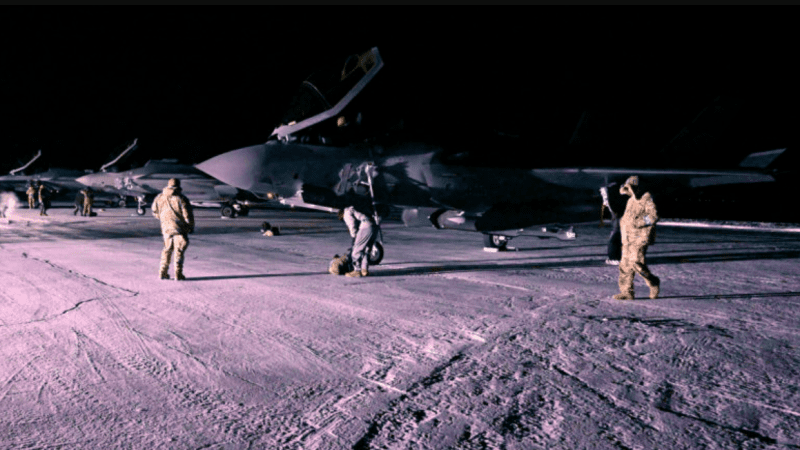
Photo. Master Sgt. Benjamin Wiseman/USAF
Robert D. Kaplan famously treated geography as „the most powerful, yet most underestimated factor in foreign policy.” The Mercator projection does not help us understand Greenland’s geopolitical significance, as it inflates the island to the size of a continent; in reality, its territory corresponds roughly to the surface area of Mexico. Why, then, is Greenland so coveted by Donald Trump?
Approximately 80% of Greenland is covered by ice. In contrast, its eastern neighbor, Iceland, is covered by only about 10% ice. Despite Greenland’s territory being 21 times larger than Iceland’s, the nation with its capital in Reykjavík is home to nearly seven times more people. Notwithstanding its geographical location in North America, this world’s largest island has been tied to the Nordic countries for centuries. Despite European settlement, roughly 90% of Greenland’s population today consists of the Inuit—the indigenous people of the Arctic who also inhabit Canada and Alaska. In a straight line from Nuuk, the distance to Washington is nearly the same as the distance to Copenhagen. After all, which way do the Greenlanders feel closer?
The U.S. concerns
The key to understanding U.S. national security concerns lies in viewing the Earth as an oblate spheroid from the perspective of the North Pole. From this vantage point, one can see the real geographical proximity between the U.S. and Russia. Even during the Cold War, the „default” route for the vast majority of the Soviet strategic arsenal intended for the U.S. was a flight over the Arctic, close to the North Pole. It is no different today. In an era of U.S.-China tensions, where Russia aligns itself with China, placing the core of air defense in the Arctic (including Alaska and Greenland) represents an optimal solution for U.S. national security. Since the 1950s, the U.S. has maintained a permanent, active military base at Thule in northern Greenland—strategically located and serving as a key component of early warning systems and Arctic military presence. If the Americans lease the land for the base from the Danish government, why can they not simply negotiate new terms for their presence to accommodate expansion?
While Denmark formally leases the land to the U.S., Greenland possesses broad internal autonomy and a strong political voice in decisions regarding its territory. Greenlandic society has long emphasized that military cooperation is permissible, but any transfer of additional land to the Americans or expansion of the base would be perceived as a violation of sovereignty and would trigger significant public opposition. In practice, therefore, instead of negotiating for new land, the United States focuses on modernizing and optimizing infrastructure at the existing location. However, we are currently witnessing the dusk of the previous policy of minimizing tensions on the Washington–Nuuk–Copenhagen line. The United States, through the words of Donald Trump, clearly declares its desire to purchase all of Greenland from Denmark. Whence this change?

New Trade Routes
Climate change in the Arctic, leading to the rapid melting of glaciers and increased navigability of sea routes, is diametrically shifting the region’s geopolitical weight. Routes such as the Northern Sea Route along Siberia or the Northwest Passage in Canada shorten the distance between Asia and Europe by several thousand kilometers compared to traditional routes through the Suez or Panama Canals. Greenland, strategically located in the central part of the North Atlantic, is becoming a key point for monitoring and securing these new routes. For the United States, this means not only a need for early warning in the event of a military threat but also control over potentially the most important trade routes of the 21st century, which could alter global economics and geostrategic advantage. In this context, the Thule base and U.S. military presence in northern Greenland take on an additional dimension—not just defensive, logistical, or observational, but also resource-related.
Resources
Greenland hides enormous resource potential within its bounds, attracting the attention of the United States and other powers. The island’s Arctic location coincides with a wealth of strategic minerals, such as rare earth elements, uranium, iron, copper, and nickel, as well as potential oil and gas deposits on the continental shelf. As the ice melts and extraction technology advances, access to these resources is becoming increasingly realistic. For the U.S., this signifies both a prospect of strategic independence regarding critical raw materials and an increase in Greenland’s importance as a territory that can support American logistics, power projection, and control over the Arctic. In this context, military presence merges with economic interest—monitoring, infrastructure protection, and support for extraction operations are becoming core elements of the American strategy in the region.
American designs on Greenland have been a subject of interest for mainstream media and analytical centers for years. It is worth focusing as well on the communications emanating from Nuuk and Copenhagen, and even from Oslo, Stockholm, Helsinki, and Reykjavík.
The Greenlandic Perspective
Greenland enjoys broad internal autonomy, particularly in economic, social, and infrastructural matters, but remains a dependent territory of Denmark regarding foreign policy and security. Copenhagen is formally responsible for negotiating international treaties, defending the island, and strategic agreements, including those regarding the Thule base. However, local authorities have the right to provide opinions and co-decide on many aspects of international cooperation, meaning that no strategic move can ignore the voice of the Greenlandic people.
Today, Greenland’s political scene shows clear divisions in its approach to autonomy and foreign relations:
- Siumut (a social democratic party, historically the ruling party) advocates for a gradual increase in autonomy while maintaining close ties with Denmark and a cautious approach to the American presence.
- Inuit Ataqatigiit (IA) (left-wing nationalist) calls for greater self-reliance and potential independence in the long term, emphasizing the need for control over resources and environmental protection, while remaining open to pragmatic strategic partnerships.
- Naleraq and smaller nationalist groups promote a more dynamic and faster path to sovereignty, often pointing to cooperation with the U.S. as a potential alternative to dependence on Denmark, though they never advocate for formal annexation by America.
- Demokraatit (a socially liberal and moderately pro-independence party) focuses on gradually increasing sovereignty while maintaining stable relations with Denmark and pragmatic cooperation with foreign partners, including the U.S. In the 2025 elections, it achieved the highest result, making it a key negotiator for a new governing coalition.
In recent years, Greenland’s political stage has been shaped by shifts in power and party priorities. In 2018, Inuit Ataqatigiit took power, ending years of Siumut rule. IA focused on sustainable development, control over local natural resources, and gradual preparation for greater autonomy while maintaining pragmatic relations with Denmark and foreign partners. Siumut, while remaining a significant opposition force, represented a more cautious approach to rapid changes in autonomous policy. Smaller parties like Naleraq pushed for a faster path to sovereignty and influenced decisions on strategic partnerships within coalitions.
Greenlandic society generally opposes the full incorporation of the island into the U.S. but is open to economic and military partnerships provided that local control is maintained. These trends show that Greenland’s autonomy is evolving toward greater self-reliance and negotiating power against Denmark, while the political scene oscillates between cautious pragmatism and ambitious visions of independence, always taking strategic foreign interests in the region into account.
In March 2025, parliamentary elections took place, bringing significant changes to the balance of power: Demokraatit won approximately 30% of the vote and 10 seats in the 31-member parliament; Naleraq gained 24.5%; while IA and Siumut saw declines in support. These results indicate that Demokraatit will have the greatest influence on shaping Greenland’s policy in the coming years. It must be remembered that Greenland operates under a proportional system. In practice, this means that any single party rarely wins an absolute majority, and forming a government requires coalitions and negotiations. Even the largest parties must include smaller forces in decision-making, ensuring compromise and limiting the ability to push through radical initiatives in isolation.
The coalition system is a result of the practical political dynamics arising from the proportional electoral system rather than a formal statutory requirement. Government stability depends on negotiations, which means that decisions regarding autonomy, foreign investments, or strategic partnerships must consider both public opinion and diverse political interests. Consequently, although Demokraatit currently dominates the political scene, Greenland’s policy remains a balanced compromise between independence aspirations and pragmatism toward Denmark and key strategic partners.

The Nordic perspective
Denmark remains the country most naturally interested in Greenland, having clearly signaled for many years a lack of desire to sell the territory. Currently, this traditional message has been reinforced by a joint Nordic statement. In response to increasing political pressure from the United States, including proposals regarding control over Greenland, the Nordic countries expressed an unequivocal stance on the island’s sovereignty. In early January 2026, the foreign ministers of Denmark, Finland, Iceland, Norway, and Sweden issued a joint statement emphasizing their readiness to strengthen security and stability in the Arctic and support an increased NATO presence in the region. Simultaneously, they noted that all decisions concerning Denmark and Greenland should remain exclusively within the jurisdiction of Copenhagen and Nuuk, without external interference.
The Nordic stance emerged in the context of increasingly assertive American rhetoric, in which some politicians suggested a strategic justification for control over Greenland and even the possibility of using military options. Denmark rejected such proposals, considering them a violation of sovereignty and emphasizing that they could lead to a serious crisis within the NATO alliance. Meanwhile, Copenhagen maintains close cooperation with the U.S. within allied defense structures, including the American base at Thule and joint Arctic monitoring systems. Denmark also invests in developing its own military presence in the region and defense infrastructure to effectively protect the territory and control air and sea space. This approach demonstrates that the country combines cooperation with allies with the maintenance of full control over its own strategic interests.
The centuries-old tradition of cooperation among Nordic countries found its application on January 6, 2026, in the face of the current pressure from the U.S. Among many joint statements, the one from January 6 is the latest, most striking example of clearly defining a common threat (the last joint statement of such caliber occurred in April 2014, which clearly identified Russia as the greatest threat in the region). The historical context shows the evolution of the Nordic countries« approach to threats in the Arctic and Northern Europe, allowing for a better understanding of the mechanism they use today against U.S. pressure. While cooperation with Washington was the foundation of security for decades, the situation began to evolve rapidly. A symbolic turning point was the year 2025, when Denmark—previously one of the most loyal overseas allies—officially designated the U.S. as a threat to its own interests and sovereignty for the first time in its history. This unprecedented re-evaluation of Danish policy became a catalyst for the entire region.
The mechanism of the Nordic response was simple yet effective: although each country maintains its own policy and sovereignty, joint statements constitute a message directed at both national societies and potential aggressors. Consequently, even if an individual country has limited capabilities, the entire Nordic group expresses a cohesive voice, thereby increasing its credibility and capacity for coordination. In the past, this forced Russia to consider the fact that the countries of the region act in a coordinated manner, which strengthened stability in the Arctic and the Baltic Sea basin.
In practice, such joint statements show that the Nordic security model is based on collective responsibility: a single state can initiate an alert or signal a threat, but its effectiveness grows only when combined with other countries in the region. This approach became the foundation for the latest Nordic declarations, including the crucial one regarding Greenland in 2026. Although the context of the threat is different today—concerning pressure from the U.S. rather than Russia—the mechanism of action remains the same: the Nordic countries use a common voice to secure the region’s strategic interests and strengthen the position of smaller states in international negotiations.
Does Warsaw understand Nordic know-how?
For Poland, which aspires to be a strategic partner in the NB8+ format, understanding this model is a key issue. In Warsaw, the thinking that „only we understand Russia” often dominates. While we are historically correct, the Nordics have shown that they can translate this knowledge into an institutional mechanism of resistance. If Poland wants to enter this circle, it cannot be perceived merely as a „spokesman for the U.S. in Europe.” We must prove that we understand the agency of players like Denmark or Norway, even when their interests clash with Washington’s policy. Credibility in the North is not based on declarations of purchasing military equipment, but on the ability to stand in solidarity against anyone who violates regional sovereignty.
In this context, it is worth looking at the Baltic states, which, despite their enormous support for the U.S. and existential dependence on American security guarantees, supported the Nordic statement of January 6, 2026. Lithuania, Latvia, and Estonia apply a „diplomatic biathlon” strategy: they build military security based on U.S. bases, but base their political agency on solidarity with the Nordics. The Balts understand that undermining Denmark’s sovereignty over its dependent territory creates a dangerous precedent that Russia could exploit in the future.
Poland, wanting to become the „Keystone of the North,” should adopt a similar attitude. Our goal should be to combine Polish realism regarding the Russian issue with the Nordic methodology of collective assertiveness. Poland should promote the concept of a „European Arctic,” supporting Denmark’s territorial integrity as a foundation for the security of the entire northern flank. Only such a stance—cool-headed, independent, and deeply solidary with neighbors—will allow Warsaw to stop being merely a „client” of great powers and become an actual leader of the northern format. A security model based on collective responsibility, where a single state signals a threat and the region responds with one voice, is the only effective way to maintain stability in a new, multipolar world.
Dr Wojciech Lieder, Instytut Nordycki