












- WIADOMOŚCI
Will the U.S. turn Greenland into “Crimea 2.0”?

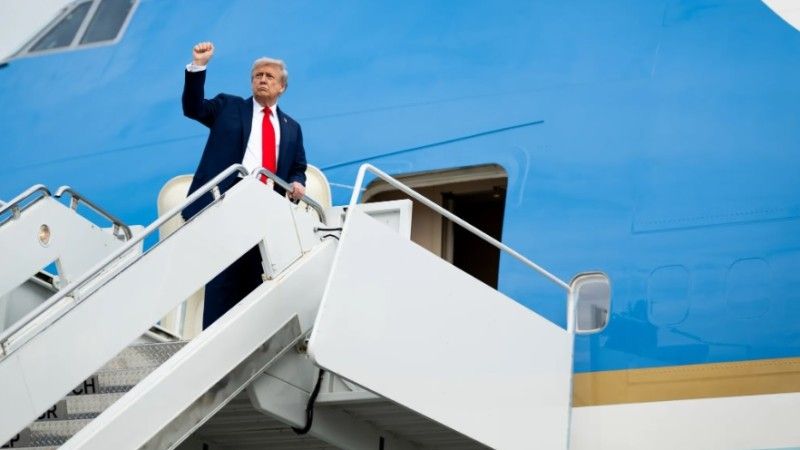
„Invoking the will of Greenland’s inhabitants would be an attempt to create the appearance that the population of a territory wishes to emancipate itself, become independent, and immediately join the United States. That would be Crimea 2.0 and a reprise of 2014 — of course, if that were accompanied by a false narrative supplanting the real will of Greenlanders,” said international law expert Dr. Mateusz Piątkowski (University of Łódź).
In recent discussions about Greenland and the possibility of its incorporation into the United States, talk has surfaced of alleged agreements that would supposedly make it easier for Americans to lawfully take over the Danish territory. Do the Americans actually possess arguments they could use to acquire Greenland?
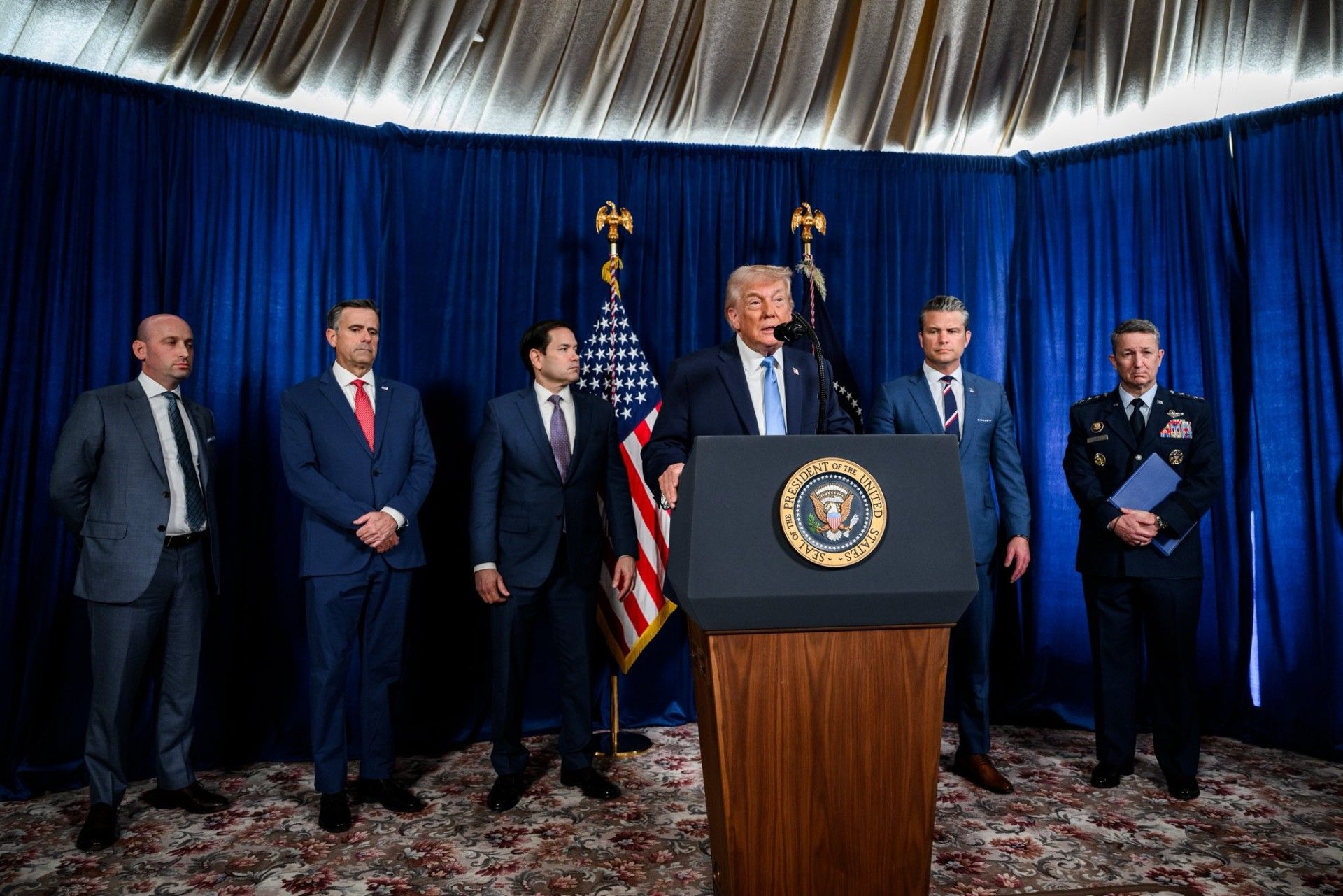
Dr. Piątkowski’s answer is short, unequivocal, and comes at the outset of our conversation: „The Americans have no legal arguments,” the expert says, citing above all the most recent relevant instrument of international law — the mutual Danish-American arrangement of 1951. It does confirm, to be sure, American rights to maintain military bases in Greenland and the full jurisdiction of the United States within those bases, but it simultaneously and explicitly affirms Danish sovereignty over the island. „Formally, the Americans have no historical title to the island. There is no document, treaty, or declaration that would help Washington in this situation,” stresses the expert, who also recalls 1916, when the United States officially recognized Denmark’s claim to Greenland. In return, the U.S. secured the right to acquire the Danish West Indies (today the U.S. Virgin Islands).
Historical proposals
That clear resolution in 1916 does not mean Greenland has never appeared on the agenda of Danish-American negotiations before or since. As Dr. Piątkowski points out, one early example dates back to 1864 and the Danish-Prussian war, in which Denmark lost Schleswig.
„At one point Denmark, in a rather far-fetched idea, pondered whether the Americans might want Greenland so that Denmark could offer the Prussians, in exchange for Schleswig, the Philippine island of Mindanao (Denmark would thereby have regained Schleswig),” the lawyer explains, noting that Copenhagen probed other swap possibilities for Greenland later on. At the turn of the twentieth century, however, U.S. authorities made clear their priorities and signaled they were more interested in other territories.
The situation changed only during the Second World War. „Denmark was one of the few countries occupied by Germany where a local government effectively continued to exist. The Danish government in occupied Denmark maintained diplomatic relations with the United States,” Dr. Piątkowski observes, recounting the episode of the Danish ambassador to the U.S., who, contrary to instructions from Copenhagen, signed an agreement in 1941 granting access to Greenland to support the Allied war effort — and specifically to the Americans.
2014 - reprise?
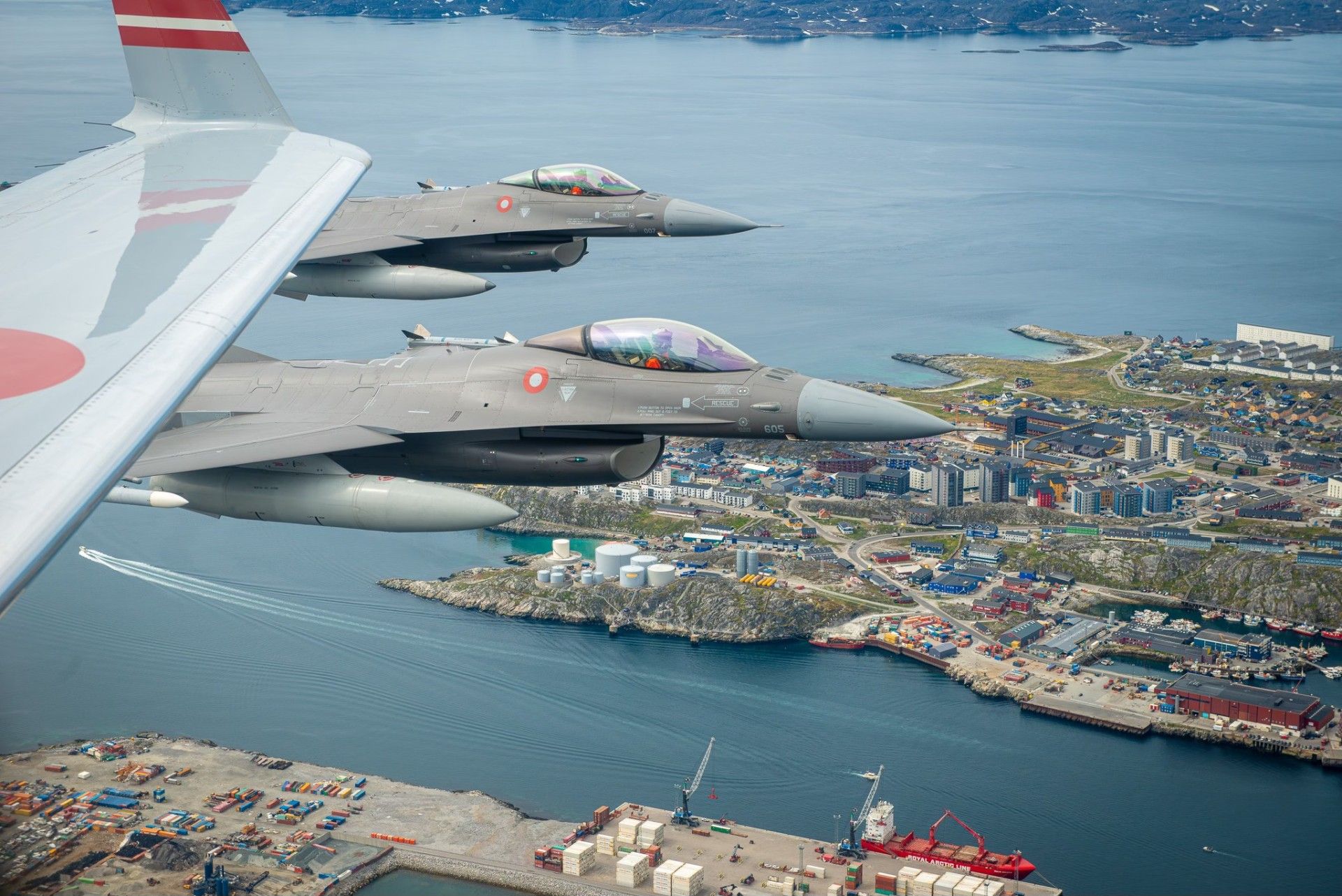
From public statements by the American administration to date, the desire for greater U.S. control over Greenland would appear to be driven primarily by military considerations. Given that the United States has long maintained military bases on Greenland, it is reasonable to ask what more the White House might hope to gain, and whether one more step „forward” would already be unlawful, or even an act of aggression. In U.S. public debate, proposals calling for a referendum on the sovereignty of Greenland’s residents have surfaced with increasing frequency. Dr. Piątkowski argues that any American push to realize such a scenario could be likened to a „Crimea option,” framed in terms of a right to self-determination.
„It is an idea of trying to create the semblance that the population of a territory wishes to emancipate itself, become independent, and in a referendum declare independence and then immediately accede to the United States. That would be Crimea 2.0 and a replay of 2014,” he says — assuming, of course, that all relevant parameters were in place. Our interlocutor believes that in such a case Americans would invoke the principle of self-determination as it exists in international law. At present, Greenlanders generally aspire to greater independence but do not want to become part of the United States.
„Self-determination is one of the cornerstones of international law, but its external application was effectively exhausted during the colonial era. Its implementation cannot, by principle, lead to the breach of a state’s territorial integrity. Although it must be acknowledged that the mutual Danish-Greenlandic arrangement is quite specific, and Greenland enjoys broad autonomy, one should accept that the right of Greenlanders to self-determination has already been fulfilled — within the framework of the Kingdom of Denmark,” Dr. Mateusz Piątkowski said, adding that „playing the self-determination card would be illegal, but more tactical than a use of force.” In his view, the final decision still rests with Copenhagen.


