












- KOMENTARZ
- WAŻNE
- WIADOMOŚCI
USA pulls out of international institutions, Russia pushes

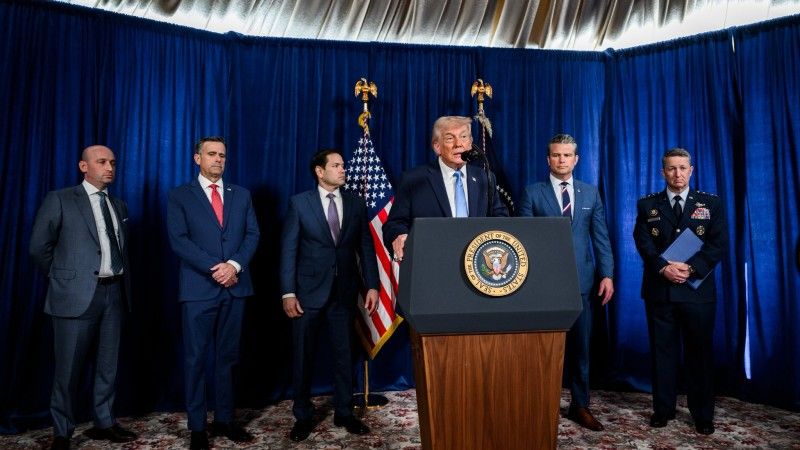
Washington is stepping back. Europe is left exposed. The U.S. decision to withdraw from key international bodies is not just administrative. It is political in effect, and it reshapes the environment in which pressure, influence and disruption are managed.
The Trump administration presented the exit from 66 international organisations as a clean break with waste, ideology and hostile agendas. That is the narrative. The reality is different. By leaving selected structures, the United States is also leaving parts of the system designed to deal with pressure below the level of open conflict. The most damaging example is the withdrawal from the European Centre of Excellence for Countering Hybrid Threats in Finland. This is not technical. This is not symbolic. It directly affects how hostile activity is identified, tracked and answered.
HybridCoE is where experience is shared and patterns are identified. Where lessons from sabotage, cyber activity, disinformation, migration pressure and political interference are collected and analysed. This is not theory. This is daily practice. Russia uses these tools across Europe, consistently and deliberately. By walking away from HybridCoE, the U.S. weakens common awareness and slows down coordination. For states on the frontline, this is not abstract. This is operational.
The timing makes it worse. Only days after the Helsinki Coalition (Finland, Sweden, Norway, Denmark, Estonia, Latvia, Lithuania and Iceland) met to discuss closer cooperation in the Baltic and Nordic space, Washington pulls out of one of the key platforms built for exactly that purpose. On one side, there are calls for unity and coordination. On the other, withdrawal from the main hub dealing with hybrid pressure. The contrast is sharp. And in Moscow, it will not go unnoticed.
This is not an isolated case. Alongside HybridCoE, the United States is stepping away from a broader set of international frameworks that shape norms, build capacity and enable coordination. These include cooperation platforms linked to the International Organization for Migration, parts of the UN Human Rights Council system, engagement structures with UNESCO, selected coordination mechanisms within the World Health Organization, institutional frameworks of the UN Development Programme, policy bodies of the International Labour Organization and cooperation channels connected to UNFPA. These are not marginal bodies. These are places where influence is exercised and standards are shaped.
The White House argues that these institutions are ideological, ineffective and unnecessary. That misses the point. Pressure below the level of open conflict does not disappear because someone dismisses the institutions that deal with it. It does not pause. It does not wait. It adapts. It probes. It exploits gaps. Leaving HybridCoE and similar platforms does not remove the challenge. It removes tools used to see, to understand and to react before a situation spreads.
There is also a structural effect. When the United States leaves, the space does not remain empty. It is filled. In the European context, that „other” is obvious. Russia has a long record of using institutional presence, observer status, informal channels and parallel platforms to expand its reach. Reducing Western participation does not weaken that game. It simplifies it.
From a European security perspective, this is a bad move. A very bad move. At a time when pressure is persistent and multi-layered, reducing engagement in the very structures designed to manage it is counterproductive. Cooperation will continue. Europeans will adapt. But without U.S. participation in HybridCoE and related frameworks, the weight, speed and political backing of these mechanisms will change. And that change will be noticed.
This is not about defending bureaucracy. It is about defending presence. Influence does not exist in a vacuum. If one actor leaves the table, another takes the seat. By stepping away from HybridCoE and other international institutions, Washington is not simplifying the environment. It is reshaping it. And in Europe, that reshaping creates space – space that Russia is ready to use.


