- WYWIADY
- WIADOMOŚCI
A thousand Abrams to maintain: WZM President on the future of armored Poznań [INTERVIEW]

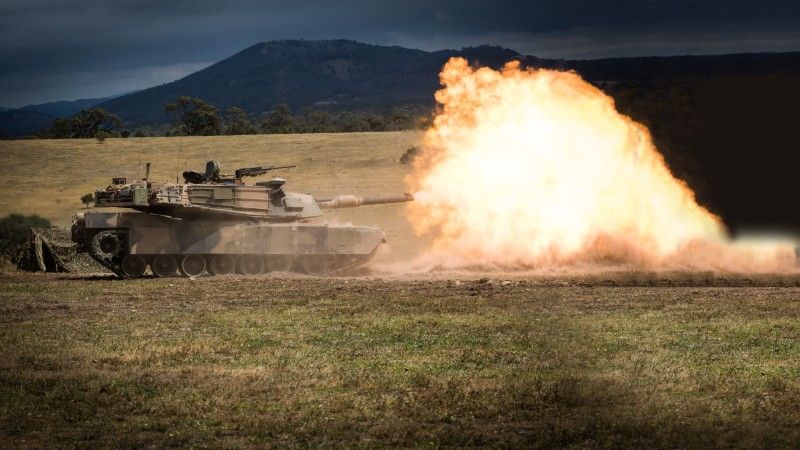
Photo. GDLS
It is estimated that WZM will have to service more than a thousand Abrams tanks alone. Building full capabilities is a matter of four or five years. But it turns out the U.S. Army is already reporting needs today, emphasizes Elżbieta Wawrzynkiewicz, President of the Management Board of WZM S.A., in the interview. She also talks about financial results, WZM’s potential, and cooperation within the PGZ Group.
Sponsored article
Jacek Raubo, Defence24: The year 2024 was a time of intensive modernization of the Polish Armed Forces, but also of political changes in Poland’s surroundings. How did it look from the perspective of the Military Automotive Works (WZM)? Madam President, what are the financial results and the most important achievements?
Elżbieta Wawrzynkiewicz, President of the Management Board at the WZM S.A. company: 2024, like all the previous years for over a decade, was a year in which we executed all contracts on time and at a high quality level. Turnover exceeded PLN 300 million, with a profit margin of around 20 percent. That level of profitability allowed us both to continue developing the plant’s infrastructure and to engage in preparations for new challenges and new products — in other words, to continue the process we essentially started after Russia’s full-scale aggression against Ukraine. Preparing for maintenance, for building a „system house” for new tank platforms. All of this is happening. So 2024 was intensive and demanding. Besides the core work and profits, we also had to build schedules and processes to establish the capacity for new maintenance. Of course, challenges remain for the coming years.
A lot is currently being said about expanding capabilities — essentially the entire defense industry. So I’ll ask: what are WZM’s most important initiatives in this area and, above all, what are the real needs? To what extent does WZM rely on its own, generated funds, and to what extent does it need external support?
I must say that Poznań and WZM have never been fortunate when it comes to external support, and despite that the whole plant has been modernized. We have always distributed profit rationally; part of it goes to employees, but the number one priority has always been expenditures budgeted for development.
Today the plant is fully modernized; we are now finishing the social facilities in the largest hall with an area of over 20,000 m². By the end of the year it will be ready to enter and start using, to install workstations tailored to specific products and their associated technological operations. The rest of the plant is already modernized, so regarding infrastructure the company modernized everything largely from its own funds.
As for challenges, I have always believed — and this has not changed — that if the Company has high-class specialists for tanks, it should not waste that potential by redirecting them to produce bicycles. That would be a dissipation of capability. We have high-class specialists in tank platforms, as confirmed by both our European and American partners. We have specialized in this for many years. And if someone visits the plant, they will really see a tank being repaired, stripped down to the bare hull.
So if the Company has such capability — the ability to disassemble a tank down to the bare hull, repair components and then reassemble the tank and return it to the military — there is no higher competence for producing new tanks. Of course not all components are repaired here. By creating the vehicle system house, we are developing it downwards through cooperation both within PGZ Group and outside the group, i.e., diversifying according to how companies shape their competency portfolios. A company with such competencies is best prepared to produce tanks.
For many years I have heard that WZM is for overhauls. But an overhaul of, for example, the MB873 engine can be two hundred man-hours or one and a half thousand man-hours. WZM has always specialized in what overhaul means — an actual, very deep regeneration, not just an oil and gasket change. In that sense, it represents the highest competence for knowing a platform. Which in turn is also a competence for designing and building new vehicles.
So what is key for WZM today?
For us, the key is, of course, achieving the capacity to service American equipment. These are Abrams tanks, M88A2 Hercules recovery vehicles, and accompanying JAB bridging systems on the Abrams chassis. This process is currently under way.
Everything is happening very dynamically. I mean legal matters, negotiations of many contracts with parts manufacturers so that regeneration of critical components can be done at a deep level here in Poland. This includes translation of government documentation. It also includes license documentation from BAE Systems for the Hercules vehicles.
We have already started training on Abrams tanks, both the M1A1 and the M1A2 SEPv3 variants. A lot is really happening. Deprocessing of tanks and recovery vehicles arriving from the United States is also taking place here. For two years we have cooperated with American partners, conducting deprocessing together. So this really is a period of intense work.
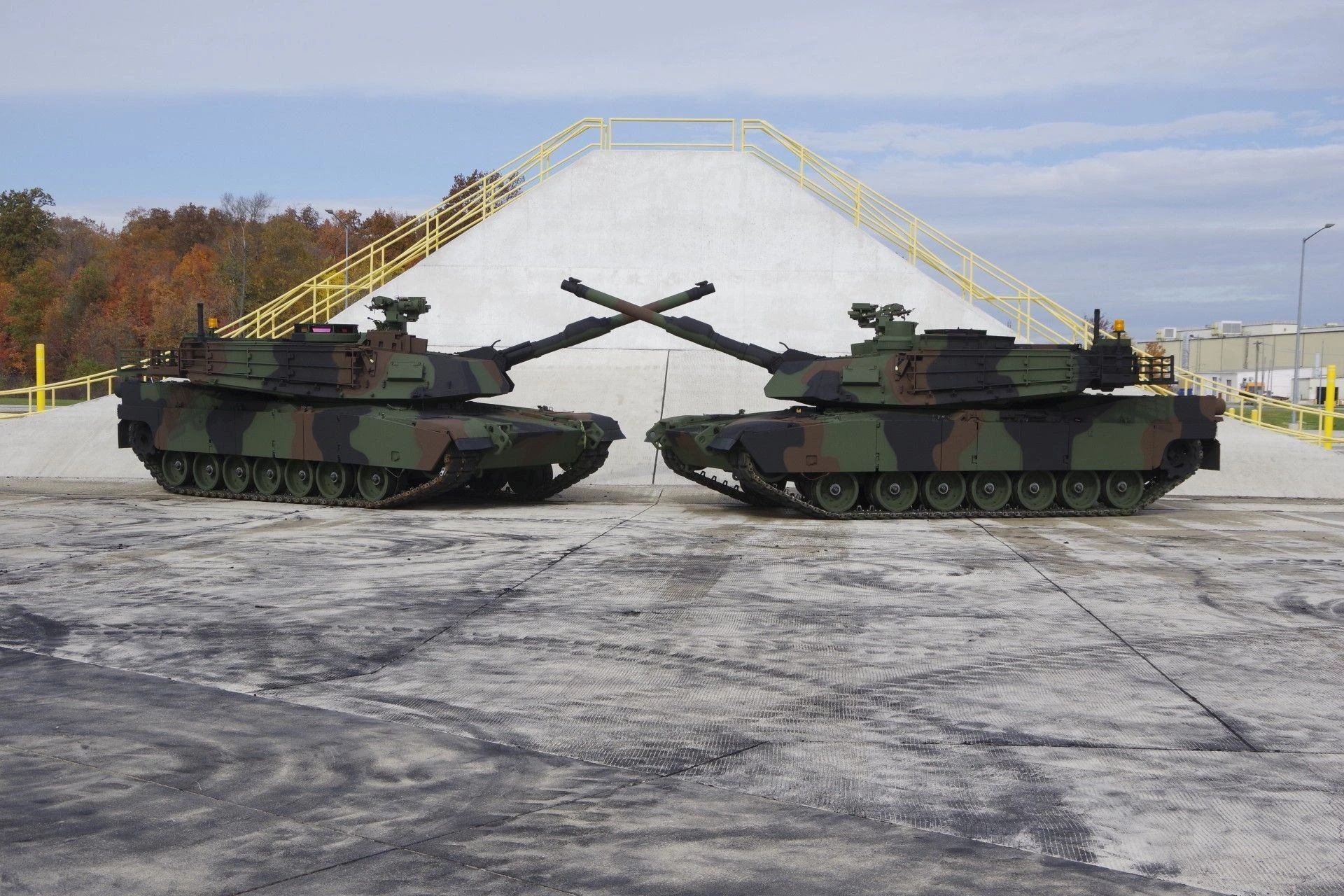
WZM has a chance to become a maintenance center for more than 300 Abrams tanks that, besides Poland, are used in Europe by Ukraine, Romania and U.S. Army units in Europe. The manufacturer is geographically distant from Poland. How does WZM plan to secure the operation of these vehicles?
That’s a very good question. Our concept for cooperation in Poland in the area of American equipment has been presented to the American side — both governmental and industrial — from the start, in three steps. Step one is achieving the capacity to service the equipment of the Polish Armed Forces. Step two is for the center to also service equipment of U.S. forces stationed here. And of course step three is servicing American equipment in neighboring European countries.
To be honest, the second step has suddenly begun to almost overtake the first. I hope that soon I will be able to say — here you go, the U.S. Army Land Forces have already commissioned the servicing of the first pieces of their equipment. We planned to carry out the project in steps two and three on an expanded infrastructure plot located very close to the Military Automotive Works [WZM], connected, and geologically surveyed. We are trying to acquire this plot. We count on support from the Ministry of State Assets to accelerate the process of acquiring that land. That is where the center should be expanded so that it would also have its own proving ground. It is estimated that WZM alone will have to service over a thousand Abrams tanks. Building full capabilities is a matter of four to five years. But it turns out the U.S. Army is already reporting needs today. So the sooner we get the land, the sooner we can think about expansion.
I believe that if we have managed to convince the Americans that this is a good project and we are moving in that direction, then it seems very beneficial for WZM from a business standpoint, but more importantly it is very important for the Armed Forces, for the security of Greater Poland and Poland. On those 100 hectares planned are both our investments and American ones. Of course these talks are happening at the PGZ Management Board level, but I am convinced it will gain approval from our owner. Implementing this project is a way not only to achieve additional revenues, but also an additional protective shield in the form of both industry and the U.S. military.
What are the next steps? You mentioned regeneration of spare parts — what about their production?
The second element we are working on is the production of spare parts in Poland. This is already happening on General Dynamics« side. We can expect that our colleagues will soon announce how many Polish companies they have already signed contracts with. As a result, production of the first — albeit initially small — elements will be in Poland. We have prepared for both the U.S. military and our partners a Product Breakdown Structure (PBS). It’s a schematic in tabular form where the tank is presented divided into assemblies, subassemblies, systems and spare parts that are most often replaced or regenerated during overhauls. The table specifies companies where appropriate production or regeneration potential can be placed. Broad audits lie ahead of us, which are fundamental for this process. Production or regeneration of these components would be carried out not only for the Polish Armed Forces, but also to secure needs of platforms that the United States maintains in other countries outside Europe.
From an economic point of view, it is more advantageous to locate production of several elements in a single national company and supply them worldwide than to have a larger number of components produced only for domestic use in small quantities, because then you don’t achieve economies of scale and the whole undertaking may be irrational from a business perspective. An element of building national capacity to service tanks is, of course, a buffer stock warehouse. The most difficult, most expensive and most important element for effective, rapid restoration of a platform to operational condition. We managed to convince our American partners that this buffer stock warehouse will be built jointly. The project is proceeding according to schedule. Tasks adopted in the timetable are being carried out within the planned deadlines, and sometimes ahead of schedule.
Will WZM’s capabilities also include modernization or modifications — e.g., upgrading M1A1 tanks to a higher version, or M1A2 SEPv3 tanks via integration of an active protection system, for example against unmanned systems?
Of course — the contract signed with General Dynamics covers not only achieving capacity for broadly understood maintenance, but also the possibility of producing tanks and their modernization should there be such a need from the Polish Armed Forces. Thus in the case of modernization and orders for new tanks, work would be carried out based on WZM with significant participation of Polish companies. The Americans look at things rationally, from an economic perspective: if the capacity exists locally, we’re not shipping equipment across the ocean. So absolutely yes — we are ready to carry out such work, both production and modernization.
A beneficial solution would be for the Polish government, when ordering another batch of Abrams tanks or the modernization of 116 M1A1FEP units, to indicate in the Letter of Request (LOR) the intention to locate the production or modernization of Abrams tanks in a Polish company — at WZM, which is responsible for American equipment. Then the potential we possess, confirmed by approvals and certificates, could be used fully.

Photo. WZM S.A.
What does the Leopard 2A5 tank support program mean for Wojskowe Zakłady Motoryzacyjne (WZM)? What are the prospects for their modification and modernization? And, in your opinion, is there room to offer support vehicles based on Leopards?
I believe the Leopard 2 tanks have settled in and are well regarded by the military. Today they are effectively the primary tank in Poland. The military is only just learning the Abrams and the K2. The Leopard 2 has also been battle-proven. It is a platform that provides both unification and diversification in terms of parts availability, because I know that countries that sign up to a joint project divide among themselves the capacity for who will produce particular components, including optics and others. So again — risk diversification, economic sense, money stays in Europe. Leopard 2 remains a very important platform when we look at European NATO countries.
Regarding the Leopard 2A5s, several years ago we developed a proposal for modular modernization. It addressed the problem that some key components for this tank have not been produced for many years. That makes acquiring parts and services on the market for repairs difficult, and obtaining, for example, optics from the company PCO is a more advantageous solution than previous ones. Therefore we approached this from the Poznań perspective — I would call it more a modification than a modernization.
We will propose to the Armed Forces a new legal and economic formula for approaching modifications, very beneficial for the military, but I will not reveal details before talks with the Ministry of Defence.
We talk about modern platforms, but at the same time the Polish Armed Forces still operate in large numbers post-Soviet equipment, including BWP-1 IFVs and BWR-1 reconnaissance vehicles. To what extent do WZM support their operation, and what are the possibilities?
I’ll put it this way: for more than 30 years I have dreamed that this equipment would leave Poland. So when it turned out that it is leaving, I am glad — it’s just 20 years too late. Honestly, I would like to focus on modern equipment. Of course, where guarantees are provided, we will secure the military in that respect. We will also carry out tasks to maintain readiness for services, if such tasks are imposed by MoD.
One must be aware, however, that reviving capability after it has been shut down is costly and time-consuming.
As for the BWRs, the situation is different because the BWR vehicles were modified for reconnaissance forces. Here we maintain the capability, we will continue to maintain it, and this is also an obligation resulting from the contract. So there are certain elements concerning both the BWP and the BWR. As is known, the chassis is the same here, but the entire mission equipment is heavily modified — in essence it is a new vehicle. And we are ready to service it.
So let’s return to that mentioned modernity. Recently the first contract for deliveries of the Borsuk IFV was signed, with the power-pack supplied by WZM. How important is the program for this new IFV to WZM?
Borsuk is very important to us. It is the first quickly replaceable power-pack designed here at WZM. I don’t recall us ever producing modern engines or transmissions in Poland before.
Of course, key assemblies are foreign, but the know-how of designing the power-pack is WZM’s work. This is very important and at the same time very difficult work. Difficult in the sense that the execution time was extended, and in the meantime production of the old gearbox, for which the power-pack was designed, ceased. New Allison solutions then entered production and were implemented without problems. The thing is, now a dozen or so units are on the old gearbox, for which it is completely uneconomic to build capacity, while for the new-generation gearbox new power-packs will be built for the new Borsuks.
We hope that perhaps this year, at the latest at the beginning of next year, Huta Stalowa Wola (HSW) will be invited to negotiate the next execution contract. Because the larger the scale of the order, even spread over 2–3 years, the more rational the design, negotiations and prices are from an economic point of view.
Borsuk is a new IFV created entirely in Poland, so there is no possibility of using allies« production lines, and needs are enormous. Will WZM take part in its sustainment in service, or perhaps even in production?
That, of course, depends on our owner, the Management Board of Polska Grupa Zbrojeniowa (PGZ). The topic is broader. It concerns the Group at the level of what I call that one page I refer to as „strategic management.” Which specific platform — tracked or wheeled — how we split competencies, how we divide products, making maximal use of existing capabilities within the group. Do we want to diversify one product across two companies, for example one firm supplying the turret and another the chassis? Or diversify in another way, so that one company specializes in Korean tanks and another in tanks of NATO countries.
And this is the discussion ahead of every subsequent PGZ board. These conversations and design works are underway now. I hope that the still unused potential of WZM will not be overlooked in these decisions and that a new product will appear in the large modernized hall of over 20,000 m², making use of highly qualified specialists.
So yes, we have the competencies to take part in the Borsuk program, but those are conversations we first have to hold within our own framework behind closed doors at PGZ.

Photo. WZM S.A.
What does the offer of Wojskowe Zakłady Motoryzacyjne look like regarding support vehicles, but also the Heavy IFV and the New KTO (wheeled APC)? Are there different options for implementing these programs?
First, I wanted to say a few words about specialist vehicles intended for Leopard 2s — this is a topic that has not been resolved for over 20 years, and the first point is the ARV. A very good project was prepared and negotiated by my team. I wouldn’t like to disclose details at this stage. I can, however, say that it is really an excellent project and concerns production not only for Poland but also for other countries based on this chassis.
We encouraged the military that, with a large variety of tank platforms, they should nevertheless consider unifying specialist platforms, because in my opinion that is supported by economic and logistical rationality. We showed analyses; I know there is a concept of platforms based on the K2, although that will require design work starting with R&D, so it may be expensive and lengthy; moreover, it is possible to use them for K2 tanks. But our role is to encourage, show analyses, and the choice belongs to the military.
Regarding a heavy IFV, our proposal was also developed and submitted within PGZ. PGZ should determine who will be the main contractor and who will participate in this project. In my opinion, the potential of the entire Group should be used; it cannot be that some companies wait for the completion of infrastructure construction and undertake further long-term work, while others have ready, modern infrastructure sitting idle. Those conversations are ahead of us.
Looking a bit more broadly, how do you perceive WZM S.A.’s place in the Polish defence industry, taking into account supply-chain building and cooperation with PGZ companies and private firms?
We see it such that if we are designated as the lead for a vehicle — for the Leopard 2A5, Abrams or M88A2 Hercules — we build capacity „downstream,” bringing partner companies into that process according to their competency profiles (optics, communications, electronic systems, etc.).
We already do this essentially for American equipment. Rationality demands it of us, but it also solves the problem of spare parts and component availability. We must avoid a situation where a hundred tanks could be repaired but spare parts are enough for only ten. We also look to ensure the military receives equipment in a reasonable time. Another very important matter is that a partner who comes to us must understand that if they locate here — for example — production of bushes and pistons, those bushes and pistons will not be only for a hundred tanks in Poland, but for thousands of tanks used worldwide. And our proposal has always responded to that, that this is not just production for Poland.

Photo. BAE Systems, Inc.
In summary: what do you believe are the most promising directions for the development of WZM S.A.’s offer in response to the needs of the Polish Armed Forces? And what are the greatest challenges facing the Company?
The challenges are that we are designated to build capacity in MRO of American equipment, but in fact we still do not have our own product. That product was to be the K2 tank, but another solution was chosen. And so in general we are now looking together with the Management Board of Polska Grupa Zbrojeniowa for what product would be WZM’s flagship new product. That is what somewhat keeps me awake at night.
Preparation for the K2 took a long time; assembly of the first vehicles was to start in January 2026. The modern hall is ready, but things turned out otherwise. Of course the hall will be used, but for repairs, so that flagship product is missing. A second very important element is that in 2014 we as WZM were nominated to be the company responsible for producing power-packs and their maintenance, etc. We built capacity for that and would like it to be used not only for Leopard 2s but also for power-packs for the K9, Krabs or K2.
However, in the short term, for now the most important thing for me is to obtain as soon as possible the first fully qualified, completely trained group of people on the Abrams. In the queue there is the M88A2 Hercules, in the queue there are JABs. The final stage of training includes obtaining trainer certificates. Then we will be able to conduct trainings for employees ourselves, which of course is much cheaper.
Thank you for the interview.